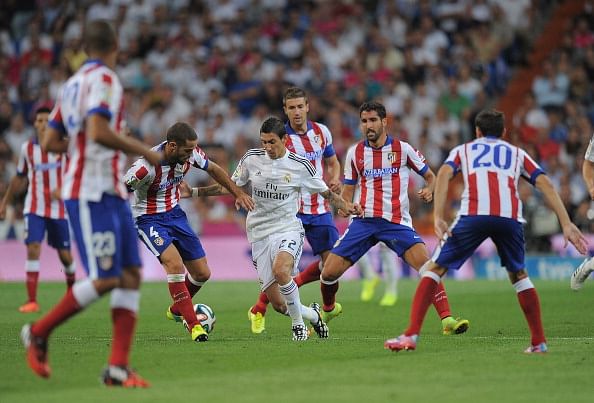
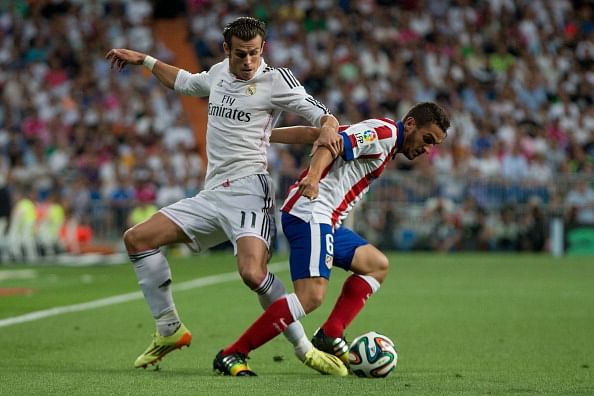
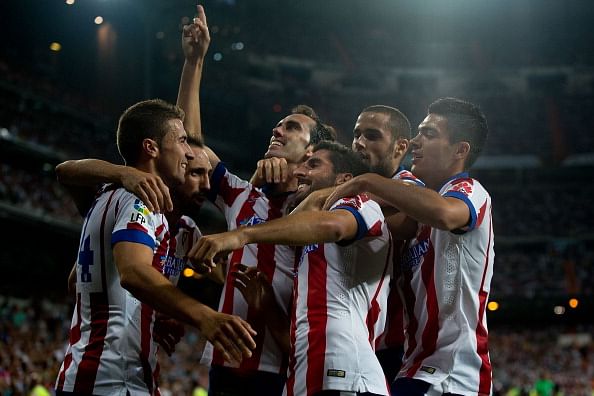
Right through Atletico Madrid’s title-winning season last year in the Spanish La Liga, Diego Costa was front and centre as far as their attacking ambitions went. He scored 36 goals in all competitions including 8 in Europe as Los Colchoneros also made their way to the showpiece final of the UEFA Champions League against Real Madrid in Lisbon.
Even before the Spanish season could end, there were murmurings that Chelsea were reportedly lining up a bid for Costa in an attempt to get over their weakness in the striking department (read Fernando Torres and Demba Ba). And he did eventually make his way across the English Channel from Atletico after the Blues met his £32 million release clause.
Considered by many to be the missing piece of Chelsea’s jigsaw in their quest for glory, Costa has been a revelation so far having racked up 10 goals already, all of them in the Premier League. He seems to be a perfect fit for Jose Mourinho and his team in every way and he has the fans plush with excitement at the possibilities this current season holds for them.
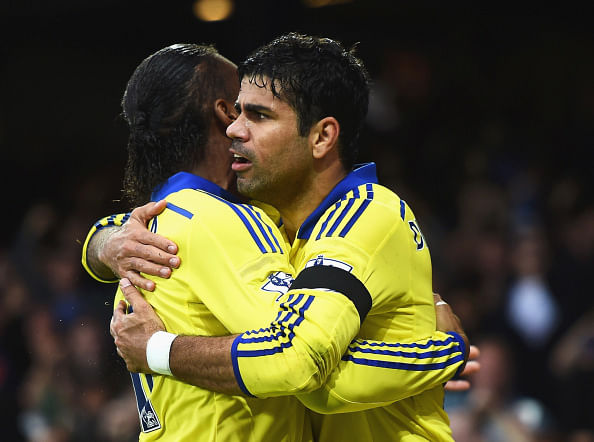
So much so that he is already being compared to another striker who plied his trade at Stamford Bridge for many, many years, one of a similar mould, a club legend who guided Chelsea to possibly their greatest night ever two years ago in the summer of 2012.
Didier Drogba spent 9 seasons at Chelsea before signing off on an absolute high as a Champions League winner after that magical night in Munich. In that time he established himself as one of the top true centre-forwards of the decade and made it a habit of manhandling opposition defences. He’s back this year for a second stint, revelling in almost a god-like status amongst the Chelsea faithful who never get tired of chanting his name when he’s on the pitch.
Drogba probably sees a lot of himself in Costa and with good reason. Their styles of play are very identical, both tough, physical players very good in the air and at muscling defenders around. They make sure that the opposition’s centre-backs have their hands full whenever they’re around. Their ability to keep possession under pressure with their backs to goal is another trait that the two share.
So far this season, barring the game at Goodison Park, when Costa’s been on the pitch, Drogba hasn’t and vice-versa. And that looks to be the definitive pattern as far as Chelsea are concerned despite some sections of fans wanting to see the two marauders play in tandem more. The truth is, it just wouldn’t help Chelsea any better if they did, not under Mourinho. Trademarks of Mourinho teams
Over the years, from Benfica and FC Porto to Chelsea to Inter Milan to Real Madrid and back to Chelsea again, Mourinho’s teams have borne some common trademarks. Almost all of his teams have players who are strong, powerful, organised and disciplined. Amongst other things, all of these teams also had a strong, powerful centre-forward in the mould of Costa and Drogba in their ranks.
The other is defence. Mourinho builds his teams on strong defences, and that’s not necessarily a negative thing as some people may make it out to be. He knows that good defences win championships and he has been consistent with that approach throughout his career. And as he builds his sides up from the back, the midfielders and forwards are an extension of that style in the forward areas of the pitch.
Diego Milito was the lone forward for Jose at Inter Milan
There are certain requirements that Mourinho has of these centre-forwards. He uses them as focal points, and hence the necessity for them to be physically strong and be able to hold their own against opposing centre-backs. As a focal point, the forwards are the target of long diagonals from defence and midfield and that’s where ability in the air comes into play.
The other aspect of their role as a focal point is to help relieve pressure when they are under attack by holding up possession in forward areas, thereby a) helping to keep opposition defences who push up at bay, and b) allowing his teammates time to get back into their positions since his teams traditionally defend deep. Drogba’s excellence at this was one of the reasons that helped Chelsea grind out results in tough situations.
Set pieces is another long-running element. Every time Chelsea win a corner or a free-kick, the opposition is immediately on their heels for they know the danger that they pose with the likes of powerful headers such as John Terry, Gary Cahill, Branislav Ivanovic, Nemanja Matic and, of course Costa, at their disposal. Not only is the centre-forward integral in attacking set pieces, but also in defending them as we’ve seen countless times when Drogba and Costa have headed away the threat. Five midfielders
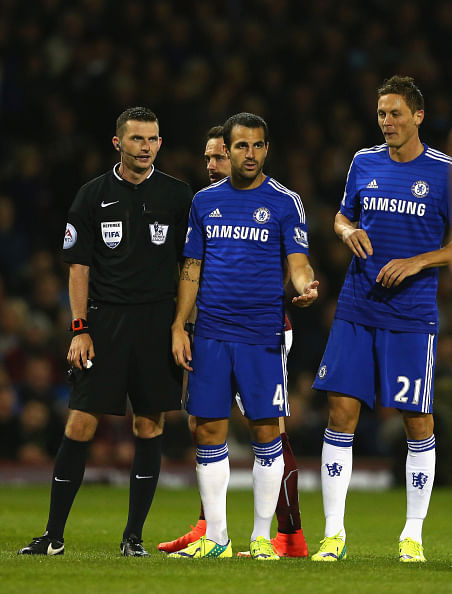
Mourinho also prefers attacking by creating width with the use of quick and skilled wide players. Two players playing either side of the forward wide on the flanks is a necessity – Eden Hazard, André Schürrle, Willian and sometimes Oscar play those roles in this new Chelsea linking up with Costa just like how Arjen Robben, Joe Cole and Adrian Mutu used to do with Drogba. That combined with Mourinho’s desire to play with a double pivot in midfield ensures that he has to play five midfielders at the least. Matic and Cesc Fabregas sit in that deeper role today with Oscar playing ahead of them.
Cesc Fabregas (left) and Nemanja Matic play the double-pivot in midfieldWhen he feels the need for added protection, he brings on John Obi Mikel or Ramires to go alongside Matic, pushing Fabregas further forward while shifting Oscar wide right.
Retaining control of that central zone whether in possession or not is one of the keys to Mourinho’s strategy and that’s why playing the extra forward is not an option save as a desperation move when in need of a goal.
The presence of a physical centre-forward usually means that he will not be as quick as some of the other forward players (unless you’re Cristiano Ronaldo) and that’s another reason Mourinho never plays two such identical players together for then his team’s quickness takes a hit.
‘The Special One’ is a big fan of the counter-attack and it is the quick players who help him make that transition from defence to attack in a flash. Why get Drogba then?
Drogba was sensational in the fact that most of the time he required the attention of both centre-backs, consequently helping in dragging them out of position so that the others would have space to run into.
Costa’s been doing something similar so far, in continuation from his body of work while with Atletico. With both opposition centre-backs already being engaged by just one player, Mourinho gains a huge tactical advantage, negating the need for another front man.
Which actually brings us to the acquisition of Drogba. While many considered the move to be nothing more than a goodwill placebo, Mourinho actually got in a suitable back-up for Costa, one who knows the system inside out and who comes with a wealth of experience behind him.
The frugal minutes is a given, but then again, it suits a veteran perfectly. Which is why you’re more likely to see Loic Remy being thrown on in support of Costa when Chelsea are gunning for a goal than Drogba. Remy is the supplement, Drogba is back-up.
“Look, if I have a triangle in midfield—Claude Makelele behind and two others just in front—I will always have an advantage against a pure 4-4-2 where the central midfielders are side by side.
because I will always have an extra man. It starts with Makelele, who is between the lines. If nobody comes to him he can see the whole pitch and has time. If he gets closed down it means one of the two other central midfielders is open.
If they are closed down and the other team’s wingers come inside to help, it means there is space now for us on the flank, either for our own wingers or for our full-backs.
There is nothing a pure 4-4-2 can do to stop things.” – A quote from Mourinho during his first stint as Chelsea manager
In short there’s another term for when you play two such centre-forwards, it’s called 4-4-2 – the system he exploited and annihilated when he first arrived in England.
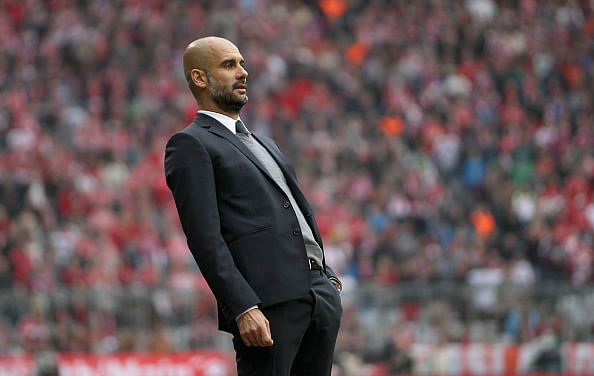
Fantasies are one thing and while it certainly would be quite a sight to witness Costa and Drogba making life hell for defenders at the same time, the reality is that Mourinho’s machinations will not allow for it. Jose doesn’t do 4-4-2!
A simple umbrella is often all you need to protect yourself from the rain. It will keep the droplets away, ensuring that you stay nice and dry under it, unaffected enough to carry on with your work. But sometimes, when it rains, it pours, and there is simply nowhere to go as you are washed away in a deluge once the skies have opened.
For Mumbai City FC, the first four games of the Hero Indian Super League have gone something like that. They currently sit in seventh place in the table with three points, having lost three of their four games, with only FC Goa below them.
They were part of the inaugural match of the tournament inside the famous Salt Lake Stadium against Atletico de Kolkata, which ended in a 0-3 defeat. They came home for their next game and rebounded in fine fashion with a sparkling display against FC Pune City, winning 5-0. But just when it looked like the win would kick-start their campaign in a major way, NorthEast United FC rained on their parade when they came to Mumbai and beat them 2-0.
Another away fixture lay in wait for Mumbai after that as they travelled to the east coast for their fourth game. Unfortunately for them, the result was another loss as they returned after getting beaten 5-1 by Chennai.
In the eye of the storm is Head Coach Peter Reid, of Sunderland and Leeds United fame. The former England midfielder has been witness to the action from the sidelines as he’s watched his team suffer early setbacks in the campaign.
However, he is a man on a mission. And he is keen to set right his team’s course and get them back into the thick of things.
Reid has the experience of managing in the top flight of English football and has been in situations before where he’s had to get his team out of a pickle. As interim manager of Leeds, he oversaw a difficult period trying to avoid the drop in the 2002-03 season. With Sunderland, he guided the team to promotion into the Premier League twice.
The ISL presents Reid with new challenges in a new territory, but he is determined to make his mark. Injury problems
Mumbai, of course, have not had the best of times with injuries, resulting in an unsettled team. Their marquee player, Freddie Ljungberg, was not match fit for the first game and came on for a brief 25 minutes in the second game at home. He once again started on the bench in game three, but was introduced at half-time with his team needing a boost. Sadly, about 15 minutes later, he pulled up in agony with a torn hamstring and was forced off. It is very unlikely we will see him again this season for Mumbai.
Injuries to key players like Freddie Ljungberg has not helped their cause
“Freddie’s hamstring is gone and with my experience in football, tears in hamstrings are very difficult injuries and I don’t think it is good for us”, said Reid after the game against NorthEast United.
To go with that, the player he named as captain of his team, India international Syed Rahim Nabi, picked up an injury inside 20 minutes of the opener against Kolkata and had to be taken off. Brazil’s Andre Moritz, who netted the first hat-trick of the tournament in their 5-0 win over Pune and who has been one of the most impressive players so far for Mumbai, played with a bandaged head against NorthEast United after suffering a fall in the bathroom; he didn’t last beyond the first half.
And of course, French striker Nicolas Anelka was forced to miss the first three games owing to his suspension following a controversial celebration last season while playing for West Bromwich Albion.
All in all, there’s been a lot for Reid to contend with as far as player availability is concerned. Discipline and concentration
Another front on which Reid has been forced to do a lot of firefighting is on the disciplinary front. That is not in reference to any misconduct on the part of the players, but merely alludes to their on-field discipline and concession of fouls and bookings.
“I am an optimist by nature, but if there is a worrying factor that I have, it is that we are putting ourselves under tremendous pressure by conceding stupid free kicks,” bemoaned Reid in a press conference before his side took on Chennai.
Mumbai have failed to maintain consistent levels of concentration
In the 0-2 reverse match against NorthEast United, Mumbai lost Ljungberg to a hamstring injury after Reid had made all his substitutions, thus rendering them down to 10 men. To make matters worse, central defender Pavel Cmovs went in for a rash challenge just minutes later to pick up his second yellow and he was given his marching orders, taking them down to nine men. And once that happened, they were well and truly out of the game.
“Going down to nine men against NorthEast United was the team’s own fault. We must be more disciplined in terms of not committing the fouls,” Reid said.
He has also been attempting to get his team to keep up their concentration levels throughout the course of a game; they have suffered several mid-match lapses which have cost them points.
"I give you my word that we will put in an effort. I don't know if we'll win, but we'll persist. Put on your seat belts, because we're going to have fun."
Two trophy-less seasons had passed at the Nou Camp when ‘Pep’ Guardiola was appointed manager of FC Barcelona ahead of the 2008/09 season; the above were his words during his presentation to the fans. He was tasked with resurrecting the fortunes of one of the most famous European clubs in football and bringing back the glory days to Catalonia.
Six full seasons on, he stands out as one of the best managers in world football, the reputation of both Barcelona and his own personal brand greatly enhanced.
The name Guardiola does not merely represent a man any more; it has come to represent a faith, a belief, a philosophy; one that has delivered success on a consistent basis at the highest level. Whether you love his tactics or hate them, there is no disputing the fact that ‘talking tactics’ and ‘formation fiddling’ just went up to a whole new level with his coaching in play. And if there’s one word that would aptly sum up all of Guardiola’s coaching adventures so far, it would be ‘dynamism’.
With Europe’s top leagues on hold due to the international break, it’s a good time to take a look at the evolution of Pep’s formations from Barcelona to Bayern Munich. For ever so quietly, away from the main stories making the rounds in the continent, Guardiola’s Bayern have made another impressive start and are looking the best amongst all the reigning league champions. That’s not all; Guardiola has thrown in another new tweak in the Bavarian giants’ strategy, which has been quite fascinating. Pep’s Barcelona and the 4-3-3
Even before we get to talking about the actual formations, I think it is essential that we fully recognize Pep’s philosophy – the philosophy to build teams on the foundations of unison, work rate, patience, ball movement, zonal play, positional play and finally dynamism, both in formations as well as personnel. Each of Guardiola’s acquisitions was done with a specific goal in mind.
In his all-conquering first season, when Barcelona won the treble, Guardiola operated predominantly with a 4-3-3 formation. While many critics believe that all he did was put together a group of some of the most talented players around, that is not necessarily true. Guardiola had a plan and a reason for putting in each of the players that he inserted regularly into his line-ups.
Holding possession by moving the ball both laterally and forward with crisp, short passes was the principle that they religiously stuck to. And they would wait for their opportunities when the opposing defence would get unhinged to strike the final blow. This early version though played slightly quicker, largely due to the presence of forwards Thierry Henry, who played wide left, Samuel Eto’o, who played through the middle, and Lionel Messi, who started wide right.
Behind that trio was Sergio Busquets, promoted from the B team, in the holding role, with Xavi and Andres Iniesta to his right and left respectively. Eto’o at the time was at the height of his powers, while Messi had still not reached his magical peak yet. So utilizing the pace and power of Henry and Eto’o, while relying on Messi’s ability to dribble and draw defenders, was essential.
Xavi played behind the front three as the deep-lying playmaker and Busquets played the roles of anchor-man and Xavi’s wingman, always moving with him, protecting him from opposing defenders and acting as a foil to receive and spray passes. He was also the added cover for the backline, slotting in for one of the centre-backs, notably Gerard Pique, whenever he ventured forward.
Iniesta would venture further forward as the advanced playmaker, either going central to support the forward trio or taking up the space out wide vacated by Henry or Messi. This also required a very hard-working central striker and Eto’o did just that, sometimes falling back to receive the ball and actually allowing Henry and Messi to work as a front two.
Messi’s conversion into a striker opened up a world of possibilities for Barca
Subsequently, Guardiola converted Messi into a full-fledged striker from a winger, and Eto’o and Henry would depart. Zlatan Ibrahimovic was bought in as Guardiola wanted to find a different way of scoring goals, but that experiment didn’t go very well and he used him sparingly.
This was when the triangle offense really came into its own, as Barca’s players would move forward with the ball, triangulating their passing with almost geometric precision to unseat teams. Can you believe that 2008-09 was the last time that Messi scored less than 49 goals in all competitions?
David Villa would take up Henry’s role out wide on the left after the Frenchman’s departure, and Pedro would take up the wide right position. However, Pedro wasn’t a regular in the team and Guardiola would go quite a few games with Iniesta/Villa/Messi as the front three.
Fabregas playing as a false forward
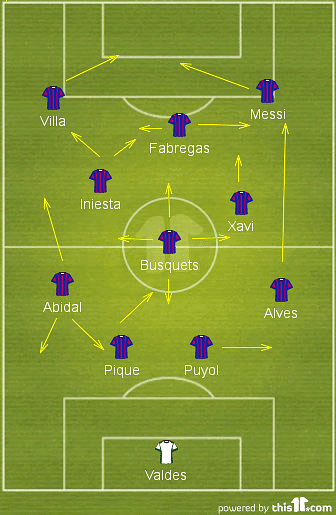
Then came the acquisition of Cesc Fabregas and the introduction of the false nine concept. With Fabregas and also Alexis Sanchez in the side, Guardiola had a new level of freedom and dexterity with which to operate. Both Fabregas and Sanchez could play in a multitude of positions, which is why they were bought. Fabregas enabled Pep to play the striker-less formations, the conventional 4-4-2 with Messi and Pedro/Sanchez up front, and the 4-1-3-2 with him playing in a midfield three with Iniesta and Xavi and Pedro, and Sanchez either side of Messi up front.
Defensively, Alves would bomb forward on the right with Puyol covering for him. That would result in Abidal falling back into the left side of a back three, with Pique and Puyol. Also, the long balls were sparingly employed by Pep’s Barca sides as they lacked the height and physicality up front and also because their defenders were more comfortable playing the ball out on the ground as Pique continuously did. Pique’s forays forward also meant a covering job for Busquets to drop back and aid Puyol and Abidal.
Throughout his time at Barca, there were two players outside of Messi that were of utmost importance to make the formation work and make it dynamic – Alves and Abidal.
Alves was key in the attacking areas of the right flank. His intricate interchanges with Messi in the opposition half were among Barcelona’s biggest threats. When Messi moved into the middle as a false nine, Alves continued to play high up the pitch, importantly stretching the play, especially since both Villa and Pedro too were more inclined to move in from out wide.
Alves’ ability to go up and down so regularly and with such frightening results made up for the lack of a right winger or right midfielder. His forward menace also managed to keep the opposition left-back pinned down in his own half.
Eric Abidal (left) celebrates scoring a goal with Dani Alves (right) in a Copa del Rey match against Real Madrid at the Santigao Bernabeu in January 2012
Abidal was hugely important in compensating for Alves. He would push forward when necessary, but his ability to sense danger and drop deep to operate as an additional third centre-back when required were irreplaceable. He also covered for Busquets and Pique in their respective roles whenever Barca were in pursuit of a goal and pushed more bodies forward. Abidal was the guy who made the formation tick at the back with his amazing ability to play left-back, centre-back and defensive midfield to perfection.
All in all, Guardiola’s formula at Barca for much of his stay was built on the full-backs, dribbling centre-backs, the wide forwards who would dart in and the midfield duo of Iniesta and Xavi and later the concept of the ‘false forward’. Bayern 1.0 – Beginnings with 4-1-4-1
German giants Bayern Munich came calling for Guardiola’s services and he agreed to take over the reins from the 2013-14 season onwards in what was a tough act to follow as his predecessor Jupp Heynckes signed off in some style leading the Bavarians to a historic treble with a team that was devastatingly destructive.
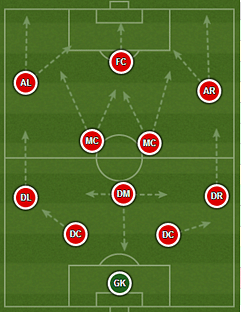
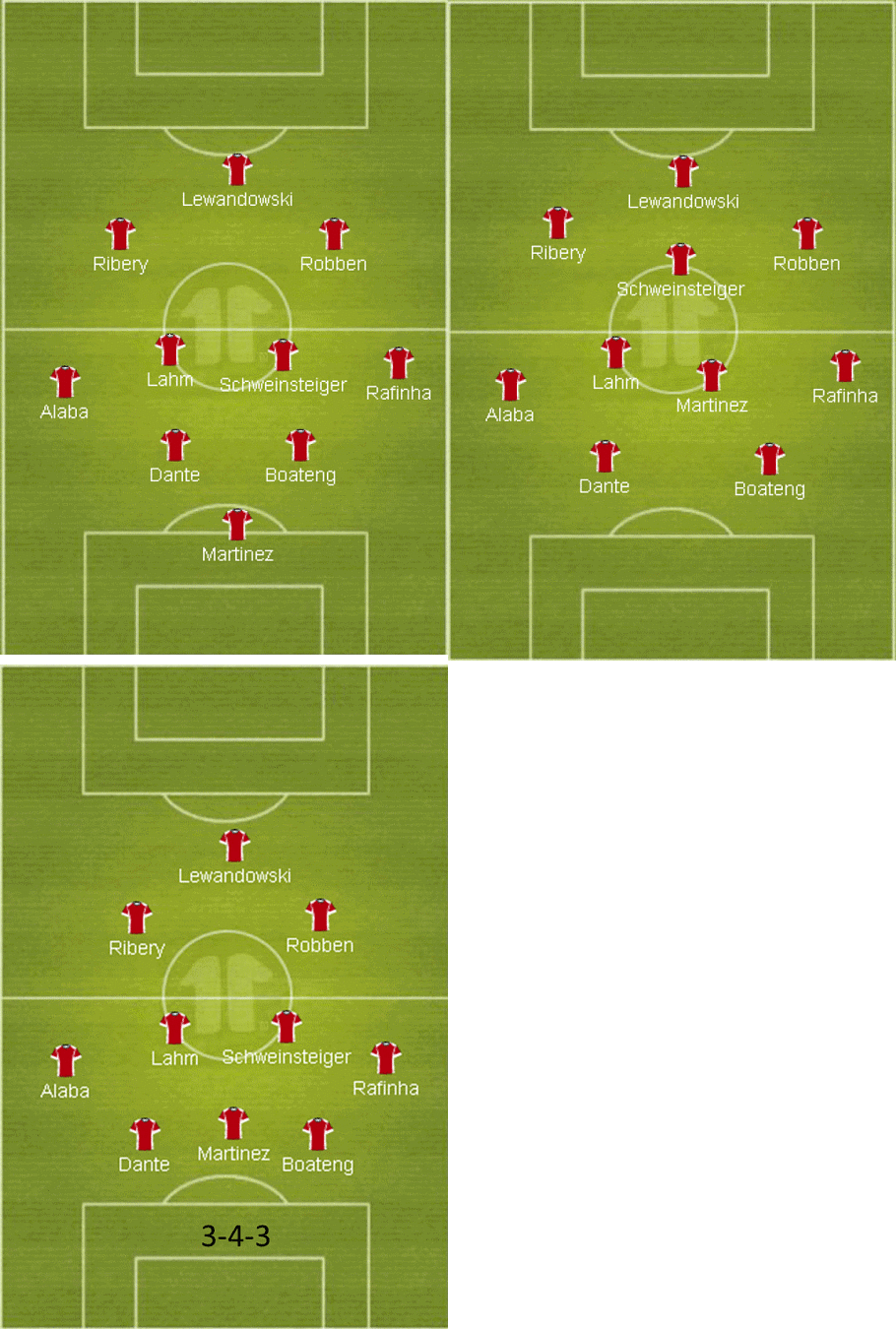
Bayern 1.0 saw Guardiola employ a 4-1-4-1 formation. This formation was built to explore Bayern’s depth in midfield especially around the ability of Toni Kroos to distribute, move up and down the middle of the pitch and also play as a playmaker. While at Barca, Guardiola had players of short stature at his disposal who were very good in possession; at Bayern he had more direct players in the likes of Thomas Müller, Arjen Robben and Franck Ribery and he tried to cater to their strengths by banking on the influential Kroos.
The 4-1-4-1
Philip Lahm, possibly the best right-back in the world was given a new role by Guardiola as a holding midfielder breaking up the erstwhile duo of Bastian Schweinsteiger and Javi Martinez that his predecessor used to telling effect. His need for a more mobile holding player with good passing range saw him make the shift and that meant Rafinha would take Lahm’s place at right-back.
However, the full-backs under this system were part of a mobile triumvirate that would move up and down with Lahm and would more often than not join up with the two central midfielders to make a four in the middle occupying the space vacated by the two wingers who’ve joined up in attack. The use of ‘false full-backs’ was made possible by the presence of Ribery and Robben, who provided the width with their forays out wide to reduce the necessity for advanced full-backs. In the absence of one or both, Alaba and Rafinha tended to play in a more traditional full-back role.
And it was that versatility that got them off to such a flying start last season, eventually helping them win the Bundesliga at a canter. Opposing teams simply could not handle the many different attacking formations in the form of an attacking double-pivot of either Götze/Robben, Götze/Müller or Müller/Robben. Also, unlike at Barca, this Guardiola team played a good number of good long balls because – a. their defenders weren’t the dribbly kind like Pique and b. the presence of aerially gifted players such as Müller and Mario Mandzukic.
The presence of multiple playmakers ensured that they could swap roles freely and the ones not on the ball could then run the channels effectively, complementarily opening up space for each other to operate in.
The overlying emphasis of this formation was to always have three central midfielders on the pitch at any point of time. That’s why Pep went out and bought Thiago Alcantara, not for old time’s sake. Lahm explained as much in an interview last year:
“Also, outwardly it appears as if we’ve changed our system, but if you look more closely we still have three central midfielders on the pitch. Whether there’s one No.6 [a primarily defensive holding midfielder] and two No.10s [offensive midfielders], or one No.6 and two No.8s [more creative holding midfielders] or maybe one No.8, one No.6 and one No.10 – there are three players in central midfield. To give you an example, last season Toni Kroos [a typical No.10] sometimes played in the No.6 position alongside Bastian Schweinsteiger. It’s open to debate whether or not you could have spoken of two No. 6 players in those moments. So each of the three players fills the position with his own identity and his characteristics. That is what counts.”
The attacking pivots also helped in pressing from the front and while not as intense and harrying as they were under Heynckes, Bayern were still very effective doing their version of the Barca press to dispossess opponents.
The difference in Guardiola’s triangle systems at Barca (above) and Bayern (below)
This formation was another continuation in the triangle system of Guardiola, except that instead of widening the pitch to stretch the defence like at Barca, here the system was about overloading the centre of the park with triangles formed all around the centremost midfielder, usually either Kroos, Lahm or Schweinsteiger.
And this system also kept up the bargain of tactical flexibility for Guardiola as it could morph into a 3-4-1-2, 4-4-2, 4-3-3, even a 2-4-4 at times if chasing a game.
The 4-1-4-1 for all its tactical nuances had some weaknesses. It involved the full-backs playing almost as midfielders and with Lahm’s solidity no longer present at right-back, it exposed Bayern, who played a high defensive line, to individual mistakes and long passes. And as brilliant a sweeper-keeper as Manuel Neuer is, he could not always save the day for them, especially against quality opposition.
When used ineffectively the overload of playmakers in the centre muddled the midfield and made their attack look toothless and the build-up slow. Also, they could almost never capitalize on quick counter-attacking opportunities.
Bayern wore a dejected look as they were taken apart by Real Madrid
All of this came to a head in their semi-final tie against Real Madrid in last year’s UEFA Champions League. Madrid were a side perfectly built to expose each and every flaw of this system and it was a matchup nightmare for the German side. A front six of Cristiano Ronaldo, Karim Benzema, Gareth Bale, Angel di Maria, Luka Modric and Xabi Alonso had too much pace, power, and on-ball ability to be contained by the 4-1-4-1. Ronaldo and Bale ran roughshod over the two ‘false full-backs’ and Benzema’s movement in combination with one of the two plus di Maria took the two centre-backs out of the equation as well.
Also a few players such as Mandzukic suffered as he was forced to make runs out wide and become a provider at times instead of a goal threat and that saw him lose his starting spot to a midfielder with Guardiola preferring to play Müller as the lone striker instead. Ribery and Robben were forced to make the unnatural shift to receiving the ball and quickly giving it back, instead of venturing forward to take on the defenders which took the destructive nature out of Bayern’s attacks. Bayern 2.0 – A 3-4-3
With all that had gone by and seeing the limitations that the 4-1-4-1 caused, Guardiola introduced a 3-4-3 system against Borussia Dortmund in the DFB Pokal final of last year to redeem himself after the chastening defeat to Madrid. And he has continued with it this season.
The backline movement in the 3-4-3
The 3-man backline sacrifices width for numerical superiority in dealing with opposing attackers while providing a man advantage in midfield.
In defence, it relies on the 3-man backline and the 4-man midfield, which includes the two wingbacks. And in attack, the formation moulds into a 3-4-1-2 or 3-4-2-1 using either one attacking midfielder (Götze/Kroos) behind two strikers (Mandzukic/Robben and Müller) or two attacking midfielders (Kroos/Müller, Kroos/Götze) and the lone striker (Robben/Müller/Mandzukic).
The 3-4-2-1 has been the one that Bayern have gone with more often and it is a very demanding formation. The two withdrawn strikers or attacking mids play a critical role as they alternate between shifting wide or tucking in behind the main striker. Due to only one striker up top and a lack of wingers, the role of the wingbacks becomes more important. Without their inputs, Bayern can't maintain their superiority when attacking. While being aggressive though, they have to remain disciplined, as they are the sole defensive cover on the wings. So even one slip-up can be costly.
However, the 3-man backline does provide an extra target against teams whose forwards press hard, like Dortmund. The extra man enables them to pass the ball out smoother. The central centre-back often functions as a key distributor, much like Pique did at Barca while the two guys either side of him push wide almost in a full-back-like position to use and cover the space.
Someone like Javi Martinez and Holger Badstuber, both of whom have played as defensive midfielders, can play centre-back better in this formation as it helps them break up play, even at the cost of leaving their position thanks to added protection from the sides and also helps in their distribution. If need be they can even step in to join the midfield to provide extra impetus in attack as the other two centre-backs would then converge to form a back-two.
Till now, Guardiola has used six different players in the full-back roles this season – Pierre Hoijberg, Juan Bernat, Philip Lahm, David Alaba, Rafinha and Sebastian Rode. Each of them offers him something different; Bernat is more of a traditional full-back and more or less parks himself along the touchline; Alaba and Rafinha are capable of not just playing as full-backs, but also tucking into midfield while Rode and Hoijberg are more inclined to drop inwards as defensive midfielders.
Depending on what weakness a certain opponent has and what he wants to guard against regards his own team, Guardiola can pick his personnel. To top that, you have Lahm, who can play any of those positions on either side. And hence the dynamic fluidity of the wingbacks will be something to look forward to this season.
“Bajegi seeti, udega ball, Come on India, let’s Football”… echoes Star Sports’ video ad on the upcoming big-money extravaganza that is the Hero Indian Super League.
After having previously touched cricket, badminton and kabaddi, the franchise-based league in India visits the domain of football, a sport where interest levels in the country have zoomed considerably in the last decade.
With eight teams in the fray and with an array of powerful and influential backers behind it, the ISL aims to deliver a fillip to football in India.
As with any sporting contest, rarely is an event possible without a team from India’s ‘Maximum City’, Mumbai. Representing India’s largest metropolis is Mumbai City FC.
Move over Manchester City, for ‘MCFC’ is going to come to denote a team closer home. Home Venue: D.Y. Patil Stadium in Nerul, Navi Mumbai Capacity: 55,000. Mumbai City FC Squad Goalkeepers: Ishan Debnath, Subrata Paul, Andre Pereira Defenders: Deepak Mondal, Peter Costa, Raju Gaikwad, Syed Rahim Nabi, Pavel Cmovs, Ilias Pollalis, Johan Letzelter, Manuel Friedrich Midfielders: Asif Kottayil, Lalrin Fela, Lalrindika Ralte, Ram Malik, Francisco Luque, Jan Stohanzl, Tiago Ribeiro Forwards: Abhishek Yadav, Nadong Bhutia, Rohit Mirza, Singam Subhash Singh, Sushil Kumar Singh, Diego Nadaya, Nicolas Anelka
The Mumbai outfit has managed to acquire some of biggest names available.
Former Arsenal legend Frederik Ljungberg is their marquee player and he will have a former teammate by his side in journeyman striker Nicolas Anelka, who looks to be a top acquisition. To go with the former Arsenal duo, the team also has in its ranks defender Manuel Friedrich, a former Germany international, who played his best days with Bayer Leverkusen and was even signed up as cover by Borussia Dortmund last term.
Amongst the younger internationals in the team are defenders Ilias Polallis and Pavel Cmovs with the latter being a regular at the junior levels for the Czech Republic. Experienced French full-back Johan Letzelter, who has played in almost every division of French football, adds to Mumbai’s impressive collection of defenders, making for an extremely solid back-line.
But it is not just the collection of international players that has the Mumbai club buzzing. The team seems to have made some great picks with the choice of domestic talent as well.
Guarding the goal posts will be India keeper Subrata Pal who was among the most expensive local players in the auction. He is coming off a spell with Danish Superliga club FC Vestsjaelland where despite signing on with the main squad he never got a first-team opportunity, featuring only in a few reserve games. So, he will be keen to make an impression once again.
The highly versatile and talented Syed Rahim Nabi will also don the Mumbai colours in the first season of ISL. A match-winner on a regular basis both at club and national level, the Mohammedan man will be looking to show just exactly why he got top billing in the auction.
The other notable Indian faces are Ram Malik and Lalrindika Ralte. Malik, a huge Liverpool fan, is an exciting young winger while East Bengal and India man Ralte, considered one of the best young players in the country, will be a huge attacking threat from midfield. Local boy Raju Gaikwad with 22 national caps to his name is also part of the fray. India veteran Deepak Mondal will be a reassuring presence at the back for the team. Likely XI: Subrata Pal; Deepak Mondal, Manuel Friedrich, Pavel Cmovs, Syed Rahim Nabi; Freddie Ljungberg, Asif Kottayil, Jan Stohanzl, Lalrindika Ralte; Diego Nadaya, Nicolas Anelka
Mumbai City FC – Best XI
Coach
There’s an English and Premier League connection in the coaching department for Mumbai with Peter Reid as Head Coach, ably assisted by Steve Darby.
Reid has under his belt erstwhile managerial stints at Manchester City, Sunderland and Leeds United. He also had a one-year stint as manager of the Thailand national team between 2008-09. Reid won LMA Manager of the Year award in 1996 after he helped Sunderland stave off relegation in the First Division before eventually guiding them to promotion into the Premier League.
Mumbai City FC Coach Peter Reid
"I have a philosophy and I like to use the wingers. But I have to look at my players and play according to strength. If I have players who pass the ball, then we pass the ball. But in these conditions (heat and humidity), we need to adapt well, not pass the ball excessively," – Reid in a recent interview.
He also went on to add in that interview, "I am coming here to coach players I don't know. Obviously I know Nickolas Anelka, I know Freddie Ljunberg, but the Indians, I am learning. It is a new league, it's exciting. The players are getting to know me."
While Reid may be relatively new to Indian football, his assistant Steve Darby isn’t, having served as the manager of Mohun Bagan in 2011. Besides management, Darby has also been a pundit with initially the BBC and later ESPN Star Sports in Asia. It is a reunion for Reid and Darby who worked in similar capacities with the Thai national team as well.
Team Owners
Owner Ranbir Kapoor (middle) with the players at the team launch
Mumbai City FC has two very prominent owners in Bollywood actor Ranbir Kapoor and Mumbai based chartered accountant Bimal Parekh. Ranbir is obviously one of the top male actors in the industry at the moment, but Parekh too has his connections with B-town as he happens to manage the investment portfolios of some of Bollywood’s biggest stars including Aamir Khan and Katrina Kaif.
Ranbir has been known to be an ardent football fan since childhood and famously appeared with many of India’s top cricketers in a series of Pepsi commercials a few years ago with the tagline “Change the Game”, in a bid to increase the popularity of football. Along with Parekh, he now owns a talented team of individuals who will now look to take that message forward and do their best in helping the game of football grow farther and wider in the country in years to come.
Nothing symbolizes Mumbai better than its iconic local trains that carry millions of people across the city every single day. And it is no wonder that it finds a place in the logo of Mumbai City FC as the owners wish the franchise to serve the people in the very same way, just like the city’s locals, as a vehicle of entertainment, spreading the joy of football.
How far will they go?
It is just the inaugural season, but at the outset Mumbai look to be one of the teams well-placed to do well.
One of the reasons is that they look to have strength in depth in every position, an important component when it comes to winning championships. And it’s not just the depth, the assembly of talented players at their disposal is also a huge factor.
They have made some smart acquisitions not just with the foreign players, but also the Indian ones. With their senior foreign players, one thing of note is that they haven’t been away from the game for too long. Friedrich, as mentioned, was with Dortmund as of last season and likewise Anelka, who cancelled his contract with Premier League side West Bromwich Albion after the controversy over his ban for following a supposedly incendiary goal celebration. Ljungberg too was involved in football as recently as 2012 when he was involved with Japanese club Shimizu S-Pulse.
They also have a nice assortment of players from the Indian stable including plenty from the national set-up. Pal, Nabi, Ralte and Gaikwad are all some of the best players from the Indian stable and this combination of a strong domestic core to augment their international stars is what makes Mumbai a formidable outfit.
Nicolas Anelka has been in good touch in the warm-up games
Reid himself believes he has the wherewithal to take his team to the title, exclaiming in a recent interview with Goal.com, “You wouldn’t want to enter a competition and not want to win it. It’s going to be tough, I know that. And everybody else is going to try to win it. But I think we have got enough quality to put on a good display. The unfortunate thing in football is that you can't be sure about these things. Or I would be a billionaire by now!"
And it’s not just hopefuls within the city and their coach who have their sights set firmly on the prize, others around the league seem to think so too. World Cup winner and Chennaiyin FC player/coach Marco Materazzi believes Reid’s side are firm favourites to win it all in the first edition of ISL.
So far they’ve even lived up to their billing, staying perfect with four wins out of four in their pre-tournament friendlies with their main players seeming to be in good touch.
The journey begins this Sunday for Mumbai City FC as they travel to the Salt Lake City Stadium in Kolkata to take on Sourav Ganguly’s Atletico de Kolkata in the season-opener of the ISL. There will be pressure and there will be a million eyes watching, but they look to be prepared to put together an impressive first season.
It will be “Bajegi seeti, Mumbai City ki seeti...” Stay connected with Mumbai City FC’s exploits on their Facebook page and Twitter and Instagram handles. Also be sure to watch out for some highlights and other videos on their YouTube channel.
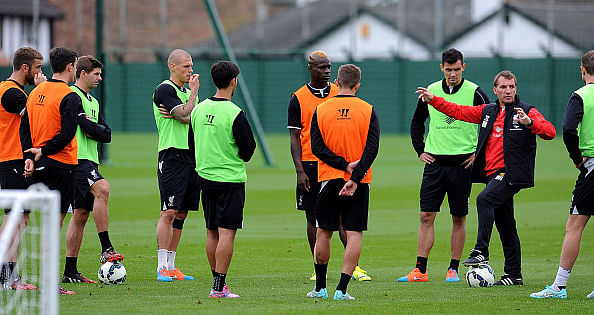
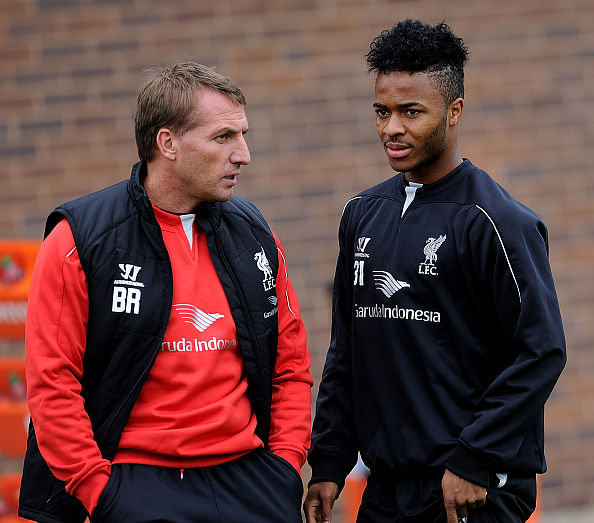
Brendan Rodgers talks to his players during a training session at Liverpool’s Melwood Training Ground
A common product of delving deep into clubs’ early season forms is the inference on which of them are seemingly in ‘crisis’ mode and which ones are close to one. There are certain trademarks of these ‘crisis’ clubs such as going from title contenders last season to mid-table and below at present in the current season, losing a top player to a rival and being in the Barclays Premier League more often than not.
Liverpool right now are the subject of many such inquests that are absolutely convinced that last year’s runners-up are going to squarely fall flat this season and fail to match up to their levels from 2013-14.
Tuesday night against lower league opposition Middlesbrough, Liverpool played out a hugely thrilling and tense penalty shootout that lasted an eternity and finally finished when Albert Adomah missed his kick to give the Merseyside team a 14-13 victory. That shootout win came on the back of a humbling 3-1 defeat at Upton Park against Sam Allardyce’s West Ham United, their third defeat in their first five games of the new league season.
More than their performances, Brendan Rodgers’ main task this time around is to manage expectations that have been set thanks to the team’s showing last time around. Managing expectations
The truth is Liverpool are not at the level where they can be regular title-contenders yet, on par with Chelsea and Manchester City. They were very, very good last season and were rightfully amongst the top two teams in England’s top division. Brendan Rodgers has a proven record of bringing about regular improvement in his teams, but last season was just a glorious coming together of all the good work, one that we may not see again. A number of things went right for them with regards to injuries, player performances and the lack of European football, especially with regards to the comparatively thin squad they had last term.
So taking that as the base, it’s easy to feel disappointed and throw brickbats at them for their showing so far. But it’s never easy to repeat success (yes, success does not necessarily mean winning trophies), even without the kind of change that Liverpool have gone through. And there is precedence to it; just think back to their superb 2008-09 campaign where they were top of the table for 9 weeks and kept up the chase on eventual champions Manchester United right until the end.
Besides the fact that Liverpool were involved in the UEFA Champions League that season, there were many parallels between that season and the one from last year. Then too they had a lethal striker who struck up a beautiful partnership with the midfield and Steven Gerrard had a fantastic season. The very next season?
They finished 7th with one of their key players, Xabi Alonso, having left for Real Madrid in the summer. So history shows us that it’s not easy to do repeats and three-peats which is why the efforts of Chelsea, Manchester United and Arsenal in the past decade were so admirable.
However, that said their fans and fans of the league are not going to be so forgiving for the expectations have been set now and that’s an added pressure that both Rodgers and his side have to deal with. Errors that may have been let off last season may be received with much more admonishment, and we’re already seeing it. Managing the loss of Luis Suarez
Kolo Toure seemed ever determined to get as much playing time as possible and did his best to give away a clumsy penalty in the dying minutes of regulation that pushed the aforementioned League Cup game against Middlesbrough into extra time. That pretty much sums up their defensive nightmares so far. Their defenders have more often than not been lost for position and were made to look good only by Tottenham Hotspur; that tells you something about where the London club are at the moment.
But defensive struggles aside, their attack has failed to kick into gear. Yes, that high-octane attack which scored just one goal lesser (101) than champions City last season and which could dismantle any side with ease when in rhythm. That forward line of theirs was one of the best on display amongst all 20 top flight teams and they were a thing of beauty when in full flow.
Yes, Luis Suarez has left for Barcelona and Liverpool are finding out exactly what Tottenham went through last season after Gareth Bale headed to Spain. It doesn’t matter how many quality players you bring in to replace that one big fish, they’re going to need time to settle and subsequently the team is going to go through a trough in that phase. To add, there’s the element of familiarity now with how Rodgers’ side are going to play which leaves teams better prepared from last time.
Suarez had a huge role in how well both Sturridge and Sterling played last season
One particular aspect that will be of great interest as the season progresses is how Rodgers assimilates Mario Balotelli into the first-team (if at all) along with Daniel Sturridge and youngling Raheem Sterling. Last year, Rodgers had at his disposal one of the most fluid frontlines in the league with the excellent Phillipe Coutinho behind. It was a frontline that was full of runners and players who liked swapping the role of scorer and provider regularly, especially Suarez, who in the second striker’s role amplified Sturridge.
Amongst those three, Sterling and Suarez were most of the time never hesitant to pass, while Sturridge every so often would pull the trigger unnecessarily instead of moving the ball on. It didn’t affect them too badly because two of the front three were playing to plan and plus Sturridge played the furthest up field, so he could be allowed the indiscretions.
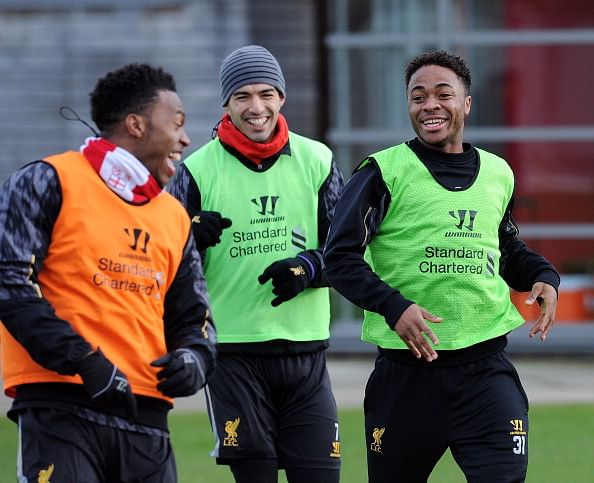
Now with Balotelli, that makes two people not always looking to pass and that’s a worry. Also, the Italian isn’t the most hard-working forward around and needs good service; a trait that’s come through while playing for his national side and City formerly. This puts the impetus on Sterling who suddenly is the next big thing for England (lost count of how many such ‘things’ have come and gone in the last decade) and supposedly THE man at Liverpool too. I think we’re conveniently forgetting that he is just 19 years old; the guy is a serious candidate for a quick burnout at this rate. Managing Raheem Sterling
There are increased demands now on Sterling for both England and Liverpool
And that’s the final part of what Rodgers is up against this season. Sterling may be the golden boy of Liverpool and England right now, but many such promising youngsters in the land of hype, England, have tapered spectacularly after having won selection for the Three Lions. He needs to abstain from putting all the pressure of chance creation on Sterling if things get rough and needs to stick with his philosophy. He also needs to manage the youngster’s minutes with his side likely to be involved in European competition right through to ensure that fitness concerns don’t overreach and cause a downturn in his performances on the field.
The other task he has is to keep Sterling grounded; such sudden elevation can sometimes get in the way of good young players making it great. He is a fantastic player and it is disheartening to see when players of his ilk don’t come through on their enormous potential.
Burnout and overconfidence apart, other teams will soon start sniffing around if he continues to grow at his current rate (There are rumours already about Real Madrid’s interest, no surprise!). Warding off their advances and keeping his charge focused on the here and now is going to be integral.
That’s the combination of issues that Rodgers has on his hands at the moment as he looks to right the course of the Liverpudian ship that has hit one too many icebergs already this early in the season. He is one of the best young managers around and history suggests that he will eventually get it right, but even if he does he may not be able to match that second-place finish. That’s the reality that we should be ready to contend with.
However, if he does get it right, what he will be doing is setting the club up for a more consistent run at the top of the table and a scenario where it would be tough to keep them out of the title talk at the beginning of every season. A scenario where Liverpool would be better prepped to manage expectations.
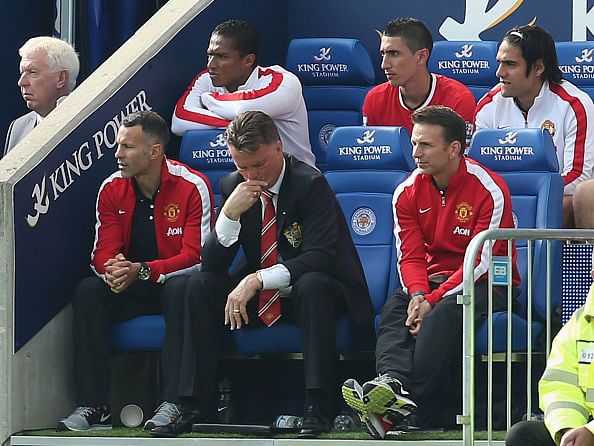
It was a chastening defeat for Louis van Gaal and Manchester United at the King Power Stadium against Leicester City on Sunday. The rather swift reversal of fortunes that saw United go from being on the right end of a 3-1 score line to the wrong end of a 5-3 verdict in the space of about 20 minutes left van Gaal at a loss for words at the conclusion.
Flummoxed was the Dutchman for he could not quite believe what had just transpired and how a promising evening had turned into one so sour. In an honest admission, he slammed his players for the 60-minute showing that they put up without diving into criticism of some of the refereeing decisions that did indeed cost his side.
Leicester reinforced their reputation as the ‘never say die’ team of the Premier League after yet another stirring comeback that brought a party-like atmosphere to the stadium during the game while United showed that there is still much work to be done at the once dominant club.
Much of the talk as expected swirled around the porous nature of United’s defence and top-heaviness and not without reason too. But, in their rather calamitous capitulation, a few deeper problems were revealed. United’s stars fail to ride through the tough times
In their first match last week against Queens Park Rangers (QPR) at home, their big-money line-up rode roughshod over Harry Redknapp’s visiting side. They were barely troubled for much of the match and in that luxury played with the freedom of a child with nothing in the world to worry about.
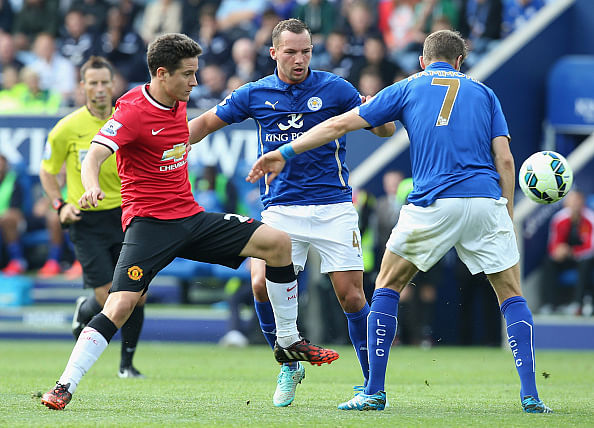
Following on from where they left off, the starry troupe sliced and diced its way to a quick 2-0 lead on Sunday before finding resistance forthcoming. Leicester reduced the arrears immediately following the restart, but it was still expected that United would have too much for the newly promoted side come the second half. And when United scored their third through Ander Herrera’s beautiful back-heel flick, the result looked a certainty.
Except that United hadn’t witnessed the last bit of resistance yet from the Foxes. They fought back again and caused their guests much unease just like after they’d conceded their first goal. A few seconds later, Leicester were back on level pegging and suddenly most of United’s outfield players resembled headless chickens. This really was the first big challenge for this new United side and they failed to show any taste for a fight, limping out in the end.
Ander Herrera and the midfield gave away possession needlessly too many times in the second half
Almost all of United’s new signings have cost big money, but not all of them are battle-hardened professionals with plenty of experience, especially Premier League experience. It’s a problem that Tottenham Hotspur continuously face with their numerous imports every season and something that Liverpool are encountering this season. Sometimes you have to get stuck in and grind out results; the current United lot, while all good individual players, failed to show that resolve.
Marcos Rojo got caught out numerous times while playing a misplaced forward pass instead of playing to the situation and Ander Herrera lost possession similarly quite a few times. Daley Blind tried to control proceedings but he was overburdened with the failings of the backline which left him with too many open spaces to cover.
Tyler Blackett is just learning the ropes with his call up to the first-team and it’s been a tough learning curve for him, but Chris Smalling even after considerable time at the club still does not know composure when dealing with a situation and added to the woes of his young colleague. Rafael has shown glimpses of his attacking brilliance and what he adds to the team going forward since his return. What he’s also shown is that his ability to shoot himself and his team in the foot is still very much intact.
United are not the first team to suddenly lose the plot nor will they be the last. However, not all teams cave in quite so spectacularly, sides have managed to stem the rot with strong leadership. And therein lies United’s other major problem this season. Wayne Rooney fails to deliver as captain
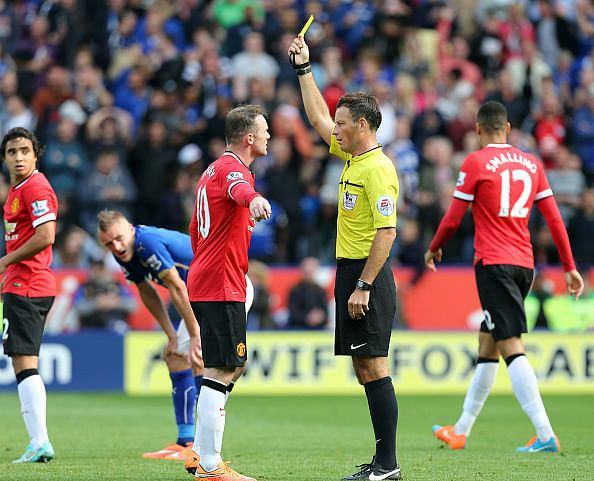
Wayne Rooney was petulant and failed to lift his side
On Sunday, Rooney had the perfect opportunity to show that van Gaal was right to make him captain by attempting to salvage his ship from wreckage. His crew were losing the plot in the face of wave after wave of Leicester pressure and it was as fine a time as any to step up and take charge of the situation. And he failed.
Oh Rooney was not passive; he was anything but. He was in referee Mark Clattenberg’s face after he awarded the penalty that led to Leicester’s second goal. He was constantly barking away at Clattenberg thereafter every time a decision did not go his team’s way. He was so irate and literally had steam spewing out of his ears after Blackett’s sending off as he ganged up on the referee once again with his teammates.
And after conceding the lead, he had a go at each of his mates that were around him, admonishing them with some choice words, but not really in a way that one would rally the troops. In between those moments he tried to shoot from way outside the box with defenders in his way, saw his passing fall off spectacularly, and had a go at trying to get himself sent off by making some silly lunging tackles. To put it simply, he lost his head.
In the past, United have had strong captains in Ryan Giggs, Patrice Evra, Nemanja Vidic, Rio Ferdinand and Edwin van der Sar to turn to for inspiration. They were all feisty characters, but they did not let the heat of the moment consume them, and more often than not managed to get the team regrouped, focused and led them out of tough situations. Route to consistency
Since United’s disastrous previous season, much of the attention has centred on the rebuilding of the squad and getting quality players to don the famous red shirt once again. But since Alex Ferguson’s departure, it is the confidence and morale of the team that has taken a severe beating and needs repairing the most. Skill can be purchased in the market, but they need to be backed up by a strong core and definitive leadership.
United’s players have the skill, but they need to learn to have the gumption for a fight. Rooney needs to leave his impish ways behind, not just because he is a senior player on the team, but because he is the captain for crying out loud. And van Gaal has to find a way to bed in some mental fortitude along with all of the tactical and strategic nous that he has been drip-feeding his new team since the start of the season. Only then can the league expect to see a consistently good Manchester United.
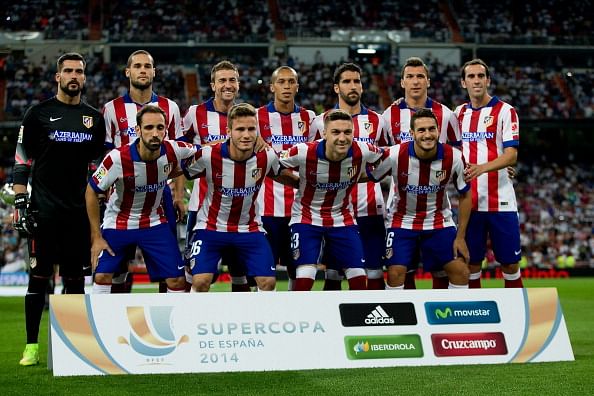
Atletico Madrid line up in the 1st leg of the Super Copa against Real Madrid at the Santiago Bernabeu
It’s always of great interest to follow the story of an underdog, what with their tales of courage and bravado in going up against stronger foes and being able to hold their own. The story of the underdog in sport occupies a special place, for it lends an added element of drama to their success.
Now Atletico Madrid are no longer underdogs, but they did start off as such a couple of years ago, before slowly but surely climbing the ladder and scaling the peak of the Spanish La Liga last year in a most memorable season. So there’s always that one question in the back of your head – can they do it again?
That’s a question that can never really be answered on the first day of the season, barring a feeble affirmative that merely tends to acknowledge the fact that, yes, they are contenders. But with all the goings on in the post-season primarily revolving around the departures of some of their star names, Atletico’s 2014-15 campaign holds much allure to see how they go. Atletico keep Real’s stars grounded
They finished their campaign last season in action against city rivals Real Madrid in the final of the UEFA Champions League, where they were usurped by their more famous opponents as they made their way to capturing the holy ‘La Decima’. Atleti began this season against the same opponents two nights ago, this time in the 1st leg of the Spanish Super Copa at the Santiago Bernabeu, and this one too finished with the exact same score line after 90 minutes as was the case that night in Lisbon – 1-1.
In finishing with a draw and an important away goal to boot, Diego Simeone’s side showed much of the same characteristics that defined their campaign the whole of last season – grit, guts and gumption. They contained Real for much of the game and despite conceding a late goal that threatened to undo all of the good work put in, managed to hit back quickly before time expired to set up a very interesting second leg at the Vicente Calderon tomorrow night. The New Boys Los Colchoneros did not have the marauding presence of Diego Costa up front to lead the attack, nor did they have the evergreen David Villa, who confounded critics and naysayers last season who claimed that the former Barcelona hitman was past his prime. Who they did field was their €22 million summer signing, Croatian international Mario Mandzukic.
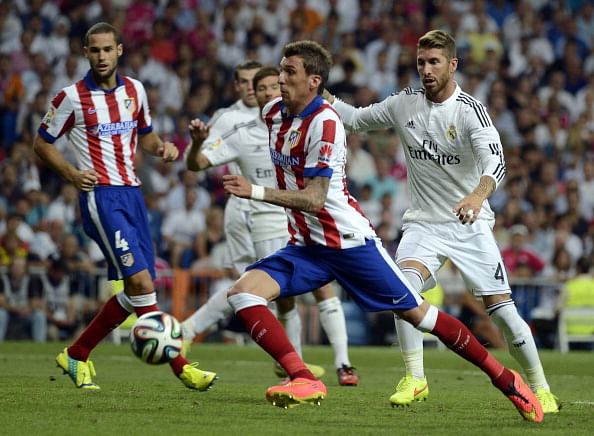
Mario Mandzukic did his best at harrying Sergio Ramos and Pepe through the game
Mandzukic is not even close to being the UWM (Ultimate Windup Merchant) that Diego Costa is, but he ticks the boxes in all other departments as a physical front man perfectly suited to Simeone’s needs. He’s aggressive and helps with the high press, putting pressure on the centre-backs and constantly being a thorn in their flesh. He did that to great effect on Tuesday night, managing to unsettle Pepe and Sergio Ramos in the heart of Real’s defence.
As seen from his spells at Bayern Munich and Wolfsburg before, Mandzukic never ceases to run, plus with his expertise in heading the ball and at set pieces, he seems a perfect fit in the system. And if anything, Mandzukic is a proven performer who has been consistently delivering the goods the last few seasons for both club and country; Costa had one magnificent season, but can he deliver those on a regular basis? We will find out in a few seasons.
We did get to see the other striker too in the closing stages of the game – Mexican Raul Jimenez, another tall striker. Jimenez looks to be a good replacement for Adrian, having scored well for Club America in the Mexican league the last two years, and has been picked up while on an upward curve. He did look to play more as a second striker though, bringing the others into play and exchanging places with them.
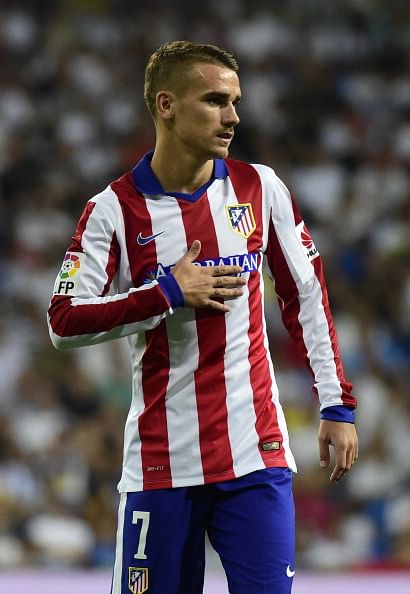
Antoine Griezmann had a good second half outing
Atletico’s most expensive summer signing, Antoine Griezmann, was also introduced on 57 minutes. The €30 million man, who had five impressive seasons at Real Sociedad, looked very impressive playing in a role akin tothe one David Silva plays for Manchester City. With his deft touch and eye for a pass, Atletico enjoyed a good spell of pressure post his introduction, and looked more dangerous going forward. It will be very interesting to see what Atletico can serve up when they have Arda Turan back, provided he’s still around at the end of the transfer window. The core remains strong
New players are like new seasonings that you’ve picked up at the supermarket because your old ones are exhausted. So while it is natural that attention seemingly goes to the new recruits, much of what Atletico will achieve this term depends on their core, one that they have kept reasonably intact, with Costa and Filipe Luis the only departures so far.
Atletico’s strong core continues to be the foundation of the team
For two seasons running now, Atletico have had the best defensive record, fuelled primarily by how well organized they are and possibly having the best back four amongst all teams. Luis has left, but the strong resolute trio of Diego Godin, Joao Miranda and Juanfran are very much intact and provided another excellent defensive display against European champions Real, managing to keep their offensive weapons quiet. And that defence has been the bedrock of Atletico’s means to success upon which they have built on these past few years; so as long as that end is as fit and firing as ever, they should continue to do well.
The other combative members of the core – midfielders Koke, Raul Garcia and Gabi – were all in attendance too and in their customary workmanlike approach augmented the efforts of their defence really well. Garcia is just a phenomenal bloke for he is such a favourite of Simeone, someone who works his socks off for the team when not in possession and can play as the supporting striker when they need some impetus up front.
It was his goal that drew parity as he did what he does best, be in the right place to put away a Koke corner after the Real defence failed to clear it leaving him with just a clueless and hapless Iker Casillas to beat. He’s been in good form, having scored in the friendlies against Wolfsburg and Cadiz as well, and the goal at the Bernabeu was his fourth in three games in the space of 10 days.
Koke dispossesses Gareth Bale
Koke continues to impress. His delivery from set pieces is very, very underrated and is a vital ingredient of how the team is set up as they look to take advantage of set pieces to get into scoring positions. The 22-year-old was the subject of widespread speculation even before last season could finish, with many claiming that he would be off along with the likes of Costa to a ‘bigger club’. But as he announced over the summer, Atletico is where his heart is, and he would like nothing more than to help this team get better and win more trophies.
An Atletico product through and through, Gabi leading by example is like the master conductor who brings it all together on the pitch, and he led his team as always with a verve and gusto that far outstripped that of his counterpart, Iker Casillas. Importantly Atletico’s midfield managed to keep tabs on Real’s engine room of Luka Modric, Xabi Alonso and Toni Kroos. A season of much promise for many reasons
The second leg of the Spanish Super Copa is tomorrow night at the Calderon. A year ago, Atletico lost the Cup to Barcelona despite not being beaten in either leg, thanks to away goals. They wouldn’t mind winning the same way this year.
As far as performances and integrating new units into the system go, Atletico seem prepared, you wouldn’t have expected any less from a side marshalled by a hard taskmaster like Simeone. There’s obviously no way that they are at 100%, but they’ve got the elements that served them well in the past up and running and chugging along nicely. They’ve done well in pre-season and came into the Super Copa clash unbeaten, always a healthy sign.
It may be surprising, and is possibly a fact that has been understated and looked over, but Atletico have spent €99 million on players this summer (yes, that is indeed true)! They have not come even close to that figure in previous seasons with last season’s figure being roughly 30% of that at €29 million!
It goes to show that Atletico are interested in maintaining their position at the top of the Spanish game and are not in it to be a short fuse. They have bought well in terms of players who would fit their style of play with no doubt an eye on how well endowed they are in certain hormonal capacities (refer Simeone’s famous statement at the end of last season).
Atletico still look to have a lot of fight left in them
They’ve been rebuking critics for some time now; last year it was argued that Champions League football would be a distraction and would hence strain a thin side thereby affecting league performances. But they won the league and made the finals of the Champions League, coming within a minute of doing the double.
It was argued even before last season came to a close that Atletico would suffer this term with the potential exits of their top men. While the losses have been sizeable, they haven’t been paralyzing. And from what we saw in the first game, the side bears a settled look about it.
More than anything else, this season promises to be a season of excitement. For we will get to see if Atletico can get back to that high level after a winning season, maintaining that level of intensity and effort. And also as an interesting sub-plot, we will get to see how Simeone goes as a manager and how his journey unfurls from here on in as one of the top managers in the game.
Until now, Atletico were the hunters, and Simeone found it very easy to train his pack and get them motivated for the challenge. Now, they are the hunted, and how they respond to this challenge should make for compelling viewing.
There’s a line on the front of their jerseys that says “Land of Fire”; that of course is the tagline for their chief shirt sponsors, the country of Azerbaijan, but it is something that also so aptly defines what this club has come to represent under Simeone’s stewardship. There is still much fire and bite left in this dog and that’s why its bark should still be heard come the end of season.