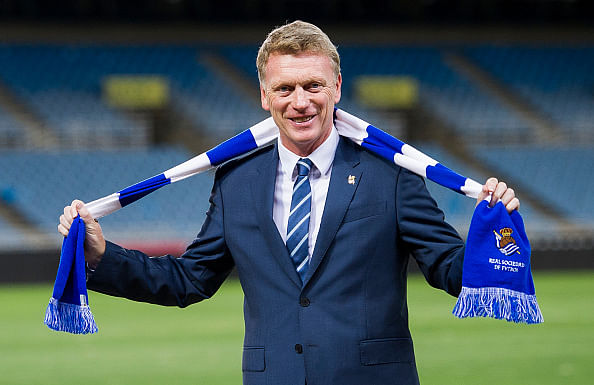
David Moyes with the club scarf of Real Sociedad during his unveiling as manager
Redemption is one of those mesmerising story arcs that draws viewers into the travails of an embattled protagonist. From being given the cold shoulder and left out to dry in public, left to fend off the relentless stream of admonishment, to making it back to the top and into the warmer confines of a secure job, it is a story that never gets old and one that the masses just love to see. None truer than in sport. “We were lucky in that a name such as David’s, one that had previously been out of bounds for our club, ended up joining us and I think he has brought some good things with him.” The ‘David’ in question isn’t the biblical one who ended up slaying the giant Philistine warrior Goliath, but rather David Moyes who got chewed out and left in managerial purgatory by a goliath of a club in Manchester, England after an infamous 10 months at its helm. The quote above is from Loren, the sporting director of Real Sociedad, Moyes’ new club, in a recent interview with Spanish newspaper Marca.
Here’s more of what Loren had to say: “He has made the team more solid, more consistent, and you can see that with what he has done so far. I think we are seeing a team that is getting better all the time.” What a difference a year can make. From being subjected to signs of ‘Moyes Out’ at every corner, including the one in the sky in a seven-foot high lettering at the tail of an airplane, ol’ ‘Moyseh’ is currently wallowing in the fresh Basque country air and the praises coming his way for his work since taking over as manager of the club in early November.
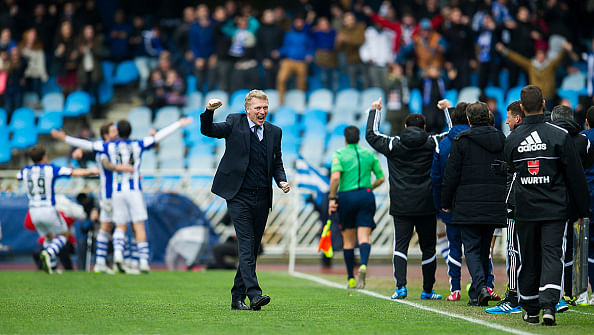
David Moyes (centre) celebrates a goal scored by his Sociedad team
The smiles are back for Moyes, back in a job as manager of a football club, in a top European league. Not only is he back in a job, but he’s got back some of what he’d lost in copious amounts through much of the 2013-14 season - respect. The unmitigated disaster that was Moyes’ time in charge of Manchester United in 2013-14 led to him being shown the door even before the season could conclude, with Ryan Giggs taking over for the four remaining league games. United finished seventh that season, missing out on the UEFA Champions League and Europa League spots. It was for the first time since 1995 when Manchester United were not participating in the Champions League and had finished outside the top three for the first time ever in the Premier League history. At Sociedad, since taking over, he’s reeled the club in from a precariously positioned nineteenth to 10 places higher at ninth with wins over Barcelona and Sevilla to show for. This after being consigned much of the blame (deserved or otherwise) for having torn asunder two decades of dominance instituted at Old Trafford. Now going back about his business in his own silent, subtle way, he is far away from the position where his managerial worthiness would be questioned. He is also away from the glaring lights and blaring voices that surround the biggest of clubs, and instead is in a place he’s been comfortable with throughout his managerial career. Which brings us to asking whether Moyes is destined for success, but only at a mid-table club?
Solidity, organization, discipline and a siege mentality
David Moyes (right) is congratulated by Barcelona’s Lionel Messi after Sociedad beat them 1-0
It is, of course, not in any way a belittling of his standing as a coach, but purely a theory that Moyes’ abilities best mesh with clubs in certain situations, such as the likes of Everton and Sociedad. Clubs that aren’t small in absolute terms, but from a relative standpoint; clubs that are clearly out of the title picture yet have a job at hand to finish just below the top four with constraints on resources and funds. When you think of Moyes, a few words automatically run through your head – solid, organized, emphasis on discipline and defence – traits that all his sides, barring United, you could associate with. A David Moyes team is generally set up to be hard to beat; that’s primary. To draw a parallel to some of the most famous British battles in history, you can just picture Moyes being the duke who oversaw a backs-to-the-wall job in defending an enemy siege against a fortress or the baron, who with a vastly outnumbered army, did a brilliant job of holding off the opposition’s offensive until reinforcements arrived.
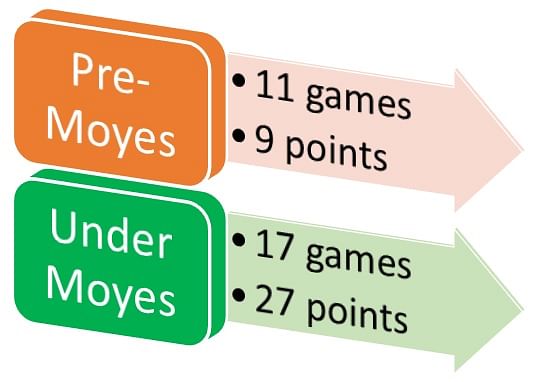
Real Sociedad’s record this season pre and post-Moyes
Sociedad’s win against Barcelona (1-0) was done by being compact, stifling Luis Enrique’s side of space and cutting off passing channels. In the meantime, they knocked in a goal and were content to soak up pressure. It isn’t like Moyes is offensively challenged, but when put in charge of bigger clubs, where the mantra is, more often than not, to take the attack to the opposition from the start and never back down, especially against the lower sides, he is bound to struggle. That brand of flowing, attacking football hasn’t been something that he’d shown plenty of earlier and that clearly affected his reign in Manchester. Making matters worse was the fact that the man who’d just departed had set in motion a style of attacking play consistent for well over 15 years, and to break out of that mould was just too hard.
A steady, long-term guy
“The coach has said on numerous occasions that he is combining the work he is doing this season with a view to next year”, Loren also said about his manager. It’s something that Everton chairman Bill Kenwright mentioned time and time again about Moyes; that he was a long-term guy, one who liked to build teams slowly and gradually. At a bigger club like United, the pressure to deliver was so much more immediate, fuelled by the dominant success the club had enjoyed in the English game for much of two decades. He also had to be so much more active and quicker in his dealings in the transfer market. At the same time, the level of players being scouted was much higher than what he was used to at Everton.

David Moyes’ managerial record at his four clubs
When the quality of players being scouted differs, the parameters that one looks out for while grading these players also need to change. It was here that Moyes failed to make that adjustment and found himself backed into a corner, especially with the United side he inherited needing a few tweaks. An accompanying aspect with the added attention and pressure of being at a big club is that your methods and ways get dissected, examined, re-examined almost on a daily basis and there’s no shortage of people telling you how to do your job. Just ask Carlo Ancelotti, who can’t buy a break despite having delivered the La Decima last season and a quite brilliant first half of the season. At Sociedad, a club already in the doldrums when he arrived, he’s had the time required to get his philosophy and ideas going, away from the spotlight and the constant critique.
Where there’s success there are egos
Many of Manchester United’s senior players such as Robin van Persie (far left) and Rio Ferdinand (far right) were said to be at loggerheads with Moyes during his tenure
The average elite league footballer today has an ego. Players who’ve won silverware have bigger ones. Players who’ve had titles equivalent to the number of years in some players’ careers have egos the size of hot air balloons. Not just do they believe that they’re better than what they actually are, some even believe they’re the best in the world, no matter what – case in point, Joey Barton. A common sighting in the papers through Moyes’ United reign was on the nature of his relationships with his senior players. Every so often you would read about either Rio Ferdinand or Robin van Persie or Ryan Giggs or _____ (fill blank with any other senior United figure of the time) not seeing eye-to-eye with the manager and reportedly looking to undermine his authority. While a lot of it was rumour mongering, it wouldn’t exactly be a surprise if indeed somebody confirmed it to be true. Star players are like that and Moyes would have experienced a huge difference in the way he needed to manage a player. Carlos Vela, Xabi Prieto and Inigo Martinez are players more suited to Moyes’ personnel ways, like Tim Cahill, Leon Osman and Phil Jagielka and unlike van Persie, Giggs and Ferdinand.
So can Moyes never succeed at a big club?
For now he would definitely be an odd fit at a big club. For the reasons discussed above and the added pressure that comes with the big job, it would serve to be a mismatch. That said, there’s time for him to grow. He’s so far been a mid-table manager who’s good, but not great. Unlike say, a Brendan Rodgers, whose teams have showed consistent attacking wherewithal and an ability to cause an upset or two, Moyes’ teams regularly had trouble beating the top sides. Even in their best seasons, Everton inevitably came up short against the big four of Arsenal, Chelsea, Liverpool and Manchester United.
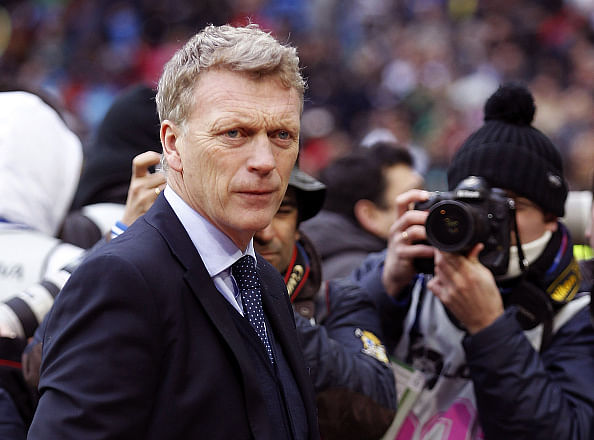
Will Moyes make it to the big league and be successful?
His call-up to Old Trafford came a little too soon for his own good, it was too fast-tracked. As such the sudden change in environment made it unforgiving, hostile even. A more gradual climb up the ladder with stints at clubs like Sevilla or Villareal in Spain or Tottenham Hotspur in England up front would prepare him better for any future job at the top of the tree as well as provide him time to expand his arsenal in the attacking side of the game. For now though, Moyes remains the perfect hand-in-glove fit for teams such as Real Sociedad and Everton, teams that are big in absolute terms, but where success year-on-year is measured relatively.
Michael Carrick’s return has been a huge boost for Manchester United
Manchester United were 10th with 13 points after 10 games in the first week of November, having just lost 1-0 away at champions Manchester City. The doubts were beginning to creep in about the big-name manager who was appointed in the summer as well as the big-money signings that had joined the squad. Much the same as last year, but with a different manager – that seemed to be the feeling amongst sections of fans. Today, the Red Devils have climbed back into UEFA Champions League reckoning, sitting in third place having put together a run of six consecutive victories. While they have not been extremely dominant, there has been an efficiency about United that has seen them take the chances offered and make the most of some good fortune along the way. The manager and the players themselves have been keen to point that out during the run. But while David de Gea’s saves, Robin van Persie’s return to form and the good showings of Ashley Young and Antonio Valencia as wingbacks dominate discussions, the return of another key element of this United side has been overlooked.
“Michael is one of those unassuming, quiet guys, who just goes about his job and never gives the ball away. But his range of passing can win you games. He has great potential and is a real Manchester United player.” – Sir Alex Ferguson
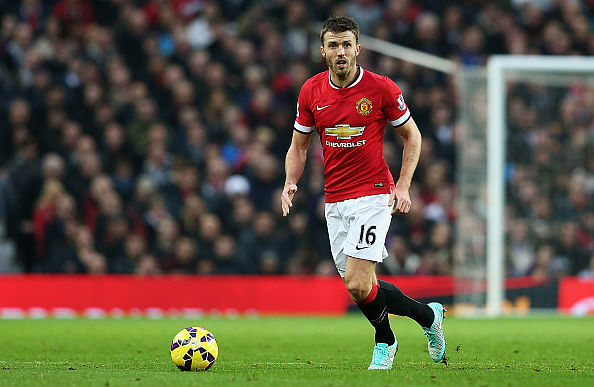
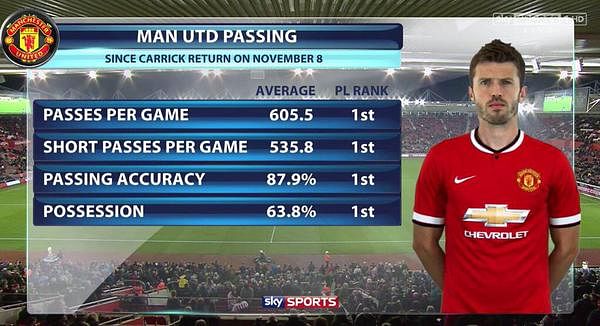
United’s win streak has coincided with Michael Carrick’s return to the starting line-up. The English midfielder made his way into the starting 11 against Crystal Palace at home on November 8 after recovering from injury, and his influence has been subtly stirring if not loudly obvious. You may not see him running himself into the ground, hit stinging shots on goal or put in crunching tackles that send the pulse racing. But his intelligence and efficient operation in United’s midfield and defence have laid the foundation for the team’s improved showing of late. You might say that they still look very susceptible to conceding goals every time they take the field. That’s true, they are still very much a work in progress, but Carrick’s return has brought about a measure of control to United’s play and possession, something that Louis van Gaal absolutely needs to get his project off the ground. In midfield In both positions that he’s played so far – holding midfielder and central defender – Carrick has excelled and played a key role in delivering results for his side. His reading of the game is right up there with the best and the way he nips in to intercept the ball has been a feature in United’s play during this winning run. Van Gaal brought in Daley Blind from Ajax to play in that role and while the Dutchman didn’t perform badly, Carrick has one-upped him so far.
Carrick’s stats since his return from injury
Blind would constantly patrol the area in front of the back four looking to protect his defenders, and he did an admirable job. The team, however, would often lose shape every time he vacated his spot to go help his teammates out. Carrick on the other hand is protecting his defenders while keeping the team’s shape intact with his economic movement and expert anticipation. Moreover, his vastly larger passing range allows him to play with commensurate ease with the ball at his feet even under pressure. We got glimpses of that this past weekend in United’s win over Liverpool. There were numerous occasions when Carrick was put under pressure by the Liverpool players either while retrieving an under-hit pass or playing it out of defence, yet he managed to make the right decisions and was ice-cool throughout the game. In defence The passing, anticipation and interceptions have been vital ingredients to his exemplary performance in the heart of defence as well. Crucially though, Carrick ensures Van Gaal’s side can now play their way out from the back, something that the Dutchman has been keen on since he arrived. We saw that at the World Cup too with Netherlands; amongst Van Gaal’s back three of Ron Vlaar, Bruno Martins Indi and Stefan De Vrij, Vlaar was the enforcer, while De Vrij and Martins Indi in particular would look for the out-ball. He has Chris Smalling in Vlaar’s role now, a no-nonsense defender, and Carrick does the Martins Indi work. The sense of calm that Carrick has brought in is something that was missing earlier when United used to almost play in a state of chaos, the stunning 3-5 reversal away at Leicester being a prime example. The side was overloaded with a whole host of gifted attacking players in Wayne Rooney, Van Persie, Angel di Maria and Ander Herrera who were a little too forward-looking all the time, and their matches often resembled basketball games – up one end then down the other. Daley Blind was left with too many holes to plug by himself, and that’s the primary reason why United were opened up so easily. Against Southampton last Monday, Van Gaal decided to take out young Paddy McNair 42 minutes into the match as he was being given a torrid time, and chose to push Carrick into his role instead of bringing in another centre-back. That allowed United to play out from the back with Carrick pinging balls to the midfield and forwards. With Carrick playing at the back, the defence no longer blindly hacks balls away at the first sign of trouble; there’s a sense of assuredness about them now. Fluidity in play To underestimate Carrick’s influence and dismiss his contributions as passé would be the equivalent of dissing Xavi and claiming that he played just an infinitesimal part in the great Barcelona team under Pep Guardiola. Carrick is a guy who has been showered with praise by two of the best midfielders of the last decade in Xavi and United’s very own Paul Scholes. He is one of those players who is highly spoken of amongst his teammates at Old Trafford, even if the fans consider him nothing but a mediocre spoke in this team. He creates time for himself on the ball and makes retention of the football a top priority, even if it involves a square pass to the keeper. We all saw how leaky United’s ‘run and gun’ style early on proved. Efficiency and intelligence are underrated in today’s football. A cerebral player like Carrick going about his work with a sense of languidness may be construed as showing little effort to some, but in truth his composed nature is a result of him having a high football IQ and being able to mentally see a play far ahead of his peers. He is sure to hold his place down even when Blind returns, as Manchester United are going to need his high-level performances throughout the rest of the season to sustain their campaign for a top-four finish. Carrick is the glue to holding it together for the United side at the moment.
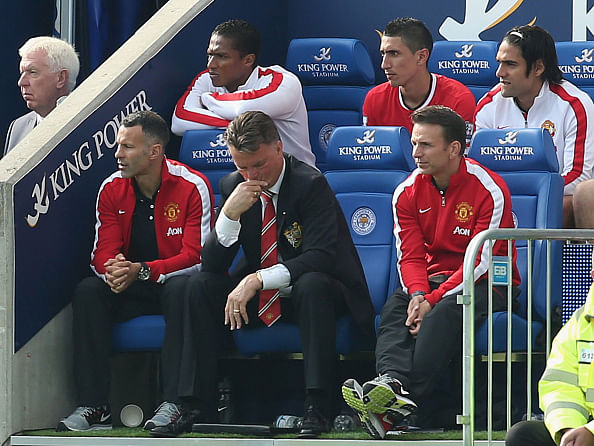
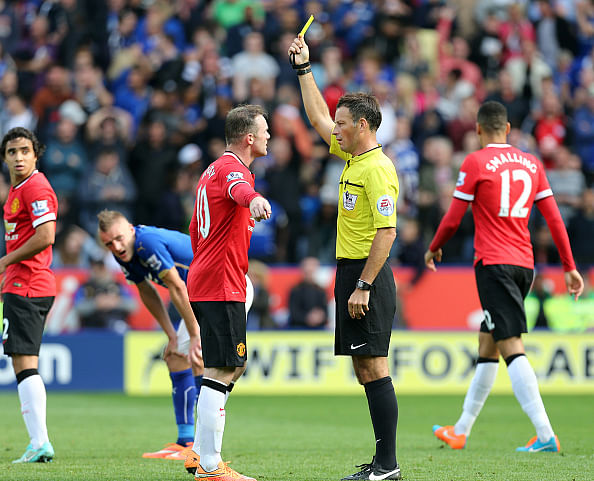
It was a chastening defeat for Louis van Gaal and Manchester United at the King Power Stadium against Leicester City on Sunday. The rather swift reversal of fortunes that saw United go from being on the right end of a 3-1 score line to the wrong end of a 5-3 verdict in the space of about 20 minutes left van Gaal at a loss for words at the conclusion.
Flummoxed was the Dutchman for he could not quite believe what had just transpired and how a promising evening had turned into one so sour. In an honest admission, he slammed his players for the 60-minute showing that they put up without diving into criticism of some of the refereeing decisions that did indeed cost his side.
Leicester reinforced their reputation as the ‘never say die’ team of the Premier League after yet another stirring comeback that brought a party-like atmosphere to the stadium during the game while United showed that there is still much work to be done at the once dominant club.
Much of the talk as expected swirled around the porous nature of United’s defence and top-heaviness and not without reason too. But, in their rather calamitous capitulation, a few deeper problems were revealed. United’s stars fail to ride through the tough times
In their first match last week against Queens Park Rangers (QPR) at home, their big-money line-up rode roughshod over Harry Redknapp’s visiting side. They were barely troubled for much of the match and in that luxury played with the freedom of a child with nothing in the world to worry about.
Following on from where they left off, the starry troupe sliced and diced its way to a quick 2-0 lead on Sunday before finding resistance forthcoming. Leicester reduced the arrears immediately following the restart, but it was still expected that United would have too much for the newly promoted side come the second half. And when United scored their third through Ander Herrera’s beautiful back-heel flick, the result looked a certainty.
Except that United hadn’t witnessed the last bit of resistance yet from the Foxes. They fought back again and caused their guests much unease just like after they’d conceded their first goal. A few seconds later, Leicester were back on level pegging and suddenly most of United’s outfield players resembled headless chickens. This really was the first big challenge for this new United side and they failed to show any taste for a fight, limping out in the end.
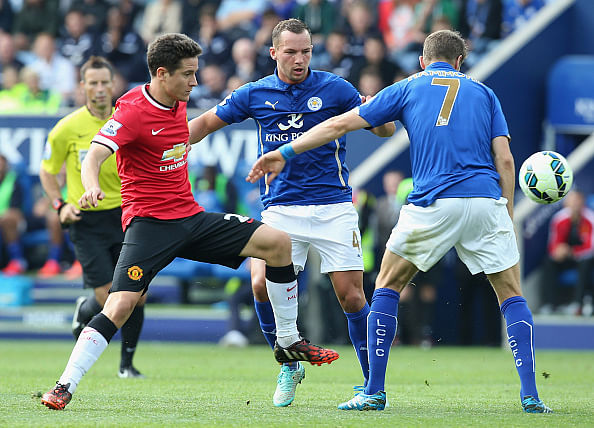
Ander Herrera and the midfield gave away possession needlessly too many times in the second half
Almost all of United’s new signings have cost big money, but not all of them are battle-hardened professionals with plenty of experience, especially Premier League experience. It’s a problem that Tottenham Hotspur continuously face with their numerous imports every season and something that Liverpool are encountering this season. Sometimes you have to get stuck in and grind out results; the current United lot, while all good individual players, failed to show that resolve.
Marcos Rojo got caught out numerous times while playing a misplaced forward pass instead of playing to the situation and Ander Herrera lost possession similarly quite a few times. Daley Blind tried to control proceedings but he was overburdened with the failings of the backline which left him with too many open spaces to cover.
Tyler Blackett is just learning the ropes with his call up to the first-team and it’s been a tough learning curve for him, but Chris Smalling even after considerable time at the club still does not know composure when dealing with a situation and added to the woes of his young colleague. Rafael has shown glimpses of his attacking brilliance and what he adds to the team going forward since his return. What he’s also shown is that his ability to shoot himself and his team in the foot is still very much intact.
United are not the first team to suddenly lose the plot nor will they be the last. However, not all teams cave in quite so spectacularly, sides have managed to stem the rot with strong leadership. And therein lies United’s other major problem this season. Wayne Rooney fails to deliver as captain
Wayne Rooney was petulant and failed to lift his side
On Sunday, Rooney had the perfect opportunity to show that van Gaal was right to make him captain by attempting to salvage his ship from wreckage. His crew were losing the plot in the face of wave after wave of Leicester pressure and it was as fine a time as any to step up and take charge of the situation. And he failed.
Oh Rooney was not passive; he was anything but. He was in referee Mark Clattenberg’s face after he awarded the penalty that led to Leicester’s second goal. He was constantly barking away at Clattenberg thereafter every time a decision did not go his team’s way. He was so irate and literally had steam spewing out of his ears after Blackett’s sending off as he ganged up on the referee once again with his teammates.
And after conceding the lead, he had a go at each of his mates that were around him, admonishing them with some choice words, but not really in a way that one would rally the troops. In between those moments he tried to shoot from way outside the box with defenders in his way, saw his passing fall off spectacularly, and had a go at trying to get himself sent off by making some silly lunging tackles. To put it simply, he lost his head.
In the past, United have had strong captains in Ryan Giggs, Patrice Evra, Nemanja Vidic, Rio Ferdinand and Edwin van der Sar to turn to for inspiration. They were all feisty characters, but they did not let the heat of the moment consume them, and more often than not managed to get the team regrouped, focused and led them out of tough situations. Route to consistency
Since United’s disastrous previous season, much of the attention has centred on the rebuilding of the squad and getting quality players to don the famous red shirt once again. But since Alex Ferguson’s departure, it is the confidence and morale of the team that has taken a severe beating and needs repairing the most. Skill can be purchased in the market, but they need to be backed up by a strong core and definitive leadership.
United’s players have the skill, but they need to learn to have the gumption for a fight. Rooney needs to leave his impish ways behind, not just because he is a senior player on the team, but because he is the captain for crying out loud. And van Gaal has to find a way to bed in some mental fortitude along with all of the tactical and strategic nous that he has been drip-feeding his new team since the start of the season. Only then can the league expect to see a consistently good Manchester United.
If there's one element of sport that has grown exponentially along with the global growth in demand for sports, it is sports analytics. Teams across various sports and countries look for the ultimate competitive edge and hence turn to analytics for it.
Sportstec is the world leader in providing exactly this sort of advantage to sporting teams. And at the helm of it all is New Zealand’s Philip Jackson.
Philip is the Managing Director and majority shareholder of Sportstec Limited, a global company delivering technologies (developed in-house) for the performance analysis market. The company has offices established in NZ, Australia, Malaysia, USA, Canada, France, Germany, India, South Africa, Argentina, Brazil and UK, at the same time establishing a distribution network in 22 countries around the world.
With over 9,000 clients worldwide, Philip has created the leading performance analysis company in the world.
Managing some key customer accounts for the Indian arm of Sportstec is Venugopal Rajagopalan, Manager-Sales & Training - Sportstec India.
Venu is responsible for business development and training at Sportstec India Pvt. Ltd. He is also responsible for helping high performance teams and coaches develop and enhance their sports performance. Being a sports enthusiast, he decided to chase his dreams and move into the sports domain where he could utilize not only his knowledge about sports and his analytical and writing skills, but also his business acumen.
We caught up with Philip and Venu for a brief interview:
Philip Jackson, Managing Director, Sportstec
How did the idea of Sportstec come about? Can you tell us a little bit about how the company was founded?
It came about in 1999 as a result of some work with the Otago University for their rugby program. So it started with that - our aim was to try and provide sports performance analysis for various sports - cricket, ice hockey, you name it - and we wanted to be the best in the world at it.
At the time, there wasn't a similar product in the market; there was one, but it was I think in Australia and restricted to the country. So we wanted to cater to a more global clientele.
So we started off in New Zealand where people are just absolute sports nuts. There is a major obsession with sport in the country and it worked well for us. What was the first product that you developed?
The first product we developed was for field hockey umpires in Australia. There were other products available, but they used to function on a more linear basis. Ours was the first non-linear offering and it helped improve the umpires' decision-making and communication with the players to a great degree. Sports is a field that has gradually evolved over the years with newer additions every decade. The advent of television has changed many things and there are increasingly more and more stats that the fans can see and process. But an often unseen part of the sport is the statistics that improve performance for the teams. How was this market when you entered (valuation and size) and how do you see it progressing?
I think from the time we started off, to what it is now, the industry has grown by a 10 factorial multiplier. The technology has become cheaper, meaning not the software that we provide, but the hardware necessary to use and run analytical software has come down. So that's something that has helped the industry grow.
Sports analytics is big; to give you a small example, initial research in America showed that the sports market there was 10 times larger than the automotive industry! Now that is some serious size. So that's the thing - there is huge demand for sports analytics right now in both established as well as emerging markets.
Stats can roughly be divided in two - you have your retail stats and your coaching stats. The retail stats are the ones that you guys see on television and the various websites. The coaching stats delve a little bit deeper into the elements that a coach wants to see, and that's the demand we cater to.
So yes, the scope is huge for that industry. What is the broad scope of operations of Sportstec?
Sportstec aims at providing top-level assistance basically and our vision is to be able to provide a learning tool. We want to help the coach be a better coach, help put a pilot through the paces with our pilot training, and similarly for the fire service and other industries. The company vision is about nurturing constant improvement in our clients. Which sporting domains do you currently cater the most to?
We have a huge list of clientele in domains like rugby (all major rugby playing nations), field hockey, basketball (28 teams out of the top 30 NBA teams), football (almost all European and English premier league teams) and also other sports like volleyball, netball, cricket (West Indies, New Zealand, New South Wales), tennis (Tennis Australia, Roger Federer, Andre Agassi). Can you name some of the top teams that have enlisted your services?
We have on board the American National Basketball team, All Blacks Rugby, West Indies Cricket Board, Manchester United, Hockey India. We have tied up with some of the major football federations in the world like Brazil, Portugal, Spain. So you know, we could have a potential World Cup winner on our hands. We have about 28 of the 30 NBA teams in the United States on our client list as well. You have mentioned a few organizations as corporate partners. Who are your main corporate partners and how have they helped support the venture?
We have stats provider Opta with us. They're one of the best in their field and they are a really crucial partner as our chief stats provider and also they provide us an integration system which helps combine the data that we capture with their analytical insights.
There are two elements to game statistics - there is the game element, and then you have the coaching analysis. On average there are close to 200k/300k data points that are collected in a game and these inputs to the coaches help greatly in performance analysis. Teams can then take the ones they want and discard the ones they don't want. And likewise, as far as education partners are concerned, who are the major partners and what sort of knowledge transfer have you benefited from thanks to these alliances?
We have tied up with numerous universities in Australia and the United Kingdom. These universities help in performing a cause-effect performance analysis. So not only do they help from an educational standpoint, but they're also offering courses on this particular subject. So they are actually providing the industry with specialists who come out of these universities fully prepared to understand the analytics and the technology being used. And the sports field now wants people who come in ready so that there isn't a great deal of time spent on educating them on the nuances again.
Venugopal Rajagopalan, Manager – Sales & Training, Sportstec India
What are the various products that you offer, if you can offer a brief run-through of each of them?
SportsCode, our basic product, is being used by volleyball leagues Europe, in Four Nations, Six Nations rugby, NBA teams in the US and also by other major teams in field hockey, tennis, football and cricket across the world.
Then there is Sportstec Exchange: This basically provides the knowledge repository to a team immediately after a game as against perhaps four days later if you were to make a DVD and send it across. This is our workhorse product, one that doesn't get too many eyeballs, but is very effective. It has a web-based stream share option.
Then you have Studio Code which is a capture, code, analyse tool.
There's SportsTec Player - which provides quickly engaging reports in minutes.
Coda/iCoda - Powerful data collection tool, non-video though.
Trak Performance - Manual tracking system where you can entirely focus on one player. You can use it to check and correlate a player's heart rate and peak performance level for example. Do you organize events to spread the word, not only for promulgating your own product, but also from a standpoint of championing your industry?
Yes, there is something called the Global Sportstec Innovation Conference (GSIC) which this year is happening at the Tower of London. It is funded by us and organized by us. It is about the industry informing the industry on latest developments and having an appraisal of how things are progressing. We will be having personalities like Les Reed, who is a coach with Sunderland football club, Gary Gold, a former Springbok assistant coach, and then we have another sports researcher from Turkey who has developed a particularly effective scouting department to look at the opposition team using which his team has gone on to win the Turkish championship. We noted from your website that Coach K (Mike Krzyzewski of Duke) is one of the coaches that have taken up your products. He is one of the most renowned coaches in the basketball circuit in the United States thanks to his work at Duke and with the US National team, and he's been known to be masterful at implementing process-based programs for improving his teams with the help of analytics. How has the experience been working with him, and can Sportstec be considered a huge part of how he has been able to sustain his success?
Oh absolutely! Coach K is a very special member of the Sportstec family and was one of the earliest adopters of our products in the basketball world. The product has helped his support staff a great deal with their coaching. One of the key things he's done with the US national team is build accountability. The US team was earlier all about a collection of superstars who just went out and won you a game based on their individual talents and were rarely questioned when they didn't perform. Now, Coach K can identify and highlight a particular aspect of a player's play and highlight to him exactly where he needs to improve. He has used analytics to bring these superstars around and instill responsibility.
And as for his school, Duke partners only with the best. And for them to select us as the best performance analysis provider out there is just a huge endorsement. What is your USP that you reckon differentiates you from other similar service providers?
Sportstec globally has the most passionate set of people working towards delivering the best performance analytics tools available. Our products are the best in the world; without a good product, there is nothing. We are knowledge oriented and we have a burning desire to see our clients succeed. And I think our clients recognize that and hence favour our partnership. Coming to the India connection, what are the clubs and teams that you work with? And what sort of set-up do you currently have in place in the country?
We have a direct operation running here. It is 100% owned by Sportstec and we've been here for about one-and-a-half years now. We are not using resellers. Here, we are still in our infancy stage, the market is just getting established right now. About five years down the line, we will look at adding distributors to better get our product around.
As far as clients go, we have Hockey India (HI) on board; they use SportsCode, iCoda. We have the All India Football Federation (AIFF) and also some of the clubs from the I-league, including the champions this year, Bengaluru Football Club (BFC), as well as Dempo and Salgaocar sports clubs. Apart from this, we had about four teams from the six participating in the Hockey India league using our products. Ranchi Rhinos, the winners of the inaugural edition of the tournament, were proud users of our SportsCode product. In this history of technological advancements, one innovation or value addition has constantly spawned off another. Looking ahead, what innovation or spin-off do you think analytics in sports can spawn in the coming years? (Or other advancements in the way we see and understand sport)
I think the filtering down of data points, so as to arrive at the most crucial one in no time is something that the industry will move towards. Right now, there is a lot of information that you get from our tools and it takes time for the coaches and other end users to skim through it. So perhaps, in future, the tools will be equipped to tell you, say if there are a 100 insights that you garner, what the top 20 or the 20 most important insights are. Then of course there's 3D reconstructive video and all that too.
A footballer who just wanted to play, a manager under severe pressure and a club looking to avoid a crisis of confidence; the confluence of those three prevailing situations at two of England’s biggest football clubs led to the defending Premier League champions, Manchester United, breaking their transfer record to sign Spanish playmaker Juan Mata from rivals Chelsea. Not forgetting, of course, that United had cash to splash to put one and one together and get ‘Juan’.
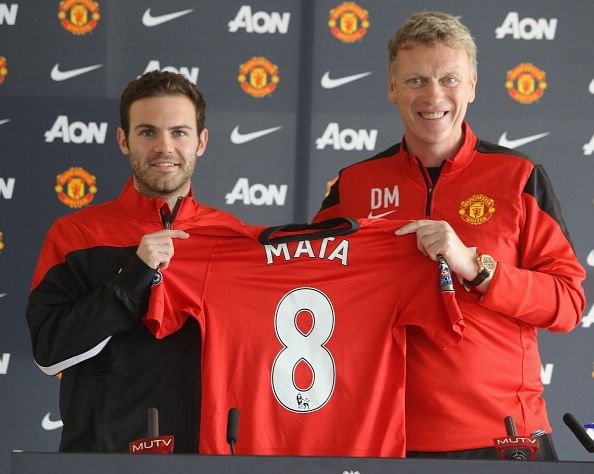
The move, completed on Monday with the Spaniard’s unveiling at Carrington holding up the No.8 shirt, caused a welcome, albeit unexpected, groundswell of emotion amongst United fans, pained for most part of the season with the team’s rather disappointing performances on the field following the departure of their beloved manager of 26 years.
For it picked up pace quite suddenly, with a few days of rumour-mongering ultimately leading to a frenzy of activity around the 21st of January with news being bandied about by reporters left, right and centre. And before you knew it, ‘Mata’ was the buzzword on most United fans’ lips, with a nice, warm glimmer emanating from within their souls, offering hope, that perhaps the mechanic to fix the season’s mess had finally arrived. Mata
The slightly-built Spaniard though wasn’t always on speed dial. It took a debilitating half-a-season under the new Chelsea manager Jose Mourinho, for Mata to finally look away from Stamford Bridge as a possible course of action. From the heights of being the Player of the Year at the club for two seasons running, ever since his arrival, to being consigned to the benches, it was a drop that the Spaniard could not have possibly envisioned.
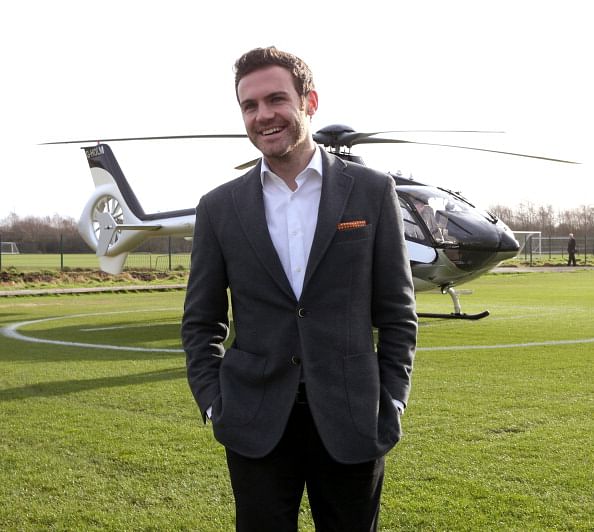
Juan Mata arrives at Manchester United training ground ahead of medical
Despite all the noise that accompanied Mourinho’s return over how ‘flair’ players such as Mata might find life difficult under the Portuguese manager’s rather pragmatic style of play, Chelsea fans and the player himself would not have sensed immediate consequences, safe in the knowledge of his achievements and quite brilliant stats.
For this was Mata, a man who had been a riveting success from the moment he stepped foot on English soil, a man who had UEFA Champions League and Europa League winner’s medals to his name, a man who had cornered FA Cup glory. When Didier Drogba rose, ever so majestically at the Allianz Arena, to head in Chelsea’s equalizer against Bayern Munich in the Champions League final of 2012, it was Mata who delivered that ball in from the corner kick. In the 2013 Europa League final against Benfica, it was Mata again with the corner kick that led to Branislav Ivanovic’s late, late winner.
To say that the man’s stats are impressive, would be an understatement. Mata, in his first season in England, recorded 573 passes, creating 66 chances, that led to 14 assists in the league, second only to Manchester City’s David Silva. In all, he has created 227 chances in his two-and-a-half seasons in England, being equally adept at creating from open-play (55.5% of assists and 69% of total chances) as well as set-pieces.
United and their manager have got themselves a player of the highest calibre, but is he the player with the same amount of confidence?
Some pundits and journos alike have categorized this sale by Chelsea as a disposal of broken goods. Claims have run rife that he is no longer the player that he once was and that Chelsea have emerged the better from the deal by not only getting rid of a player not part of their plans, but also collecting a hefty compensation for it.
Make no mistake, Mourinho and Chelsea broke Mata by putting him out in the cold. He could well take time to settle down at his new club, but for a player of Mata’s ability, with a burning desire to be a large part of the action out on the field, it should not be long before he displays those levels of confidence that once flowed through his veins, circa Mourinho’s second coming.
To boot, Mata has done justice to the term ‘professional’, having conducted himself in an exemplary manner through the darkest of days and not once has spoken out against Mourinho and the club. As a matter of fact, he penned a rather emotional goodbye to the Chelsea fans on his departure, a rarity indeed. United are not just getting an accomplished player, they are getting a thorough professional at that.
On the evidence of it, the deal represents a perfect fit – a club struggling for attacking impetus buying a proven attacker who has been starved of regular playing time. Till you consider the fact, that it needs the right kind of coaching, as the last six months of Mata’s career strongly illustrate. Moyes
Dull, staid, passive and lacking imagination are just some of the terms that have been hurled at the feet of David Moyes in his time as Manchester United manager. From elation, fuelled by the most sincerest faith in Sir Alex Ferguson’s choice of successor, to dejection leading to questioning the legendary manager’s pick, United fans have been a scarred lot.
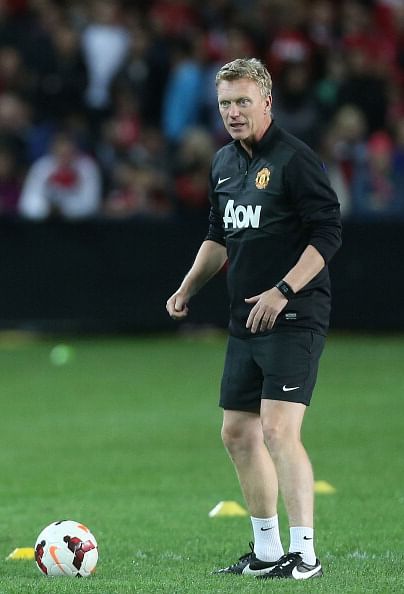
David Moyes at a Manchester United training session
The first six months under Moyes have been difficult, considering the vast amount of success the club enjoyed under his predecessor. But as much as the magnanimity of the change was projected, for everyone associated with the club the depth of it is being understood only now. Changing 26 years of history doesn’t happen in one fell swoop, it takes time, especially if you have chosen the way United have.
Having said that, Ferguson’s public assurance of the squad being in good shape for the incoming manager to take over, was merely that, an assurance. The amount of spadework left for Moyes was humongous. Not only was the squad in need of a revamp, but it was also about managing the alpha-male star players in the dressing room, and that’s one area where Moyes absolutely got no change from the senior players in the first few months.
But, more than the struggles, its the manner of the struggles that has got fans of the club and the watching public disconcerted. The traditional strong points that United wore on their chest – a winning attitude, a supreme sense of self-confidence and an ability to fight it out even when over-matched on the field, seem to have gone away with Ferguson’s departure, neatly tucked inside his trenchcoat. So signing Mata is not just about signing a really good player, its about infusing some much needed positivity around the club.
Moyes’s penchant for hardwork and grit and his ability in bringing through youngsters are unquestionable. Over the years, he has done a fine job in both those departments managing Everton, and Preston before that. And he must be given credit for having the courage to back young Adnan Januzaj this season. The real question that everybody out there has is, can he manage the thoroughbreds, like Mata, like Robin van Persie, and like some of the future transfer targets mentioned by the press.
Wayne Rooney and Danny Welbeck are two players who seem to have found a groove under Moyes, but they do not exactly fit into the same mould as Mata and van Persie, not for want of class, but for the sheer industriousness that accompanies their performances.
After the debacle in the summer transfer window, praise must be lent to Moyes for the way he handled the Mata transfer. His gregariousness in getting the deal done once he came to know of the opportunity must be commended. Unlike in the summer, him and Ed Woodward moved swiftly to take advantage of the situation before other suitors could throw their hat in the ring
A lot hinges on this Mata transfer for Moyes. If, as he says, it is a forebearer of things to come for United, it is indeed a welcome sign; for United would no longer look as toothless as they have so far this season while also, on a higher level, being indicative of the fact that Moyes is ready to cut down on the conservative approach and go in for a more attacking one, one that has come to be synonymous with Old Trafford over the years. He hasn’t exactly covered himself in glory with some of his selections until now, but how he treats Mata and how he plays him, will be important from the perspective of players of similar ilk wanting to work under him as their manager.
Moyes was until now the little boy with the wrong marbles; he’s now got a brand new, shiny one to use and he needs to ensure he strikes it rich while also managing to make good use of the ones he currently has.
And in so doing, ensure a revival in fortunes for his club. Manchester United
It seems almost a distant memory now, but Manchester United were the Premier League champions last season, and they did do it at somewhat of a canter thanks to a marquee signing the previous summer that gave everyone present at the club a huge fillip.
Change in management, not just the manager but also the Chief Executive, has led to indifferent form in the first half of the season, with January being especially disastrous, as United have exited two Cup competitions in quick time, struggling to cope with the losses of the two big names at Old Trafford in Ferguson and David Gill.
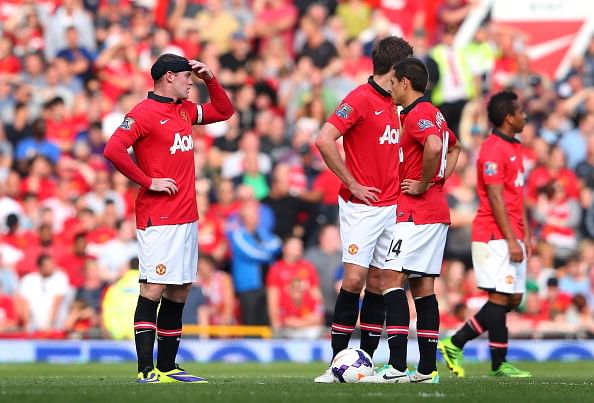
United players Wayne Rooney, Michael Carrick and Javier Hernandez look on during a game against West Bromwich Albion
United are seventh in the table and though well and truly out of the title race barring a major slip-up from their rivals, the quest for the Champions League spots is very much still on; only six points separate teams fourth to seventh, with Liverpool currently occupying that last spot in 4th.
The signing of Mata is to some a ‘desperate signing’ by a club clutching at straws, clueless in how to get out of its current predicament; it may be, but it sure is one heck of a desperate signing. And what it does provide is an opportunity for the club to rectify the mishaps of time gone by and resuscitate the club’s flagging Premier League campaign.
As the player’s availability met the club’s need, it made for a win-win situation for all parties involved. Not forgetting Mourinho’s willingness to let go the club’s once best player to a direct rival, and suddenly United have a new deck of cards to play with to try and change the game. Apart from the obvious impact to be had on the pitch, the signing also will serve to resonate United’s ability and, more importantly, interest to compete for the signatures of some of the best players in the game, thereby reinforcing itself as a sought-after destination for other talented footballers.
One signing cannot single-handedly drastically change the fortunes of a struggling club, but what he can do is have enough of an influence rubbing off on the other players that would cause them to raise their levels of play. It happened with Eric Cantona, it happened with Robin van Persie, it could well happen with Juan Mata.
More than the results, this process that Mata, Moyes and Manchester United have undertaken should serve to restore something more intangible that has been eroded over the last few months – faith – a component that seemingly the club’s fans never ran out of in the past, but one that got desperately short as the games went by this term.
Coincidentally, for player, manager and club, this move is a chance to salvage what was looking like a lost season, with an idea to kick on and move forward come next season. For fans of the club and the game alike, there is expectancy in the air that this 3M company can lead to a fourth ‘M’ on the field – Magic
Though not the familiar one in Barcelona but the Bavarian
giants Bayern Munich, who on Saturday were crowned UEFA Champions League
winners of 2013.
Bayern Munich’s victory marks a return to the centre-stage
for German football and the Bundesliga after being in the wilderness for some
time. Ever since Porto won the competition against all odds in 2004, the
Champions League has come to be dominated by English teams and Barcelona.
En route to their conquest of Europe, Bayern pounded the
dominant power in Europe, Barcelona into submission. Though nobody expected the
scale of the defeat, it was construed to be the match where the baton changed
hands, from the dominant force of the last half a decade to the force of the
future. A situation akin to when the Germanic tribes reached the gates of Rome
and brought about the end of the Roman empire.
Is this the end of Barcelona’s dominance in Europe?
Are they no longer top dogs in the continent?
Could this prove to be the death-knell for tiki taka?
All of the above were pertinent questions after Barcelona’s
campaign came to a grinding halt against the Bayern machine. It is not often
that you see the Catalans humbled in such a manner – Bayern didn’t just crush
Barcelona, they crushed a footballing philosophy as they hit 7 unanswered goals
past Lionel Messi and co.
What the future holds for Barcelona or for Bayern Munich is
a debate that will go on for long into the summer, however, that is a subject
for another day. Before that, a quick peek at footballing cycles.
FOOTBALLING CYCLES
The game of football, like most other sports operates in
cycles – both at club and at national levels. These cycles exist because
football and the various teams involved continuously strive to evolve in search
of a winning formula. It is not so much a straight line time graph, but merely
a carousel of footballing philosophies, playing style and coaching.
Sport rarely operates in an inertial environment such as the
one in our PlayStation's and Xbox's.
Footballers are human beings , they’re performances over
time become subject to the wear and tear of competition and the many bruises
and niggles that they carry. The other key word in all of it is ‘familiarity’ –
eventually they figure you out. That goes for a player, a system , a strategy.
Those that continually work to keep adding to their game are the ones that end
up being successful in extending their cycle. And in today’s day and age, where
technological aids and analysts are available to every team, it makes it that
much harder.
THE EUROPEAN FOOTBALL SCENE
The UEFA Champions League is a true testament to this.
Shifting the scene to 5 years ago, in the summer of 2008, Barcelona under Pep
Guardiola had their very own ‘changing of the guard’ match. The Blaugrana defeated Manchester United 2-0
in the final that year in Rome. United were defending champions and were
looking to become the first club in the Champions League era to retain the
title. That victory set Barca on their way to European dominance for the next 5
years, while also setting back the progress of English teams.
Hence, the 5-year period between 2008-2012 belonged to
Barcelona – they won 2 titles while making the semi-finals every year. The
previous spell of domination (2004-2007) belonged to the English clubs –
Liverpool, Manchester United, Chelsea and Arsenal who together made it a habit
of blocking out the semi-final spots every year capped off by a title each for
Liverpool and United, and finals appearances for Arsenal and Chelsea.
Real Madrid, both pre and post Galacticos had their run in
the competition before the English clubs between 2000 and 2003. We can take
only the period from 1998 onward into consideration, for previously only the
winners of each league made it into the competition, which meant only 1 team
from each country. Madrid beat Manchester United and Bayern Munich on the way to
claiming the trophy in 2000, the winners and runners-up respectively from the
previous tournament.
DOCUMENTING THEIR SUCCESS
Each of these teams adopted their own set of tactics to foster
success in Europe’s premier competition.
Outgoing Bayern boss Jupp Heynckes guided Real Madrid to
their 7th European Cup in 1997. Following that, Vicente Del Bosque
and his Los Blancos side won it in
2000. It was just before the dawn of the Galacticos
era, a team led by a young Raul, Fernando Morientes and Steve McMannaman. Zinedine
Zidane, Luis Figo, Ronaldo, David Beckham and Claude Makelele joined forces with Roberto Carlos and
Raul and the Galacticos era was born.
That star-studded squad went on to claim another prize in 2002 with that
memorable Zidane volley in Glasgow.
A simple strategy of buying the best players around that
ensured instant success. Trouble was, those stars were picked up in their late
20’s and after a period of time with age their impact waned. And since Real did
not have a system that they played to or stuck to religiously, there was a
problem when they departed and Real could never recreate the success from earlier in the
decade.
The English teams came in with good defences to fend off the
attacking threats of the Spaniards. They brought in a certain level of physical
effort with their powerful defenders and midfielders, who were very good in the
air in defence as well as attack. The English teams’ play was very direct
employing wingers to good effect to deliver crosses into the ball along with
judicious use of the long ball out of defence. Technical brilliance was not the
greatest, but they made up for it in effort and work rate. Hard-working units
with just the right amount of attacking talent served them very well in the
ensuing years.
Before Guardiola arrived at the Camp Nou, Frank Rijkaard
managed to win one Champions League final against Arsenal in 2006. His was an
all-attacking group, equally direct, centred around the talents of Samuel Eto’o,
Ronaldinho and Deco. They got that one win, but they had a traditional Barca
failing in the form of their defence and their dominance didn’t last long. They
may have had superior attackers, but since their attacking styles were
familiar, they proved easy to contain.
Then came the tiki-taka,
the hogging of possession for long periods and accurate passing of the ball
from Guardiola’s stable. Whether it was intended that way, nobody will know,
but the tiki-taka hit the English
teams in an area where they were vulnerable. They were superb clearing headers
and defending long balls and did well to cut out the through passes. Part of
the reason was their tight defensive organization. What Barca’s system did was
stymie their English foes, deny them the ball to get their forward players
frustrated and patiently pass the ball around, waiting until a member broke the
line after which they could play in that killer final pass. Slow in their
lateral movement, the system wore them down as they spent large portions of the
game tracking the ball. The high pressing game, 8 passes or less in which they
tried to regain possession was also classy. Creating space for their players to
run was central to Barca’s success plan.
And now, Bayern have brought their own heavy duty arsenal
over the past 2 seasons – a combination of high intensity pressing to peg back
the opponents and fast, direct attacks. Whether this means a new era of Bayern
dominance, we’ll have to wait and watch; Inter and Milan have had successful
winning campaigns in the past without kicking on to extend it further. Also,
there will be a change in management - Guardiola will come in for Heynckes – a
completely different approach may be taken by the Spaniard; in which case the
lack of continuity could hurt them. Inter won the trouble under Mourinho,
before having a disappointing season the next term after the Portuguese left.
What is certain is that we have witnessed the end of one
footballing cycle and the beginning of the next!
Tomorrow’s UEFA Champions League final showdown between
Borussia Dortmund and Bayern Munich will be the 4th instance of an
intra-national final, where 2 teams from the same country have met in the
championship clash. Each of the 4 instances has belonged to a different country
with Spain, Italy and England represented on the previous 3 occasions. Germany
will make its bow tomorrow.
Real Madrid 3-0 Valencia, 1999-2000 Final @ the
Stade de France, Saint-Denis
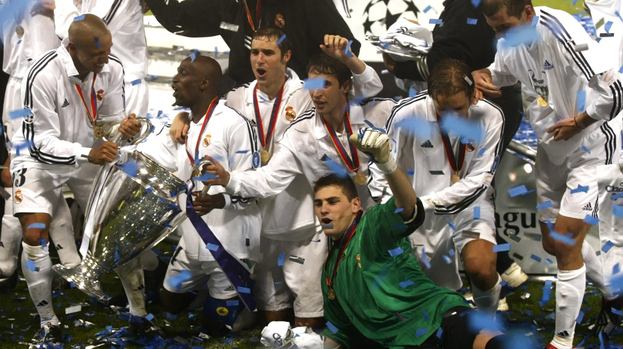
The very first instance was when Real Madrid met Valencia in the 2000
final. This edition saw the introduction of the second group phase, where the
top 2 teams from the 8 groups would again be divided into 4 groups and another
run of round-robin matches.
This was the pre-Galacticos era
at Real under Vicente Del Bosque and they had a fine team made up of a lot of
Spanish talent led by the likes of Raul, Fernando Morientes, Michel Salgado and
Iker Casillas. Current Real Madrid assistant manager Aitor Karanka was also
part of this team. Real Madrid topped their group suffering just one loss and
in the second group phase finished runners-up behind Bayern Munich. They
finished strongly though as they got past 2 very strong teams en route to the
final - Manchester United, who were the defending champions, in the
Quarterfinals and then Bayern Munich in the semi-finals.
Valencia weren't doing so badly
themselves with arguably their ‘Golden Generation’ of Gaizka Mendieta, Miguel
Angulo, Claudio Lopez and Santiago Canizares. Just like Real, they would win
the first group phase, ahead of Bayern Munich and finish runners-up in the
second, behind Manchester United. They trounced Lazio and Barcelona in the
quarters and semis respectively scoring 5 goals against both over the 2 legs.
The final had a tight beginning
before Madrid began to exert themselves on the game and took the lead through
Morientes. Steve McManaman had a marvelous game for Los Blancos and he scored
the 2nd with a spectacular volley. Raul then rounded it off with a 3rd
goal on 75 minutes when Real caught Valencia napping on the counter. It was
Real’s 8th European Cup.
Steve McManaman was voted the Man
of the Match. Incidentally, he became the first Englishman to win the tournament
with a foreign club. Raul finished joint top scorer with 10 goals. Valencia
finished runners-up again the next year when they lost on penalties to Bayern
Munich after it ended 1-1 in regulation and extra time.
AC Milan 0-0 Juventus, 2002-03 Final @ Old
Trafford, Manchester
Juventus came into the final
fresh from being crowned Serie A champions; Milan on the other hand had
finished 4th, 16 points behind the Turin club. In the season
head-to-head, Juve had won the home game while drawing away at the San Siro.
They had also beaten Milan in the Coppa Italia semi-finals.
The 2-group phases structure was
still on; Juventus topped their first group while finishing runners-up to
Manchester United in the second. They ended Spanish hopes in the competition as
they beat Barcelona in the quarters and Real Madrid in the semis. Influential
midfielder Pavel Nedved though would miss the final after picking up a booking
in the 2nd leg against Real.
Milan came in winning both the
groups including a strong second group phase pitted with Real Madrid and
Borussia Dortmund. After beating Ajax, they had to contend with neighbours
Inter in a Milan derby semi-final. It ended level 1-1 on aggregate with Milan
progressing on the away goals rule.
The final was a game of few
chances and one of the dullest of the last decade and a half. Both teams had
excellent defences which ensured that chances were at a premium. Andriy
Shevchenko had a goal disallowed in the first half though replays showed that
Rui Costa had not been in an offside position.
Current Juve manager Antonio
Conte came on as a sub and saw a header clatter the crossbar in what was Juve’s
best chance of the game. Andrea Pirlo too struck the post for Milan.
With no result even after extra
time, the match went to penalties and It was a tense, tense affair. Juventus
only made 1 of their first 4 penalties as Dida saved the efforts of David
Trezeguet, Marcelo Zalayeta and Paolo Montero. Gigi Buffon was doing his best
to keep Juve in the game as he saved from Clarence Seedorf and Kakhaber
Kaladze. Alessandro Del Piero converted the 5th spot kick for Juve,
but so did Shevchenko to clinch the trophy for the Rossoneri. It was Milan’s 6th
European Cup.
Paolo Maldini was named the Man
of the Match for the final. Filippo Inzaghi was the 2nd highest goal
scorer with 10 goals behind Ruud Van Nistelrooy who bagged 12 for Manchester
United. Shevchenko became the first Ukrainian footballer to take home a
European Cup winners medal.
Manchester United 1-1 Chelsea, 2007-08 final @
Luzhniki Stadium, Moscow
England’s top 2 teams met in the
Moscow final of 2008. Manchester United had just won their 17th
league title finishing 2 points ahead of their final opponents Chelsea. Each
team had won their home game in the league, while Chelsea had the latest win
after beating United 1-0 in the FA Cup final days earlier.
Man United went unbeaten the
whole tournament. They drew just 1 game in winning their group comfortably.
They then beat Lyon in the Round of 16, which had now replaced the previous format
and Roma in the quarters. Frank Rijkaard’s Barcelona stood between United and
their 3rd European Cup final. The teams had identical records going
into the semi-final, each having won eight and drawn two of their ten games,
scoring 18 goals and conceding just 5. Cristiano Ronaldo missed an early
penalty in the 1st leg at the Camp Nou and that leg ended 0-0.
United edged into the finals with a tight 1-0 home win thanks to Paul Scholes’
long range stunner.
Chelsea had seen a change of
manager after Jose Mourinho parted ways in between the season. Interim manager
Avram Grant did a good job though as he kept the Blues in the title hunt in the
league and guided them to the FA Cup and Champions League finals. Chelsea lost
just the one game in the tournament, against Fenerbahce in the quarterfinals.
After getting past Olympiacos and Fenerbahce, Chelsea took on Rafa Benitez and
his defending champions Liverpool. This was the fourth year in succession that
these teams had met in the Champions League. After drawing the first leg 1-1
away, the Blues won a tense 2nd leg 3-2 after extra time to make the
team’s first visit to the Champions League final.
After taking time to feel each other
out, the final picked up pace with Ronaldo’s opener on 26 minutes. United had 2
good chances to extend the lead, but Petr Cech came to Chelsea’s rescue with
some magnificent saves. Frank Lampard equalized for Chelsea in the closing
minutes of the first half after Michael Essien’s initial shot had deflected off
Rio Ferdinand and Nemanja Vidic.
The goal swung the momentum in
Chelsea’s favour and the Blues dominated for much of the second half. Drogba
went close to giving them the lead when his effort hit the post. Ryan Giggs had
a chance to get the winner for United, but John Terry made a last ditch tackle
to prevent it. It was end –to-end in extra time as both teams went looking for
the winner. Late in extra time, Drogba was sent off for a slap on United’s
Vidic.
In the shootout, Ronaldo missed
his penalty which gave Chelsea the advantage. Blues captain John Terry stepped
up to take the 5th penalty, but he would miss as he lost his footing
which saw his mis-hit shot hit the outside of the right post and go wide. In
sudden death, Edwin Van der Sar saved Nicolas Anelka’s shot to win it for
United.
Van Der Sar took the Man of the
Match award. Cristiano Ronaldo finished top scorer with 8 goals.
Borussia Dortmund vs Bayern Munich, 2012-13 final @ Wembley,
London
One-sided final like the 2000
edition or nail biters like the other two? We will find out on Saturday. The 2
league meetings between the sides both ended 1-1 and Bayern beat Dortmund 1-0
in the quarterfinals of the DFB Pokal Cup.
Dortmund will be without star play-maker Mario Götze due to injury which means he has already played his last
game for Dortmund; he will be joining Bayern Munich in the summer.