Tuesday, February 4, 2014

Did Sachin Tendulkar deserve the Bharat Ratna award before Dhyan Chand and Viswanathan Anand?

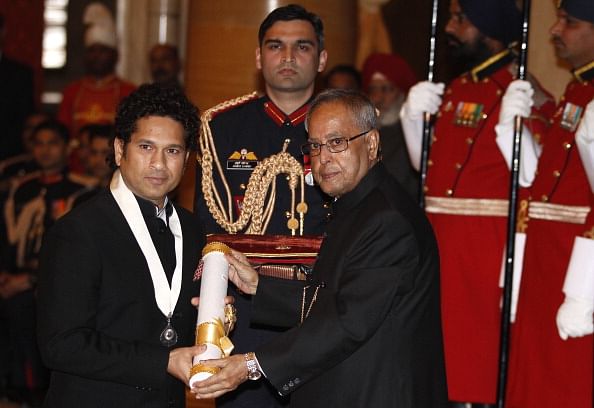
To the left, Sachin Ramesh Tendulkar dressed up in a nice suit, hair all well done, sporting a genial smile as always, empty arms drawn forward to receive. To the right, Pranab Mukherjee, the 13th President of the Republic of India, in his regular Nehru suit, hands stocked with a scroll of honour, was all set to give.

The next few moments, as the scroll changed hands from President to cricketer, from authority to civilian, marked a significant moment in the history of civilian honours in India.


Indian cricketer Sachin Tendulkar (L) receives the Bharat Ratna award from Indian President Pranab Mukherjee during an awards ceremony at the Presidential Palace on February 4, 2014 in New Delhi, India.

For the first time in the country’s history, a sportsperson had been awarded the country’s highest civilian honour. For decades to come, when people look back at the person who was the first to break the trend, the name of Sachin Tendulkar will reverberate loudly. Just about the perfect picture, right, for a man believed to be the greatest batsman and greatest cricketer of his generation, with some sections even stretching the narrative beyond the generational boundary to all of time?

Turns out it’s not as perfect a picture as it seems.

Tendulkar, of course, is no stranger to awards. The man is an exceptional talent and has been bagging awards by the truckloads ever since he started playing cricket. He would probably require an entire house just to stock the various awards he has received through his long career, maybe even two. There is no disputing his credentials as one of the finest cricketers of his generation.

But just as the ‘Bharat Ratna for Sachin’ campaign ushered in by millions of his fans and flippant media houses gained momentum, at the other end of the spectrum, sections of sportsmen and other regular citizens decided to crank up the volume on why they felt that hockey wizard Dhyan Chand deserved the Bharat Ratna ahead of Tendulkar. It sounds like a very valid point, but before we go into the intricacies of comparing the achievements of these two gifted mortals, it is important to understand the lead actor at the centre of it all.

The Bharat Ratna – what does the award represent?

The ‘Jewel of India’ is the Republic of India’s highest civilian award. For the record, the second highest is the Padma Vibhushan, the third highest the Padma Bhushan and the fourth highest, the Padma Shri. C.N.R. Rao and Sachin Tendulkar became the 42nd and 43rd persons respectively to receive the honour of the Bharat Ratna, following in the footsteps of 42 other individuals that includes foreign nationals such as Nelson Mandela and Mother Teresa (the award is not restricted to Indian nationals alone).

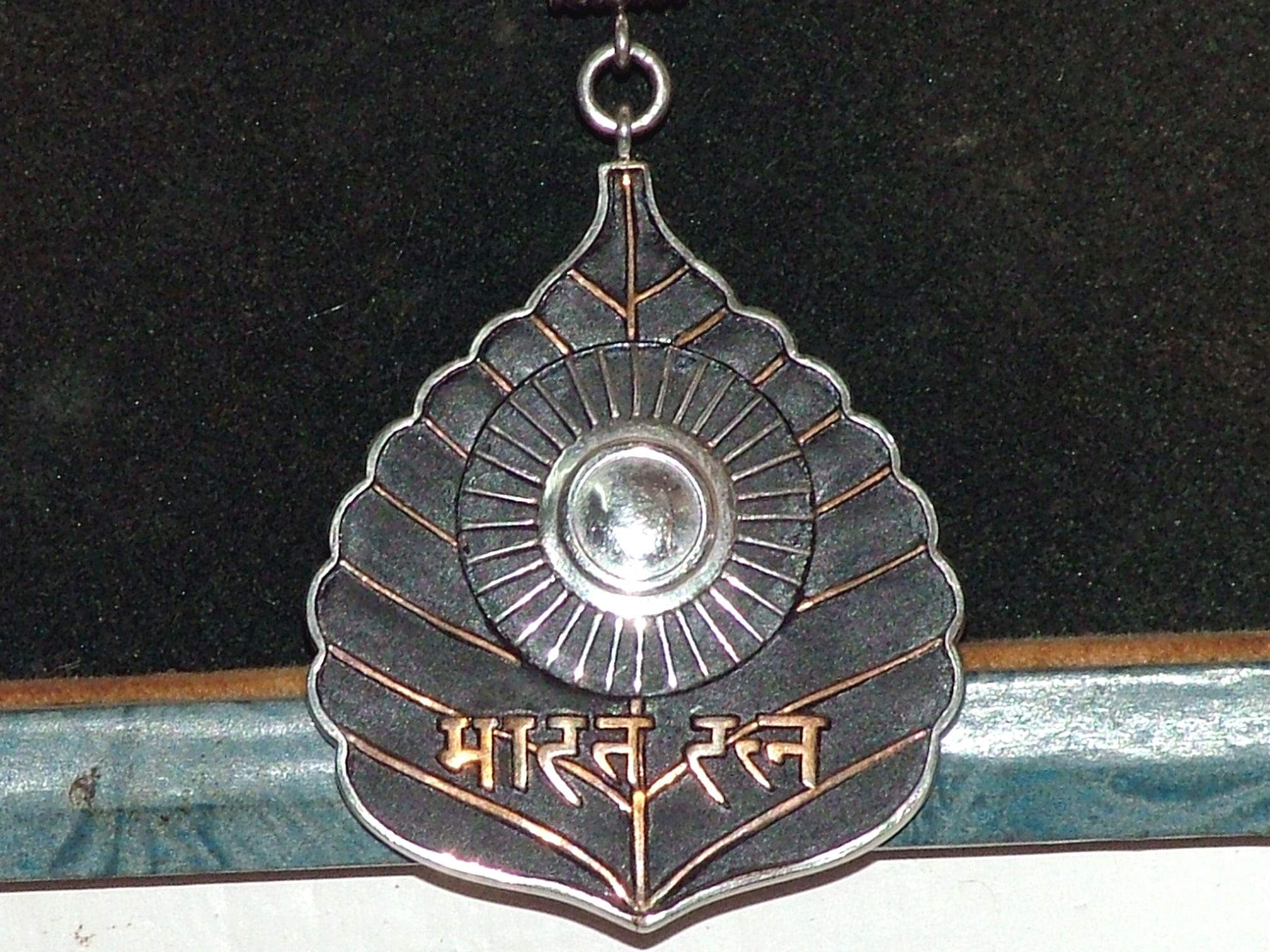
The Bharat Ratna medallion

The other significant thing about the Bharat Ratna is that a maximum of three awards can be made in a single year. And, as has probably been well known by now, the award wasn’t open to sportspersons until 2011; the stipulation before 2011 specified that the award was to be conferred “for the highest degrees of national service. This service includes artistic, literary, and scientific achievements, as well as “recognition of public service of the highest order.”

An amendment to this stipulation was made in December 2011 in order to enable sportspersons to be eligible for the award with the rule now allowing the award to be conferred  “for performance of highest order in any field of human endeavour.”

Amongst other things that the award decrees on its holder is the seventh highest rank in the Indian order of precedence as far as ceremonial protocol is considered (no legal standing), behind only the President, Vice-President, Prime Minister, Governors of States, former Presidents, the Deputy Prime Minister, the Chief Justice of India, and the Speaker of the Lok Sabha.

Now that is some rarefied airspace indeed.

Perhaps the most important aspect of all that needs to be remembered is that the award is based on the recommendation of the Prime Minister’s Office.

How did sport enter the Bharat Ratna discussion?

As mentioned earlier, the amendment to expand the scope of the award to any and every field came about in 2011. The move, while welcome, and a strong source of encouragement to sportspersons in the country, does leave some questions as to why it took the 11th year of the 21st century for a country’s decision makers to bring about this change, for there has been no shortage of Indian sportspersons with stupendous achievements in all these years.

It could be argued that the move was made keeping Tendulkar in mind, and his possible coronation in the immediate aftermath of his impending retirement. But leaving aside sportspersons from other fields, there have been several other cricketers who have been more than deserving of the Bharat Ratna. There is Kapil Dev, who was special in his own right; perhaps the greatest all-rounder that India has produced till date and the captain that delivered the country’s first ever World Cup. His career definitely does classify as a ‘performance of the highest endeavour’. Or for that matter, even the careers of Sunil Gavaskar and Rahul Dravid (considering he retired earlier) do.

And when it comes to other sports – there’s Viswanathan Anand and Dhyan Chand.

It is now the right time we got introduced to the convulsive coming together of popular opinion, pandering and politics.

The Tendulkar decision

As the response drawn by the Right To Information (RTI) query filed by sports enthusiast Hemant Dube showed, haste underlined the decision of the Prime Minister’s Office (PMO) in setting up the recommendation for Tendulkar to receive the award.

The process was set in motion on November 14, 2013, coinciding in perfect fashion with the beginning of the ‘Master Blaster’s’ final Test in his hometown of Mumbai. As India went about putting the finishing touches to another home Test win, the process of him receiving the Bharat Ratna was being cemented with much alacrity.

The move smacked of slandering to an emotional groundswell of public emotion. It seemed like a desperate attempt for salvation by a ruling government in the doldrums going into election year and rocked by accusations of failed governance, in the hope that it would alleviate some of the beating that its image had taken in the public eye.

It is very easy to be swayed in today’s times by an event such as the retirement of Tendulkar, what with the extensive media coverage and social media outlets bombarding public thought and feeding off shared dogma while hardly leaving room for individual opinions and self thought.

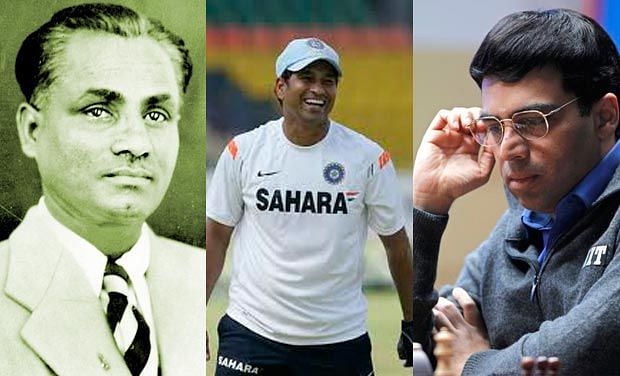
The Hall of Fame – Sachin Tendulkar, Viswanathan Anand and Dhyan Chand

Sachin Tendulkar, the Little Master

When one talks of Tendulkar, some of the things that instantly stand out are his longevity and his ability to play through not one, not two, but three generations. His skills as a batsman apart, what distinguished him was his dedication, hard work and continued zest to look out for improvements. Many have the talent, but few bring it to fruition and stay consistent at it, and that’s something that Tendulkar managed very well.

That said, many of his numbers are a sheer product of his longevity, so comparing them to prove his superiority over others is a little dubious. And the comparison across generations begs absolutely no merit, because quite frankly, one generation would in most cases be biased towards the champion of their era.

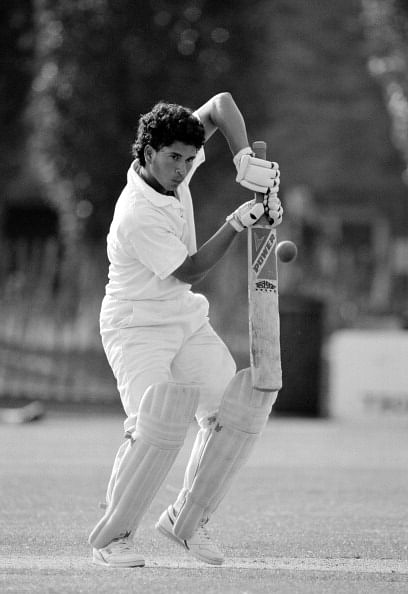
Sachin Tendulkar batting for India against the Minor Counties XI at Trowbridge, 12th July 1990. The match ended in a draw.

Tendulkar was named the Wisden Cricketer of the Year in 1997, the Player of the Tournament at the 2003 ICC ODI World Cup, the Wisden Leading Cricketer in the World in 2010, was given the Wisden India Outstanding Achievement award in 2012 and was named an Honorary Member of the Order of Australia by the Australian government that same year.

He was presented the Arjuna Award in 1994 and the Rajiv Gandhi Khel Ratna award in 1997-98. Now, along with the Bharat Ratna, he holds three out of the four highest civilian honours in India – the highest (Bharat Ratna 2014), the second highest (Padma Vibhushan 2008) and the fourth highest (Padma Shri 1999).

Viswanathan Anand, The Lightning Kid

As far as talk of champion sportspersons from India is concerned, the talk is never complete without including Viswanthan Anand, who for over two and a half decades has competed at the very top in the world of chess, fending off competitors senior to him, of his age as well as those junior to him. The last memory one may have of Anand might be the hammering he received at the hands of Magnus Carlsen in the their World Chess Championship match in Chennai, but that should in no way take the sheen off of the career of one of the world’s premier chess Grand Masters.


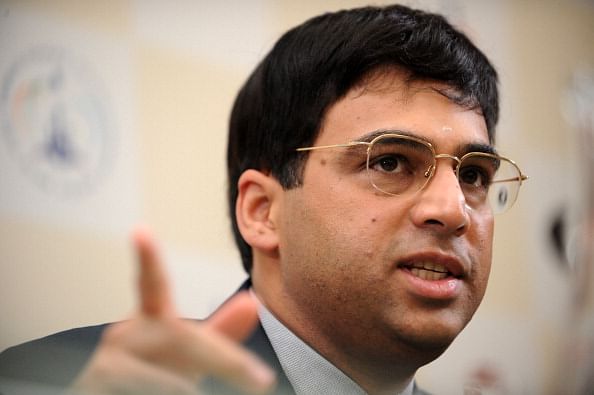
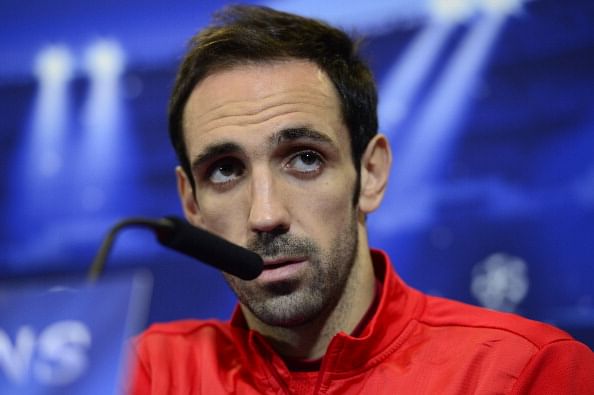
India’s Vishwanathan Anand at a press conference in State Tretyakovsky Gallery in Moscow on May 10, 2012 before his FIDE World chess championship match against Israel’s Boris Gelfand.

Anand was a 5-time World Chess Champion and the World Rapid Chess champion in 2003, apart from holding the number one ranking numerous times between 2007 and 2011. In a country where there have hardly been other number one’s in any individual sport, Anand’s reign is exemplary. In fact, in October 2008 he dropped out of the top three for the first time since July 1996. Chess players, both former and current, rate him as amongst the strongest rapid player of his time. He has received the Chess Oscar six times and is one of only six players in the history of the sport to have broken the 2800 Elo rating barrier of the FIDE rankings.

Experts consider Anand to be one of the most versatile players of all time, considering that he won World Championships in different formats. And Vladimir Kramnik, a long time adversary of Anand’s, had said in an interview in 2011: “I always considered him to be a colossal talent, one of the greatest in the whole history of chess, and I think that in terms of play Anand is in no way weaker than Kasparov but he’s simply a little lazy, relaxed and only focuses on matches.”

Anand too was presented the Arjuna Award in 1985 and was the first recipient of the Rajiv Gandhi Khel Ratna award, in 1991-92. Like Tendulkar, he too holds three of the four highest civilian honours – the Padma Vibhushan (2007), the Padma Bhushan (2000) and the Padma Shri (1987).

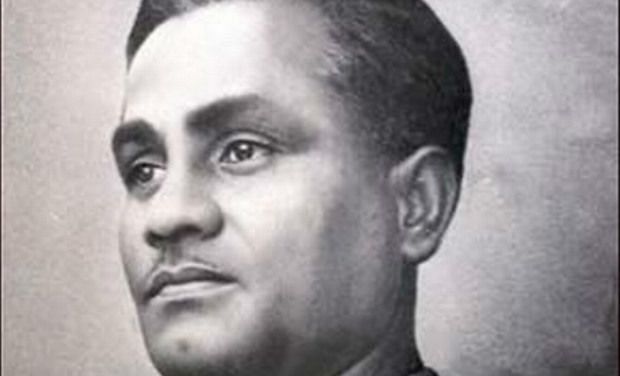
Dhyan Chand, the Hockey Wizard

Boasting superb dribbling skills, ball-control and goal scoring ability of the highest order, Dhyan Chand was a hockey player who, like Anand and Tendulkar after him, captured the attention of not just the country, but of the entire international community, in the process earning the nickname, ‘The Hockey Wizard’.

Three successive gold medals (1928, 1932, 1936) as part of a dominant Indian hockey team at the time and over 400 international goals and 1000 overall added some serious glow to a career that wasn’t short on glitter thanks to his superb stick work.

Major Dhyan Chand

Chand has a statue in his honour in Vienna, Austria, which is in the form of a man with four hands and a stick in each, depicting his legendary control over the ball. Along with almost 358 other Olympic heroes, he had a tube station in London named after him in the run-up to the 2012 Olympics.

He retired from competitive hockey in 1948, but it was when he retired from his post as Major in the Indian Army in 1956, that the Government of India moved to present him the nation’s third highest civilian honour, the Padma Bhushan. The maestro’s birthday, August 29, is celebrated as National Sports Day, and is the day when sports-related awards such as the Arjuna, Rajiv Gandhi Khel Ratna and Dronacharya awards are presented.

The National Hockey Stadium in Delhi, in 2002, was renamed the Dhyan Chand National Stadium, and now plays host to most international tournaments in India. Not just that, the year also saw an award being instituted in his name to recognize sportspersons for not just their superb performances through their career, but also their contributions after retirement, just as Chand had done.

The real debate – has justice been done by making Tendulkar the first sportsperson to receive the honour?

Contrary to what many may perceive, the debate is not about who is the greatest amongst the three, or who is the most deserving. It was never about a slug fest between these three champions of their respective sports.

It boils down to a question of the institution of the Bharat Ratna being opened up to sportspersons and being fair in its dealings in order to make up for all those who suffered under its oversight all these years.

The popularity of cricket over chess and hockey has played a significant role in Tendulkar becoming the first sportsperson to receive this honour. For all you know, had the amendment been made in the 1940s, Dhyan Chand may well have got the honour because of the popularity of hockey at that time.

As in the case of the previous awards that the three men have received, Anand received the Padma Shri first in 1987, followed by Tendulkar in 1999. Likewise, the Padma Vibhushan went to Anand in 2007 and Tendulkar in 2008. Anand’s three honours were spread out over a course of 20 years while Tendulkar’s three have been spread out over the last 15 years. Chand probably never was considered for the Padma Vibhushan due to the step-motherly treatment that sports received at the time. Can the disconnect possibly be more obvious?

Indiangreat_0_0_0_0

The Anand and Chand camps would be well within their rights to question the fairness of what happened today. It’s not Chand’s fault that hockey is not as popular as cricket today, nor is it Anand’s mistake that a majority of the people in the country either don’t have the patience for chess, or don’t understand it. Why, then, should Chand and Anand be considered less deserving of the honour?

What’s important to realize here is that Tendulkar is in no way the villain in the piece. He is just a sportsperson who went about doing his business, and was pounced upon by the machinations of an opportunistic government looking to win a few brownie points  by using him as a pawn in their political chessboard. And comparing him to previous recipients such as Homi Bhaba, C.V. Raman, A.P.J. Abdul Kalam and engaging in a street fight over their accomplishments for the greater good is pointless, because quite simply it is difficult to compare things that are as dissimilar as chalk and cheese.

Tendulkar may very well be deserving of the honour. However, what doesn’t quite seem right is the fact that he got it first.

And to all those who maintain that the timing of the award is inconsequential as long as Chand and Anand get their due recognition in the years to come, how about a small example.

In the company that you work, if you were overlooked for a promotion while being a very deserving candidate, and a few years later you noticed that another employee of similar ilk was given one at a much earlier stage than you were, would it be just?

If you filed a case fighting for some gross injustice done to you, and while waiting countless years for justice, you notice that a similar case filed much later than yours, lasting fewer years in duration, was provided a verdict faster, would it not cause indignation within you? Would it be fair?


Justice delayed is justice denied. And the fact that neither Dhyan Chand nor Viswanathan Anand were conferred the Bharat Ratna before Tendulkar was, is as fine an example of that saying as any you could possibly find.

Wednesday, January 29, 2014

The 3M company: Mata, Moyes and Manchester United


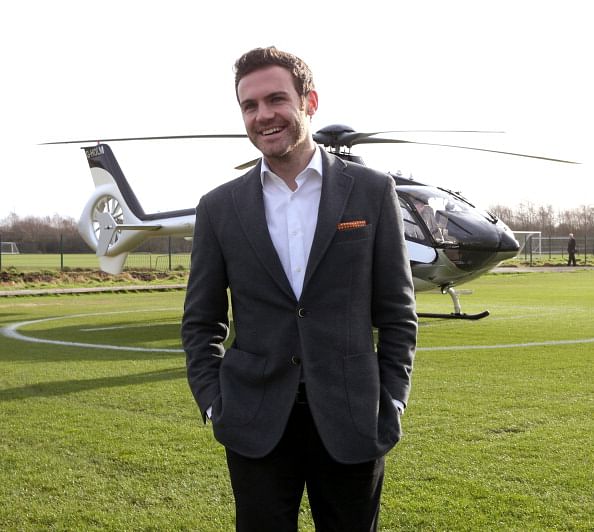
Manchester United unveil new signing Juan Mata

A footballer who just wanted to play, a manager under severe pressure and a club looking to avoid a crisis of confidence;  the confluence of those three prevailing situations at two of England’s biggest football clubs led to the defending Premier League champions, Manchester United, breaking their transfer record to sign Spanish playmaker Juan Mata from rivals Chelsea. Not forgetting, of course, that United had cash to splash to put one and one together and get ‘Juan’.

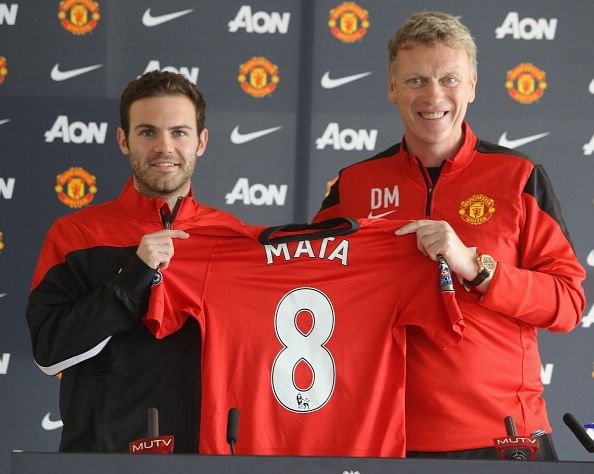
The move, completed on Monday with the Spaniard’s unveiling at Carrington holding up the No.8 shirt, caused a welcome, albeit unexpected, groundswell of emotion amongst United fans, pained for most part of the season with the team’s rather disappointing performances on the field following the departure of their beloved manager of 26 years.

For it picked up pace quite suddenly, with a few days of rumour-mongering ultimately leading to a frenzy of activity around the 21st of January with news being bandied about by reporters left, right and centre. And before you knew it, ‘Mata’ was the buzzword on most United fans’ lips, with a nice, warm glimmer emanating from within their souls, offering hope, that perhaps the mechanic to fix the season’s mess had finally arrived.

Mata

The slightly-built Spaniard though wasn’t always on speed dial. It took a debilitating half-a-season under the new Chelsea manager Jose Mourinho, for Mata to finally look away from Stamford Bridge as a possible course of action. From the heights of being the Player of the Year at the club for two seasons running, ever since his arrival, to being consigned to the benches, it was a drop that the Spaniard could not have possibly envisioned.
Juan Mata arrives at Manchester United training ground ahead of medical

Despite all the noise that accompanied Mourinho’s return over how ‘flair’ players such as Mata might find life difficult under the Portuguese manager’s rather pragmatic style of play, Chelsea fans and the player himself would not have sensed immediate consequences, safe in the knowledge of his achievements and quite brilliant stats.

For this was Mata, a man who had been a riveting success from the moment he stepped foot on English soil, a man who had UEFA Champions League and Europa League winner’s medals to his name, a man who had cornered FA Cup glory. When Didier Drogba rose, ever so majestically at the Allianz Arena, to head in Chelsea’s equalizer against Bayern Munich in the Champions League final of 2012, it was Mata who delivered that ball in from the corner kick. In the 2013 Europa League final against Benfica, it was Mata again with the corner kick that led to Branislav Ivanovic’s late, late winner.

To say that the man’s stats are impressive, would be an understatement. Mata, in his first season in England, recorded 573 passes, creating 66 chances, that led to 14 assists in the league, second only to Manchester City’s David Silva. In all, he has created 227 chances in his two-and-a-half seasons in England, being equally adept at creating from open-play (55.5% of assists and 69% of total chances) as well as set-pieces.

United and their manager have got themselves a player of the highest calibre, but is he the player with the same amount of confidence?

Some pundits and journos alike have categorized this sale by Chelsea as a disposal of broken goods. Claims have run rife that he is no longer the player that he once was and that Chelsea have emerged the better from the deal by not only getting rid of a player not part of their plans, but also collecting a hefty compensation for it.

Make no mistake, Mourinho and Chelsea broke Mata by putting him out in the cold. He could well take time to settle down at his new club, but for a player of Mata’s ability, with a burning desire to be a large part of the action out on the field, it should not be long before he displays those levels of confidence that once flowed through his veins, circa Mourinho’s second coming.

To boot, Mata has done justice to the term ‘professional’, having conducted himself in an exemplary manner through the darkest of days and not once has spoken out against Mourinho and the club. As a matter of fact, he penned a rather emotional goodbye to the Chelsea fans on his departure, a rarity indeed. United are not just getting an accomplished player, they are getting a thorough professional at that.

On the evidence of it, the deal represents a perfect fit – a club struggling for attacking impetus buying a proven attacker who has been starved of regular playing time. Till you consider the fact, that it needs the right kind of coaching, as the last six months of Mata’s career strongly illustrate.

Moyes

Dull, staid, passive and lacking imagination are just some of the terms that have been hurled at the feet of David Moyes in his time as Manchester United manager. From elation, fuelled by the most sincerest faith in Sir Alex Ferguson’s choice of successor, to dejection leading to questioning the legendary manager’s pick, United fans have been a scarred lot.
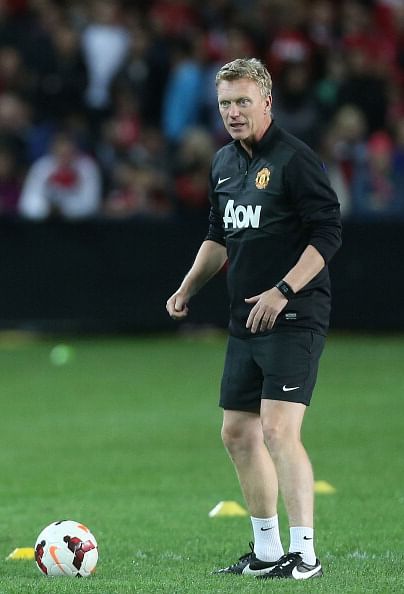
David Moyes at a Manchester United training session

The first six months under Moyes have been difficult, considering the vast amount of success the club enjoyed under his predecessor. But as much as the magnanimity of the change was projected, for everyone associated with the club the depth of it is being understood only now. Changing 26 years of history doesn’t happen in one fell swoop, it takes time, especially if you have chosen the way United have.

Having said that, Ferguson’s public assurance of the squad being in good shape for the incoming manager to take over, was merely that, an assurance. The amount of spadework left for Moyes was humongous. Not only was the squad in need of a revamp, but it was also about managing the alpha-male star players in the dressing room, and that’s one area where Moyes absolutely got no change from the senior players in the first few months.

But, more than the struggles, its the manner of the struggles that has got fans of the club and the watching public disconcerted. The traditional strong points that United wore on their chest – a winning attitude, a supreme sense of self-confidence and an ability to fight it out even when over-matched on the field, seem to have gone away with Ferguson’s departure, neatly tucked inside his trenchcoat. So signing Mata is not just about signing a really good player, its about infusing some much needed positivity around the club.

Moyes’s penchant for hardwork and grit and his ability in bringing through youngsters are unquestionable. Over the years, he has done a fine job in both those departments managing Everton, and Preston before that. And he must be given credit for having the courage to back young Adnan Januzaj this season. The real question that everybody out there has is, can he manage the thoroughbreds, like Mata, like Robin van Persie, and like some of the future transfer targets mentioned by the press.

Wayne Rooney and Danny Welbeck are two players who seem to have found a groove under Moyes, but they do not exactly fit into the same mould as Mata and van Persie, not for want of class, but for the sheer industriousness that accompanies their performances.

After the debacle in the summer transfer window, praise must be lent to Moyes for the way he handled the Mata transfer. His gregariousness in getting the deal done once he came to know of the opportunity must be commended. Unlike in the summer, him and Ed Woodward moved swiftly to take advantage of the situation before other suitors could throw their hat in the ring

A lot hinges on this Mata transfer for Moyes. If, as he says, it is a forebearer of things to come for United, it is indeed a welcome sign; for United would no longer look as toothless as they have so far this season while also, on a higher level, being indicative of the fact that Moyes is ready to cut down on the conservative approach and go in for a more attacking one, one that has come to be synonymous with Old Trafford over the years. He hasn’t exactly covered himself in glory with some of his selections until now, but how he treats Mata and how he plays him, will be important from the perspective of players of similar ilk wanting to work under him as their manager.

Moyes was until now the little boy with the wrong marbles; he’s now got a brand new, shiny one to use and he needs to ensure he strikes it rich while also managing to make good use of the ones he currently has.
And in so doing, ensure a revival in fortunes for his club.

Manchester United

It seems almost a distant memory now, but Manchester United were the Premier League champions last season, and they did do it at somewhat of a canter thanks to a marquee signing the previous summer that gave everyone present at the club a huge fillip.

Change in management, not just the manager but also the Chief Executive, has led to indifferent form in the first half of the season, with January being especially disastrous, as United have exited two Cup competitions in quick time, struggling to cope with the losses of the two big names at Old Trafford in Ferguson and David Gill.
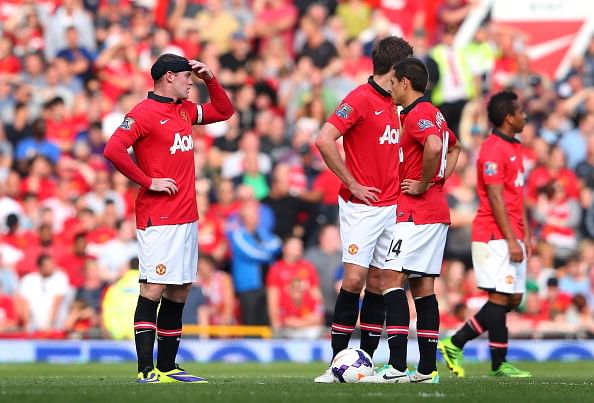
United players Wayne Rooney, Michael Carrick and Javier Hernandez look on during a game against West Bromwich Albion

United are seventh in the table and though well and truly out of the title race barring a major slip-up from their rivals, the quest for the Champions League spots is very much still on; only six points separate teams fourth to seventh, with Liverpool currently occupying that last spot in 4th.

The signing of Mata is to some a ‘desperate signing’ by a club clutching at straws, clueless in how to get out of its current predicament; it may be, but it sure is one heck of a desperate signing. And what it does provide is an opportunity for the club to rectify the mishaps of time gone by and resuscitate the club’s flagging Premier League campaign.

As the player’s availability met the club’s need, it made for a win-win situation for all parties involved. Not forgetting Mourinho’s willingness to let go the club’s once best player to a direct rival, and suddenly United have a new deck of cards to play with to try and change the game. Apart from the obvious impact to be had on the pitch, the signing also will serve to resonate United’s ability and, more importantly, interest to compete for the signatures of some of the best players in the game, thereby reinforcing itself as a sought-after destination for other talented footballers.

One signing cannot single-handedly drastically change the fortunes of a struggling club, but what he can do is have enough of an influence rubbing off on the other players that would cause them to raise their levels of play. It happened with Eric Cantona, it happened with Robin van Persie, it could well happen with Juan Mata.

More than the results, this process that Mata, Moyes and Manchester United have undertaken should serve to restore something more intangible that has been eroded over the last few months – faith – a component that seemingly the club’s fans never ran out of in the past, but one that got desperately short as the games went by this term.

Coincidentally, for player, manager and club, this move is a chance to salvage what was looking like a lost season, with an idea to kick on and move forward come next season. For fans of the club and the game alike, there is expectancy in the air that this 3M company can lead to a fourth ‘M’ on the field – Magic

Saturday, December 28, 2013

Age and drugs take India's athletics way off track in a year filled with controversy

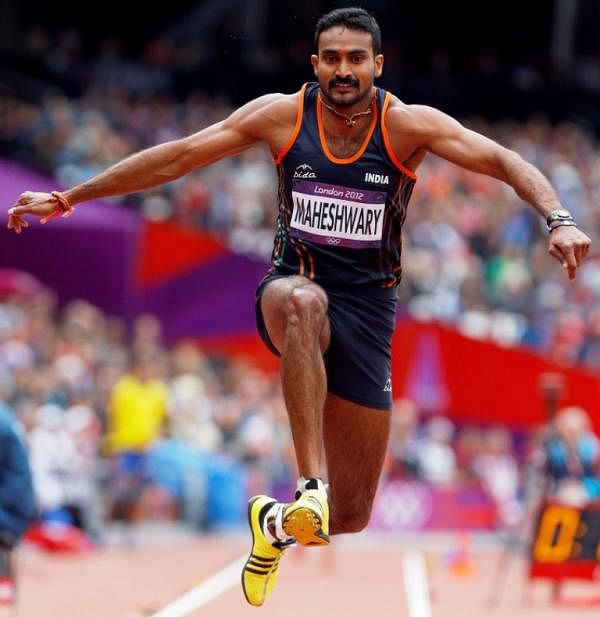
Renjith Maheshwary’s doping controversy prevented him from receiving the Arjuna Award

Indian mythology and folklore the world over has given us our fair share of multi-headed monsters; creatures that often bring about chaos and destruction, only to be saved in the end by a great hero or heroine. In many a case, it involves chopping off each of the heads. But some of these mythic monsters were so well-equipped that at the fall of a head, another one would rear, just like new.

The Athletics Federation of India (AFI) have had quite a torrid time this year dealing with precisely such monsters, ones that have kept rearing their ugly heads over and over again. At a time of the year when the season is closed and there isn’t much to deal with for authorities, athletes and pretty much everyone else as they wind down for the season and prepare to usher in the new one, the AFI dished out some Christmas presents to a number of athletes and their respective state associations.

Boxing Day is earmarked as the occasion you get to uncover your presents, and boy, were the athletes in for a rude shock!

The AFI banned six states including Delhi and Haryana for fielding over-aged athletes. 14 other athletes also received suspensions, for duration of two whole years, after having been found guilty of doping.

These decisions were the two big talking points to emerge from the body’s two-day Executive Committee meeting on December 22nd and 23rd.

“In order to curb the overage and doping menace the Executive Committee of Athletics Federation of India, which met here on 22nd and 23rd, have decided to enforce stringent measures on both erring athletes and their respective state-units,” AFI said in a release.

The implication of this ruling is that the six states in question – Delhi, Haryana, Bihar, Rajasthan, Madhya Pradesh and Uttar Pradesh – will not be able to take part in any competitions organized under the banner of the AFI in the coming season.

However, the athletes from these states can participate in the events, but they would do so under the AFI banner as independent athletes; that too, post an approval from the President/Secretary of the AFI.
The report claims that 44 athletes were found to be over the age limit in various competitions through the year. For the erring athletes, the punishment is even harsher, an exile of two years.

You do wonder if the punishment is fair, because as much as it is an athlete’s responsibility to ensure that he/she is not engaging in any activity that contravenes the established norms of fair play, the fact that the state federations were accomplices in it cannot be discounted.

You could argue that giving the state bodies a two-year ban will affect the careers of other athletes from the states involved as they would see their development stalled by a lack of funds and exposure resulting from the ban. But, isn’t that a strong message worth sending to ensure that they do not err again?

The other magic number is 14 – which is the number of athletes banned for doping. The lot that tested positive have also been given a two-year suspension from the sport. There is nothing to complain about here at all.

The damning verdict at the close of the year was bad enough, but what makes it even more worrying is the emergence of a trend in Indian athletics this year, one of repeated faux pas and goof-ups and doping instances.

It has been a tumultuous year so far filled with many embarrassing instances for the national athletics body as well as many fires that it had to go about extinguishing.

The National Anti-Doping Agency (NADA), in its dope tests through the year, found 23 track and field athletes to be guilty of doping; that number was among the highest from any discipline and earned athletics a place on the leader board in number of dope-tainted athletes.

There was also the huge fracas involving national record holding triple-jumper Renjith Maheshwary. The past caught up with Maheshwary as the jumper got caught up in a doping scandal from five years ago that snowballed into a huge controversy.

Maheshwary was accused of having failed a dope test at the 2008 Nationals in Kochi. The AFI for a long time refuted claims that he had been found guilty of doping, in order to save face, as they had recommended his name for the Arjuna Award for the third consecutive year, after doing so in 2011 and 2012 as well.

The Sports Ministry wanted a final clearance from the AFI before it went ahead and bestowed the award on Maheshwary. Finally the pressure came through, and the AFI admitted that Maheshwary had indeed committed a dope violation in Kochi, though they could not locate the files which would serve as evidence.

However, a letter from the AFI to the Railways, Maheshwary’s employers at the time, documenting his doping offence, proved to be the clincher in the end.

All this while, the Sports Ministry and Maheshwary himself, were in a state of suspended stasis as to the status of his Arjuna Award. Eventually, in a most embarrassing sequence of events, Maheshwary was intimated just hours before the awards function, that he was being hauled off the awardees’ list.
asian-youth-games-1869642
The issue of over-aged athletes too was not the first instance, and what’s more, it happened at an international event. At the Asian Youth Games in August in Nanjing, China, 17 young track and field athletes were sent back home from the games for being over the prescribed age limit.

For athletics, there was a different age criteria as compared to the other disciplines and this was overlooked, as the AFI sent athletes who were born before January 1, 1997, the date that was set for the athletics events.

This led to another administrative scuffle, this time between the AFI and the Sports Authority of India (SAI) which demanded compensation to the tune of Rs.10 lakh that it had spent to send the 17 athletes to China.

A moot point here is the oversight on the part of the organizers to provide some defence to the Indian authorities. As is the case with most international events, the name lists of the participants are sent across well in advance, and only after confirmation from the organizers are the participants sent. So how was it that the organizers failed to spot the discrepancy during verification? The Indian media likes a story and pounces on any given opportunity to beat up the sporting authorities, but there lies some share of the blame elsewhere too on this occasion.

Still, the fact that the AFI allowed such an oversight to happen under its watch is a major indictment of its operational efficiency.

Another instance where the ugly head of doping cropped up to cause more loss of face for the AFI was at the Asian Championships in Pune in July, when shot-putter Udaya Laxmi had to be forcibly withdrawn after she tested positive for a stimulant.

And if you thought that 2013 just happened to be an extremely unfortunate year for the AFI, if anything, it was a continuation of a deep-rooted malaise that has been in existence for a few years now.

The NADA furnished a report recently, in response to an RTI petition filed by a citizen, detailing instances of doping between January 2009 and July 2013. The figures were shocking.

In the above period, a total of 500 athletes were said to have tested positive for doping and 423 out of them had sanctions imposed on them by the Anti-Doping Disciplinary Panel (ADDP). Topping the list, in terms of number of offenders, was athletics.

Athletics had 113 doping violations in that period with weightlifting in tow in second place with 92 violations. The other disciplines to feature in the top were Kabaddi, Bodybuilding, Powerlifting, Wrestling, Boxing and Judo, in that order.

In some further indictment, the International Association of Athletics Federations (IAAF) revealed through one of its reports in August that India had the second-highest number of dope cheats placed in suspension in athletics, with 43, one behind Russia who had 44.

Certainly not the lists which the AFI would have wanted to be topping!

To cause further consternation to an already worried community, the NADA revealed that doping as an acceptable practice was starting young, with school-going athletes found to be rampantly using syringe-based performance enhancing drugs at an inter-school meet in Kerala.

During another event at the Kanteerava Stadium in Bangalore, TOI reported to have again found a number of used syringes in both the boys and girls toilets. In fact, two of them, after having been caught red-handed by the Doping Control Officer (DCO) at the stadium, proceeded to run away from him. They were subsequently disqualified.

A similar expose was carried out by TOI at the Jawaharlal Nehru stadium in Chennai in July-August.
Even internally, there wasn’t nothing for the AFI to write home about, as elections to its posts were held twice, after the first one was said to have violated the Sports Code put in place by the Sports Ministry. The President, treasurer and secretary elected through the first election were not recognized by the ministry and it threatened to de-recognize the AFI, similar to the IOC’s threat to India’s Olympic body.

After changes to the constitution, Adille Sumariwala, CK Valson and PK Srivastava were elected president, secretary and treasurer, respectively.

Going into 2014, a year in which the country will be participating in the Asian Games and the Commonwealth Games, the signs are bad with the national athletic body seemingly exhibiting an alarming level of operational inefficiency.

The recurring instances of doping violations and age and eligibility related faux pas have cast a dark shadow on the capability of the administrators to lead the nation’s athletic federation on the right track.

There are many issues to mend, notable amongst them being repairing the discord and acrimony that was create between the AFI and other agencies such as the Sports Ministry and the SAI. Maintaining good relationships with these bodies is a must, if at all the athletes’ interests are to be well taken care of.

It’s tough stand to stamp out doping and cheating by handing out lengthy bans and suspensions is also a welcome move, as much as the state associations may crib about it. After all, India needs athletes that are clean and meeting the required eligibility criteria to be representing it at the major events. Falling prey to last minute withdrawals due to one issue or another in front of the global sporting community is not something the country would want to see at this juncture.

The multi-headed monster is at the shores threatening to swallow up Indian athletics. The proverbial hero, a saviour is needed to rescue the situation and men and women donning the posts at the AFI have a major task at hand. Indian athletics not so much needs as demands a new dawn in 2014.

Thursday, December 19, 2013

India's shining stars: The sportpersons who did India proud in 2013

As the year 2013 draws to a close, it is time to relive some of the best moments of the year 2013. India as such had some mixed results in the sporting arena – there were some major highs accompanied by some disappointing results along the way.

The highs came in both team sports as well as some of the individual events.

Here’s a summary of the men and women who shone the brightest through the year in no particular order.

Indian Cricket Team
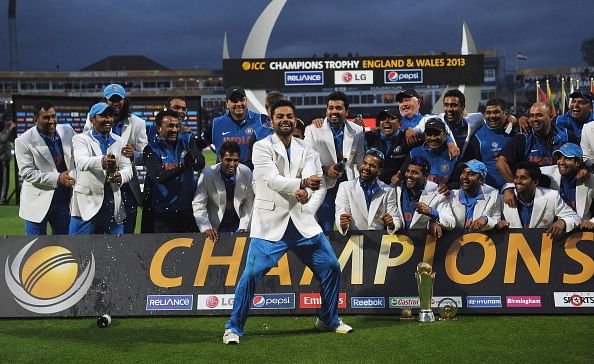
The Indian team celebrates winning the Champions Trophy

The Men in Blue have had another successful season under the able stewardship of captain MS Dhoni with the highlight being the Champions Trophy triumph in England.

The team won each of the six Test matches that it played. You could argue that all of them were at home and hence the team was expected to win, but the best teams begin with staying strong at home. The team did that, and convincingly too, with series wins over the Aussies and the West Indies. The latter ended with the retirement of Sachin Tendulkar, but many new faces were unearthed, offering much promise into the future.

Cheteshwar Pujara had a tremendous year notching up two centuries that included a big double century providing solidity at the number three position, vacated by Rahul DravidShikhar Dhawan announced his Test entry with a bang, through a stroke-filled century against the Aussies and Ravichandran Ashwin demonstrated the ability to be India’s lead bowler in home conditions and also added further credibility with the bat towards the end of the season.

The ODI side also performed admirably, winning 22 and losing 10 of their 34 matches in total, with 2 games providing no result. In fact, the team had a better win record abroad and on neutral territory this year, winning 7 of 10 games on the opposition’s home turf and winning all but one of their games on neutral grounds.

They won the Champions Trophy with a perfect record winning every game, including a remarkable fight back in the final against hosts England. Rohit Sharma finally came through on his promise, while Virat Kohli continued his rapid rise up the ODI batting echelons opening the batting and new talents such as Mohammad Shami emerged later in the season.

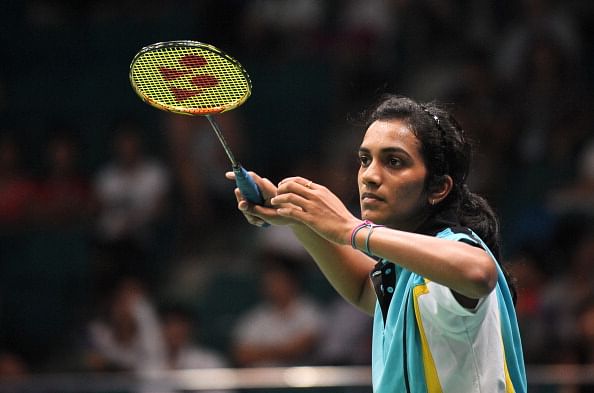
PV Sindhu
PV Sindhu returned with the bronze from the BWF World Championships

The badminton fraternity found a new face dominating the headlines this year in the form of teenager PV Sindhu who made the rather giant leap from the national scene to the international one winning two Grand Prix Gold titles and making history by winning bronze at the BWF World Championships. What was even more impressive was the fact that she took down former Olympic champion Wang Shixian and reigning World Champion Wang Yihan, both of China, en route to the semi-finals.

Another product of the Gopichand Academy in Hyderabad and tutored under the auspices of national coach Pullela Gopichand.

The lanky Hyderabadi, still just a teenager, caused a ripple when she won the Malaysian Open early on in the season. But, the shockwaves came when she made her way into the semi-finals of the BWF World Championship in Guangzhou, China, where she was assured of a bronze after falling to eventual champion Ratchanok Intanon of Thailand.

The achievement was a monumental one, as it was the first medal for India in women’s singles at the World Championships and it was also just India’s third medal overall after Prakash Padukone’s bronze in men’s singles at Copenhagen in 1983 and Ashwini Ponnappa and Jwala Gutta’s bronze in women’s doubles in the 2011 edition.

She ended the season too on a high with victory at the Macau Open, where she was the top seed and currently sits an impressive 11th in the world rankings after starting the year ranked 25th.

Heena Sidhu
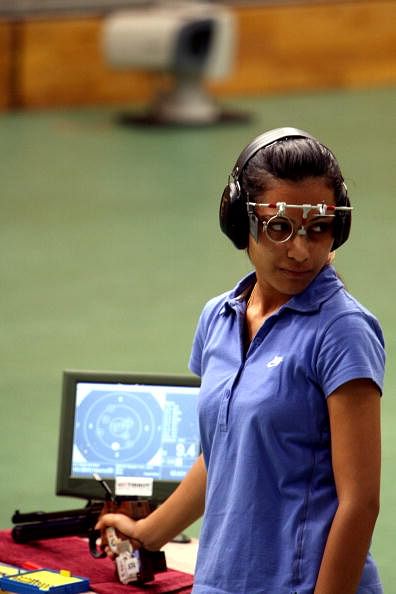
Heena Sidhu

Heena Sidhu made history by becoming the first pistol shooter to win a gold medal at the ISSF World Cup Finals.

And it’s not like she had an easy run in the tournament; she overcame stiff odds by overcoming the challenge of double Olympic champion Guo Wenjun of China, world champion Zorana Arunovic of Serbia and multiple-Olympic medallist Olena Kostevych of Ukraine.

Two Indians had previously won gold medals at the World Cup – Anjali Bhagwat in 2002 and Gagan Narang in 2008 – but both of them had come in the rifle events, making this a first in pistol shooting.

After making a shaky start in the final, she went on to hit 15 consecutive bulls’ eyes to finish with a comfortable lead of 5.2 points over her nearest competitor.

Even more astonishing was the fact that she was not even supposed to be participating at the event, and only received a late call up after two other competitors withdrew at the last minute.

Talk about a dream win!

Women’s hockey teams
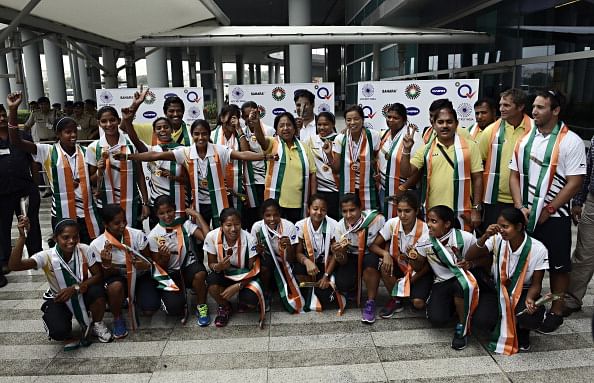
Indian girls hockey team return with bronze medal from Germany

The trend of winning a first ever medal in an event was common amongst India’s female athletes this year.

The junior hockey girls, achieved something on par with what Sindhu did when they finished the third-best team at their world cup and brought home a bronze medal, which was India’s first medal ever from the competition in Monchengladbach, Germany.

They beat England 3-2 on penalties in the decisive bronze medal playoff match.

The Indian girls proved to be a dangerous outfit right through the competition, surprising many of the top sides and making their way into the final four. They also went one better from the previous edition, where they had made their way to the bronze medal match, only to be pipped by South Korea.

Hockey India deservedly felicitated the achievement by granting a cash bonus of Rs. 1 lakh to each of the players and chief coach Neil Hawgood while the other members of the coaching staff received Rs. 50,000 each.

18-year-old Rani, who was not only the star of the Indian team, but of the whole tournament, vindicated by the Player-of-the-Tournament award bestowed upon her, was awarded a further lakh.

In general, the women outdid the men through the year.

The senior team, despite not picking up any gold, performed admirably in collecting the bronze at the Asia Cup and the silver in the Champions Trophy.

Leander Paes
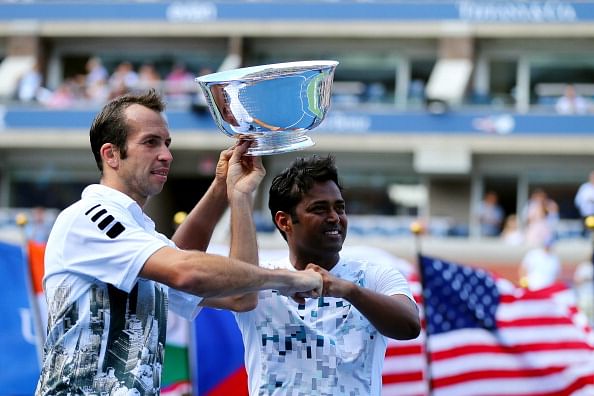
Leander Paes (R) of India and Radek Stepanek of the Czech Republic pose with their trophy after winning their men’s doubles final against Alexander Peya of Austria and Bruno Soares of Brazil at the 2013 US Open

The 40-year old veteran won the US Open mixed doubles title with his Czech partner Radek Stepanek. It was his 8th men’s doubles title in Grand Slams and 14th overall.

Paes and Stepanek clinched their second major title together with a dominant 6-1, 6-3 win over the Austrian-Brazilian pairing of Alexander Peya and Bruno Soares.

The Indian tennis star proved that age is merely a number, collecting his third doubles title at the US Open at the age of 40.

In the other two Slams that they played together, they were bumped out in the first round at the Australian Open and reached the semi-finals at Wimbledon where they went down to Ivan Dodig and Marcelo Melo in a five-set thriller.

They did not play together at the French Open due to Stepanek’s injury, with Paes partnering Austrian Jurgen Melzer instead.

Paes and Stepanek finished the year ranked at No. 7.

Men’s and women’s kabaddi teams
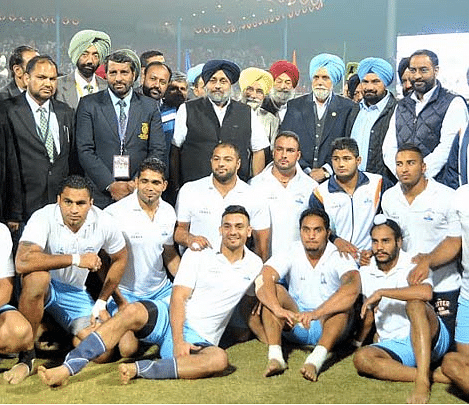
The Indian men’s kabaddi team

The men’s team won their 4th title in as many World Cups, maintaining their perfect streak with a win over Pakistan. The final this time around wasn’t as easy as in previous editions as the Pakistanis put up a game fight, but the 3-time defending champions edged them out in the end. The tournament has become something of a favourite stomping ground for the kabaddi team and it once again demonstrated that they were still the best in the sport, despite improvement from the other teams over the years.

The women too faced Pakistan, but in their semi-final, and after overcoming the neighbours proceeded to beat New Zealand in the final. This was the second instance of the women’s world cup and India made it a clean sweep of both the trophies by triumphing in this one as well.

Women’s Recurve Archery team
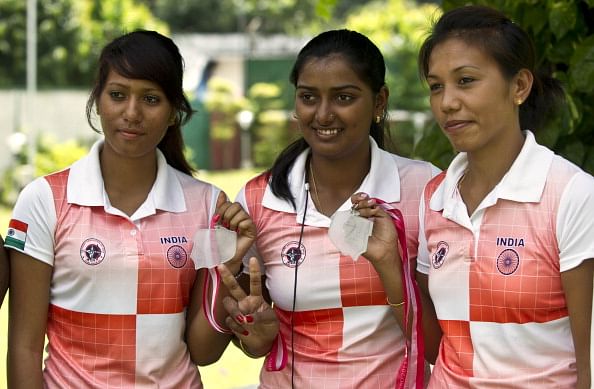
Indian women archers Rimil Buriuly (L), Deepika Kumari (C) and Bombayla Devi pose with their gold medals during a meeting with the V. K. Malhotra President of Archery Association of India in New Delhi on August 27, 2013.

Individually they may not have struck gold, but the famed women’s recurve team as a group performed really well to come out with two gold medals to their name.

India’s leading recurve archer Deepika Kumari, along with Laishram Bombayla Devi and Rimil Buriuly had a highly successful year together as a team.

The trio had bagged gold in the World Cup Stage 3 final in Medellin, Colombia after beating China in the title clash.

They then went on to cause a stunning upset of world and Olympic champions Korea in the World Cup Stage 4 final in Wroclaw, Poland in August.

Deepika Kumari also had a fine year overall individually as she ended the year with seven international medals to her name – three gold, three silver and one bronze.

Deepika’s third gold medal, after the twin team triumphs at the World Cup, came in the mixed team event at the 18th Asian Archery Championship in Chinese Taipei where she went on to win in the company of Jayanta Talukdar, the leading male recurve archer.

She picked up two silvers early in the year at World Cup Stage 1 final in Shanghai, China, in the mixed team event and in the individual category.

The third silver medal came at the prestigious World Cup Final in Paris where she had to settle for silver for a third year in succession as she was edged out by Korea’s Ok-Hee Hyun.

She finished the year ranked No.3 in the individual recurve rankings.

The lone bronze also came with Talukdar at the World Cup Stage 3 final in Medellin, Colombia, in the mixed team event.

Indian Compound Archery team
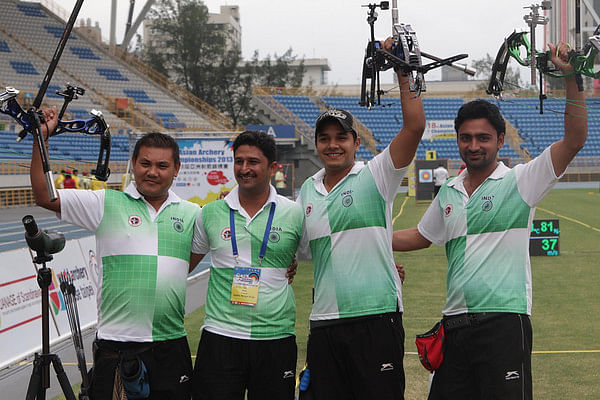
The men’s compound archery team that achieved gold at the Asian Championships

While the women’s recurve team put up consistent good shows, it was a breakout year for India’s compound archers who emerged from the shadows of their more famous compatriots.

The compound team took inspiration from the women recurve’s world-beating efforts as the trio of Abhishek Verma, Ratan Singh Khuraijam and Sandeep Kumar caused a major upset of their own when they beat the Koreans to take gold in the men’s team event at the Asian Archery Championships in Taipei.

It was the second gold for India in the men’s compound category at the event after an individual gold for IR Sanam at the 2009 edition in Bali.

The team grew from strength to strength through the year and came ever so close to winning a historic gold at the World Cup Stage 2 in Turkey, where the mixed team of Rajat Chauhan and Majudha Soy finished runners-up to the Italian team by a solitary point.

After qualifying third, the team of Chauhan and Soy went on a fairy tale run defeating all before them, that included the likes of fancied nations such as Great Britain, Canada and Russia, to make their first ever final.

Their performance was in fact the saving grace for India at the World Cup Stage 2 as the fancied recurve archers finished empty-handed after a disastrous showing.

At World Cup Stage 3 in Colombia, the men’s team won bronze and at the Asian Youth Championships in Wuxi, China, the team returned with one silver and four bronze medals.

Rajat Chauhan bagged that lone silver in the men’s individual event.

At the Asian Archery Championships, they had another successful run, collecting two gold, one silver and one bronze to further add to their tally. One of those golds, as mentioned earlier, came when the men’s team upset the Koreans. The second came in the mixed category as the team of Abhishek Verma and Lily Chanu beat the Iranians by one point in the title clash

Vijay Kumar Malhotra, President of the Archery Association of India, was unwavering in his praise for the compound archers.

“This year is entirely dedicated to compound archers in view of their brilliant performance in all international competitions attended during 2013 which is a good sign for the preparation of ensuing 2014 Asian Games, Incheon where Compound event has been included for the first time,” said Malhotra.

Indian Wrestlers
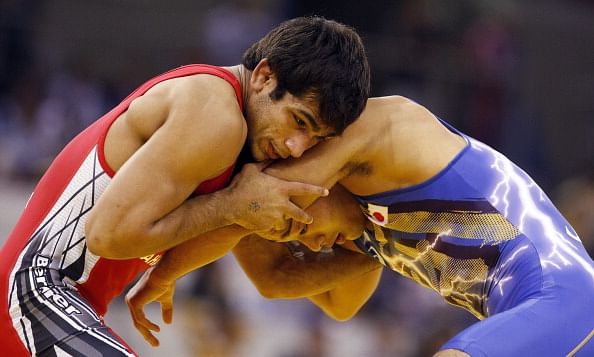
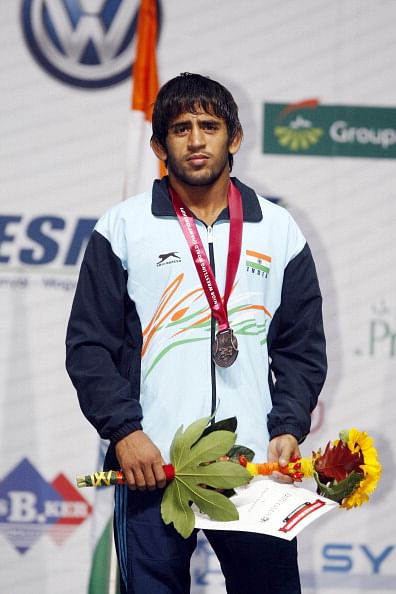
Amit Kumar (L) came home with the silver in the freestyle 55 kg category at the World Championships

At the 2013 Asian Wrestling Championships held in New Delhi, India finished with nine medals overall – two gold, one silver and six bronze.

However, that was good enough only for fifth place overall in the medal standings behind South Korea, Uzbekistan, Japan and China.

In the men’s freestyle though, India finished as the top nation with 48 points, three ahead of Iran who finished second with 45. India finished seventh in men’s Greco-Roman and fourth in women’s freestyle.

Two Amits, Amit Kumar and Amit Kumar Dhankar, won gold in the men’s freestyle 55 kg and  66 kg categories respectively while Bajrang Kumar took bronze in the 60 kg category and Hitender in the 120 kg category.

In women’s freestyle, Vinesh, Babita Kumari, Geetika Jakhar and Jyoti won bronze medals while Navjot Kaur took silver in the 67 kg category.

There was more good news to come for India in the World Championships held at Budapest, Hungary in September. For the first time, India won two medals in the men’s events at the World Championship.

Wrestler Bajrang bagged a bronze in the 60 kg freestyle category with a 9-2 win over Nyam-Ochir Enkhsaikhan of Mongolia which took him to the final. The second medal came from Amit Kumar Dahiya when he won silver in the 55 kg weight category.

The performance meant India scored 23 points at the tournament to finish sixth in the rankings behind Iran, Russia, Georgia, Ukraine and USA and in addition, their performance earned them a first ever berth in the World Cup to be held next year.

“I am very happy with my performance. I was gunning for the gold medal as I had practiced hard for the tournament but unfortunately couldn’t get it due to bad umpiring decision. The referee warned me for not attacking the Iranian and awarded him the point. I was a contender for gold. Nevertheless, I am happy with my performance and overwhelmed by the reception received here,” said Amit.
India’s Barjang Barjang celerates his bronze medal on the podium of the men’s free style 60 kg category of the World Wrestling Championships in Budapest

“I am happy to have made the whole country proud. I am happy with my performance. This is India’s best-ever finish in the World Championship,” said Bajrang

Not to be left behind, the Greco-Roman contingent also provided a medal as Sandeep Tulsi Yadav won bronze in the 60 kg category.

Amit received a cash award of Rs. 5 lakh from the Wrestling Federation of India (WFI) while Sandeep and Bajrang each received Rs. 3 lakh.

And in the final major competition of the year, the freestyle men’s wrestlers returned with 14 medals at the Commonwealth Wrestling Championships in Johannesburg to successfully defend their title. They bagged seven gold, four silver and three bronze medals.

Sandeep Tomar (55kg), Jaideep (60kg) and Amit Kumar Dhankar (66kg), Praveen Rana (74kg), Pawan Kumar (84kg) Satyavart Kadian (96kg) and Joginder Kumar (120kg) clinched gold medals in their respective weight categories.

Silver was won by Narender (55kg), Ravinder Singh (60kg), Naresh (84kg) and Rohit Patel (120kg), and bronze went to Arun Kumar (66kg), Pardeep (74kg) and Hardeep (96kg).

The men’s Greco-Roman contingent also came back with a rich haul of seven gold, five silver and two bronze. The women’s team finished runner-up with two gold, four silver and five bronze.

Monday, November 11, 2013

European football: Zeroes of the weekend featuring Ramires, Dortmund and Manuel Pellegrini

They say a moment of brilliance can decide close games, but so can some horrific blunders, moments of madness that tend to change the game for the worse.

Along with its collection of heroes, the game throws up its fair share of villains who did their best to help their team in a losing cause or at worst leave a bad taste in the mouth with their actions.

Here are this week’s candidates:

Andre Marriner and Robert Madley
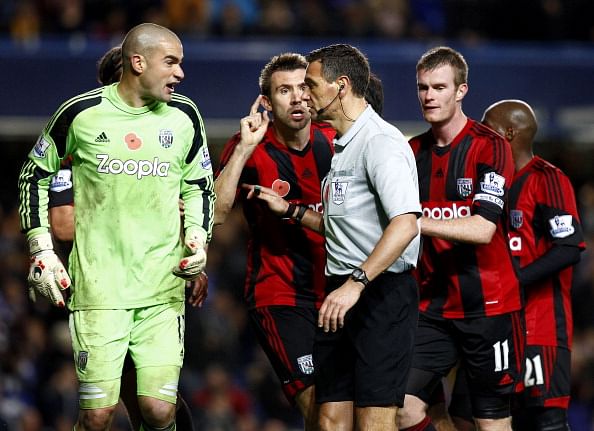
West Brom pair Boaz Myhill and Gareth McAuley appeal to referee Andre Marriner after he awards a late penalty to Chelsea during the Barclays Premier League match between Chelsea and West Bromwich Albion at Stamford Bridge on November 09, 2013 in London, England.


The two gentlemen Andre Mariner and Robert Madley were put on the spot, quite literally, as another week of Premier League action came to a close with two games being talked about for the referees and the decisions they made.

On Saturday, Mariner awarded the controversial last gasp penalty when he deemed that Ramires had been fouled in the box. West Brom were on the verge of a famous win at Stamford Bridge leading 2-1, before the penalty incident and Eden Hazard stepped up to slot home and keep intact Jose Mourinho’s record of never having lost a league game at home as Chelsea manager.

On Sunday, Madley was in the spotlight for similar reasons when he acted equally late in the game to award a rather harsh penalty to Stoke City when the ball brushed the hands of Wayne Routledge on its way out.

In Chelsea’s case, it was a clear dive from Ramires, who went down under the challenge of a normal shoulder dash. It was a harsh decision on West Brom, as even after conceding the second goal, Chelsea really had not looked very threatening.

The other game was in a very similar situation. An entertaining game at the Liberty Stadium had seen Swansea fight back from going a goal down to lead 3-2 going into the final minutes thanks to Wilfried Bony’s well taken double. The ball did brush Routledge’s hand, but he did not have his arms up in an unnatural position and the contact was merely  the consequence of the winger being in the way of the shot.

Charlie Adam converted the spot kick and Swansea were denied the full three points, just like West Brom.

Manuel Pellegrini
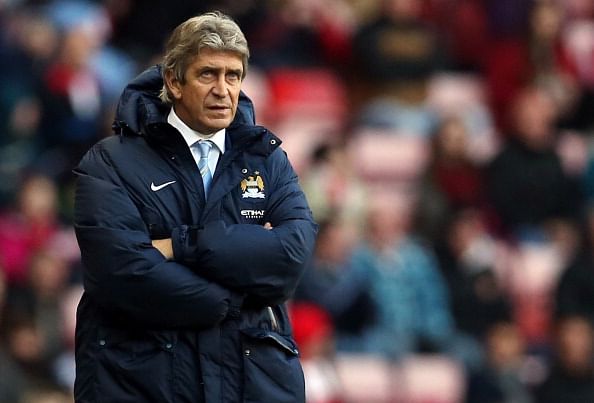
Manchester City’s Chilean manager Manuel Pellegrini looks on from the touchline during the English Premier League football match between Sunderland and Manchester City at Stadium of Light in Sunderland, northeast England on November 10, 2013. Sunderland won 1-0


City have been woeful away from home this term; they have won just one of their five games, drawn another and lost three.

The pattern is getting a little worrisome for City fans as they see their team resplendent at home, putting away opponents with minimal fuss, yet the same sort of magic has not been replicated away.

Manuel Pellegrini will be asked some serious questions after his team selection left plenty of room for introspection. He fielded a back-four which has never played together before in Aleksandr Kolarov, Micah Richards, Joleon Lescott and Martin Demichelis.

He left out experienced heads Pablo Zabaleta and Matija Nastasic and played Javi Garcia in midfield ahead of Fernandinho. Did he think that Sunderland, being bottom of the table, afforded him that opportunity? Was it a case of complacency from City’s manager?

If yes, it did come back to bite them, especially so in the absence of their most creative player, David Silva, through injury.

Against Aston Villa, where they lost 2-3 at Villa Park, Garcia was played at centre-back ahead of Lescott.

Some of Pellegrini’s decisions have been baffling and a fair share of criticism for their away form could be apportioned to the Chilean.

Ramires
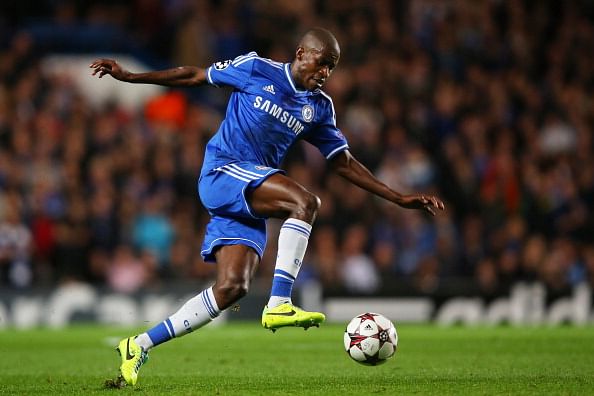
Ramires of Chelsea runs with the ball during the UEFA Champions League Group E match between Chelsea and FC Schalke 04 at Stamford Bridge on November 6, 2013 in London, England


Chelsea’s Brazilian midfielder Ramires hit the headlines for his Ashley Young-esque dive on Saturday that earned his side a crucial last gasp penalty which was converted by Hazard to help them draw the game.
It was a blatant dive from the Brazilian and as much as Jose Mourinho ranted on about it being a knock-down penalty, he’s not fooling anyone.

The video replays clearly show that Ramires goes down under the most minimalist of shoulder brushes from Steven Reid.

The referee was at fault for not spotting the act from Ramires, but it was an ugly incident that Chelsea and the Brazilian could have done without.

Juanfran

Atletico Madrid were held by Villareal to a 1-1 draw in an exciting clash at the El Madrigal. And the result meant that the one point lead to league leaders Barcelona is now three points.

Atletico had quite fortuitously taken the lead with an own goal, but Diego Simeone’s side returned the favour when Juanfran put through his own net with about 15 minutes to go to give the game a 1-1 ending.

Real Madrid also closed the gap to their city rivals with a thumping 5-1 win over Sociedad.

Borussia Dortmund
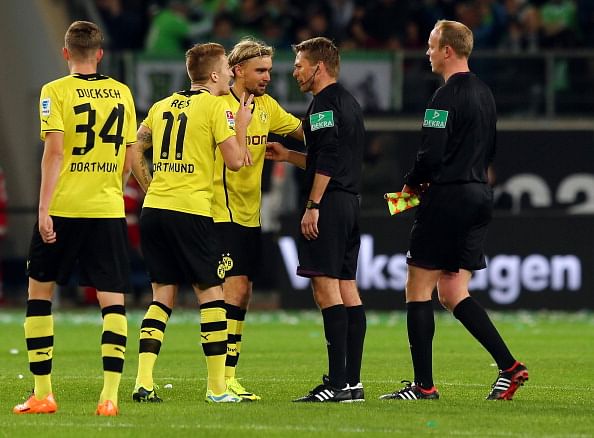
Marco Reus (#11) of Dortmund argues with referee Jochen Drees (R) after the Bundesliga match between VfL Wolfsburg and Borussia Dortmund at Volkswagen Arena on November 9, 2013 in Wolfsburg, Germany.


Having lost their midweek game to Arsenal, Dortmund suffered a second successive loss when they were beaten by Wolfsburg 1-2.

And on a day when Bayern Munich created a new record unbeaten streak with 37 games to further strengthen their position at the top of the table, it was lost ground for Dortmund.

Dortmund also suffered a major setback as Serbian defender Neven Subotic suffered torn ligaments and has been ruled out for an extended period, said to be a minimum of six weeks.

Klopp’s side were beaten by a wonder strike from Croatian striker Ivica Olic that sailed past the reach of Roman Weidenfeller.

You can’t really blame Dortmund for making any callous mistakes that cost them the game, but they were guilty of not finishing off some of the chances in both their games, against Wolfsburg as well as Arsenal.

As the home side, they did have good control of the game against Arsenal in the opening one hour, but failed to make the most of it. At one stage, the match stats read 14 attempts from Dortmund with 3 on target, while Arsenal’s was one attempt with one on target.

The goal made it two attempts with both on target.

These missed chances could have a larger implication in the larger scheme of things. Their loss to Arsenal pushed them back to third place in the group in the Champions League, and though they can still qualify, it would require a perfect performance in their remaining games.

In the Bundesliga, they have lost further ground to Bayern, who are still unbeaten. The gap is now four points with Dortmund set to welcome the champions to the Signal Iduna Park when hostilities resume on November 23 after the international break.

Saturday, July 27, 2013

Lots of hot air and very little substance


Ah! Hot air balloons, things of beauty!

The hot air balloon is the oldest successful flight technology available to man, and it’s one that allows us to fly high above the skies giving one a sense of elevation that one does not get when one’s feet are on the ground.
If you’re a football fan, every summer you get bombarded with plenty of these hot air balloons. Ladies and gentlemen, welcome to the Annual round of summer transfer gossip!

Taking an imaginary flight in the realms of the footballing stratosphere with leading players and their agents making a beeline for the next big money move, and the fans’ wildest fantasies being plucked out of their imagination and used as cannon fodder in the endless stream of transfer-related tattle that floods our internet space and takes much of our waking time; that is the transfer gossip machine at its best, where most of the information that comes along is gibberish.

There’s a reason why the news from the gossip mill is called transfer dope; it is aimed to precisely have that effect, to get the fans hooked on to it, eager and waiting for the next shot of news and then the next and one more thereafter, until such stage when the fan can no longer live without a shot of transfer news. With only a handful of teams competing for top honours each season, the transfer window represents clubs’ chance to make a key transfer signing and get the fans fired up.

Edinson Cavani, formerly of Napoli and now with French champions Paris Saint Germain, was one of the big fishes in this year’s summer transfer market. Chelsea and Real Madrid made the early running on the Uruguayan, but sometime in between all the speculation emerged a report, straight out of the blue, which claimed that Manchester United were in the race to sign the forward; this came out when just the previous evening another paper reported that Chelsea were on the verge of completing the signing of Cavani.

Manchester United fans over the last 3 years or so have been assured that their team has been close to sealing the transfer of ___________ (fill in the blanks with either of Wesley Sneijder, Kevin Strootman, Lucas Moura and Thiago Alcantara), only to still be stuck with the likes of Tom Cleverley and Anderson in midfield and being forced to recall a veteran out of retirement a couple of seasons ago.

Reportedly, Thiago lost about 400,000 followers on Twitter the day he signalled his intention to re-unite with former coach Pep Guardiola at Bayern Munich, while Cesc Fabregas found 800,000 new followers when he woke up to the news that Man United had made a bid for him. The desperation in those fans for a world class midfielder is palpable; Messrs’ David Moyes and Ed Woodward are you listening?

And, if you are someone who’s been paying close attention to the transfer window, you would just be astounded at the amount of info in the hands of janitors, nurses, doctors and airport attendants who seemingly tip off reporters that they’ve just seen Cristiano Ronaldo arrive at Manchester airport via a private jet, Wayne Rooney with Jose Mourinho in a cafĂ©, Eden Hazard doing the rounds of London and visiting a public toilet while at it!

The common joke going around a few weeks ago was that According to latest reports, Strootman has undergone so many medical tests at United, that he's now a qualified doctor!

Meanwhile in North London, ‘Le Professeur’ Arsene Wenger has been the talk of town for the “war chest” that he has been handed by the Arsenal board to fill the squad with some quality players. No day has been complete without at least 2 reports on how Arsenal have neared signing Gonzalo Higuain from Real Madrid (who, if today morning’s dope is to be believed is on the way to Napoli, hard luck Arsenal fans) while also courting Luis Suarez of Liverpool with Champions League football.

The main actors are in this are always the players, figuratively and quite literally. The range of emotions that they go through outshines that of most soap opera and movie stars. Rooney has been left “angry and confused” after manager Moyes’ comments, last year Cristiano Ronaldo was “sad” at Madrid. Zlatan Ibrahimovic, who moved from AC Milan to PSG in the summer of 2012 on a salary of £11 million-a-year, claimed to “miss his freebies” from Italy.

That is the crazy, mad world of the football transfer window; propelled by fantasy football, dearth of stories in other spheres, hero worship and ‘insider’ info filled with lots of hot air and very little substance.

So, if you can keep your head above water for the most part, and enjoy the rumour mill making judicious use of the information that comes hurtling down, one should be in a good place. Just make sure not to get too high on the transfer dope though!


Monday, June 24, 2013

Band of Brothers - Part III

Right from the Neville's to the Laudrup's, we have gone globe-trotting to look at the most famous brother pairings to have played international football for their countries. And this is the concluding part of our mini series - "Band of Brothers"

The De Jong’s – Luuk and Siem
Siem, the elder, has played 4 times for the Dutch national team scoring twice; this after coming through steadfastly at the Under-17, Under-19, Under-21 and Netherlands B teams. He is the club captain of Ajax where he has been a prolific scorer with 50 goals in 148 appearances and has won 3 consecutive Eredivisie titles.

Brother Luuk has 3 more caps at the international level and currently plays for Borussia Monchengladbach where he moved last summer after 3 years with FC Twente where he won the Eredivisie in 2009-10.

The Bender’s – Lars and Sven
The Bender twins – Lars and Sven – one plays for Bayer Leverkusen, the other plies his trade with Borussia Dortmund, runners-up in this year’s Champions League. Lars and Sven are both midfielders and started their careers with 1860 Munchen before going to Leverkusen and Dortmund respectively. The twins have represented Germany at every level – the Under-17’s, Under-19’s, Under-20’s, Under-21’s and Senior level. Sven has 4 senior caps while Lars has 14 with 3 goals to boot. They were part of the side that won the 2008 European Under-19 Championship.

The Charlton’s – Sir Bobby and Jack
Just like how the Koeman’s won the Euro together, so did the Charlton’s; except that it was the World Cup that they won in 1966 on home soil, England’s lone triumph to date.

Sir Bobby is a Manchester United legend having played all but 2 seasons of his football as a player with the Red Devils. Regarded by many as one of the best midfielders to have ever played the game, Sir Bobby was a midfield maestro who ran the show for United with great passing. He was also a great shooter from distance. The England legend was a survivor from the Munich air crash that claimed the lives of many of the famed ‘Busby babes’ of United. He went on to win 3 First Division titles, 1 FA Cup and that famous European Cup triumph in 1968. His performances at the World Cup in 1966 got him the Golden Ball award for best player as well as the Ballon d’Or. He is currently a director with Manchester United.

Brother Jack played for the other United – Leeds. While Sir Bobby was the beating heart of United in midfield, Jack shored up the backline as a powerful centre-back and was part of the successful Leeds sides of the 1960’s and early 70’s. In comparison to his brother’s 106, Jack was capped only 35 times. , but the defensive partnership he forged with England captain Bobby Moore was instrumental in their title run in ’66. Much like Sir Bobby, Jack too was a one-club man; he spent each of his 11 seasons at Elland Road winning the First Division and FA Cup once. He enjoyed some brief seasons in management at Middlesbrough and Newcastle United, but really hit it big with the Republic of Ireland whom he managed for 10 years between 1986-1996.During that time, Ireland qualified for the Euros in 1988 and also qualified for the World Cup for the first time in 1990.

The Berezutsky twins – Aleksei and Vasili
The 2 twins even have identical footballing careers. Both of them defenders, they started off at Torpedo-ZIL and then made the move to CSKA Moscow where they continue to play currently. Aleksei has 261 appearances for CSKA  with 5 goals, while Vasili has played 252 times and scored 6 goals. Vasili though has more international caps with 70 caps for Russia  to his brother’s 51. They have jointly have 1 UEFA Super Cup to their name along with 4 Russian league titles and the Bronze medal from the 2008 European Championships.

The Milito’s – Diego and Gabriel
Diego, at 34 is still playing and is a lead striker for Inter Milan. He has however missed a good part of the season due to injury. The 2009-10 was his best when his prolific scoring helped Inter to a historic treble winning the Serie A, the Italian Cup and the Champions League. Nicknamed ‘El Principe’ (The Prince), Diego has 24 international caps and was voted the UEFA Club Footballer of the Year as well as the Serie A Footballer of the Year in the 2009-10 season.

Gabriel has 42 caps, but is now retired despite being 2 years younger. He too played at Zaragoza from where they got their big moves – Diego moved to Inter while Gabriel moved to Barcelona. He won 1 Champions League and 2 La Liga titles with the Catalans. He did win the Spanish Cup once with Zaragoza earlier.

The Olsson’s – Martin and Marcus
The Olsson twins (not Ashley and Mary-Kate) represent Sweden and both play for English club Blackburn Rovers which is owned by Venky’s. Martin who plays left-back or left midfield has 15 caps for Sweden, 13 more than his brother. The two of them usually play in front of each other, at left-back and left midfield, and that flank has hence come to be known as the ‘Olsson flank’. German NBA star Dirk Nowitzki of the Dallas Mavericks is their brother-in-law.

The Baresi’s – Franco and Giuseppe
One Milan legend. One Inter legend.

These 2 are as one club as they get. Franco played all 25 years of his career with AC Milan including 5 of his Youth years.  Giuseppe did the same with Inter, spending 21 seasons there; it was only in the fag end of his career that he had 2 years with Modena.

Franco is considered one of the greatest defenders of all time. He was a sweeper, who won 3 Champions League titles, 6 Serie A titles, 4 Supercoppas, 3 European Super Cups and 2 Intercontinental Cups. In 1999, he was voted the AC Milan Player of the Century by the Giallorossi. He has coached the Under-19 and Under-20 teams of Milan too. He played 82 times for Italy and won the 1982 World Cup with the Azzuri.

Giuseppe didn’t have the same success with Italy; he only played 18 times. But, he had a stellar club career with Inter winning 2 Scudettos, 2 Coppa Italias and 1 Supercoppa in his 16 senior seasons with the club. He is currently the assistant manager of the Inter first team.