If there's one element of sport that has grown exponentially along with the global growth in demand for sports, it is sports analytics. Teams across various sports and countries look for the ultimate competitive edge and hence turn to analytics for it.
Sportstec is the world leader in providing exactly this sort of advantage to sporting teams. And at the helm of it all is New Zealand’s Philip Jackson.
Philip is the Managing Director and majority shareholder of Sportstec Limited, a global company delivering technologies (developed in-house) for the performance analysis market. The company has offices established in NZ, Australia, Malaysia, USA, Canada, France, Germany, India, South Africa, Argentina, Brazil and UK, at the same time establishing a distribution network in 22 countries around the world.
With over 9,000 clients worldwide, Philip has created the leading performance analysis company in the world.
Managing some key customer accounts for the Indian arm of Sportstec is Venugopal Rajagopalan, Manager-Sales & Training - Sportstec India.
Venu is responsible for business development and training at Sportstec India Pvt. Ltd. He is also responsible for helping high performance teams and coaches develop and enhance their sports performance. Being a sports enthusiast, he decided to chase his dreams and move into the sports domain where he could utilize not only his knowledge about sports and his analytical and writing skills, but also his business acumen.
We caught up with Philip and Venu for a brief interview:
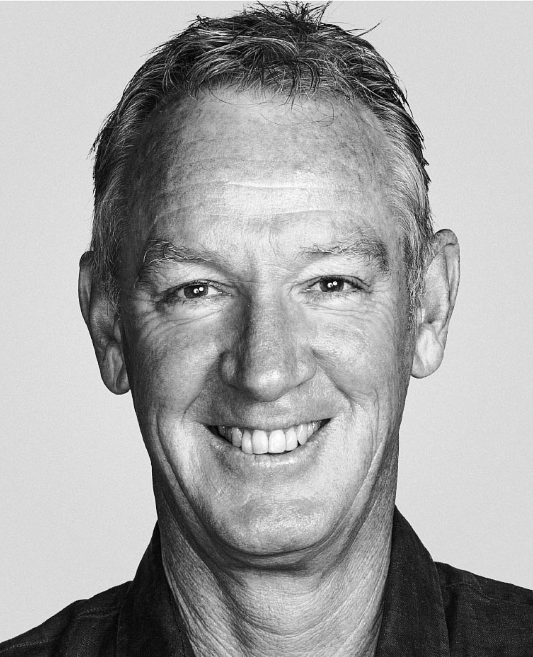
Philip Jackson, Managing Director, Sportstec
How did the idea of Sportstec come about? Can you tell us a little bit about how the company was founded?
It came about in 1999 as a result of some work with the Otago University for their rugby program. So it started with that - our aim was to try and provide sports performance analysis for various sports - cricket, ice hockey, you name it - and we wanted to be the best in the world at it.
At the time, there wasn't a similar product in the market; there was one, but it was I think in Australia and restricted to the country. So we wanted to cater to a more global clientele.
So we started off in New Zealand where people are just absolute sports nuts. There is a major obsession with sport in the country and it worked well for us. What was the first product that you developed?
The first product we developed was for field hockey umpires in Australia. There were other products available, but they used to function on a more linear basis. Ours was the first non-linear offering and it helped improve the umpires' decision-making and communication with the players to a great degree. Sports is a field that has gradually evolved over the years with newer additions every decade. The advent of television has changed many things and there are increasingly more and more stats that the fans can see and process. But an often unseen part of the sport is the statistics that improve performance for the teams. How was this market when you entered (valuation and size) and how do you see it progressing?
I think from the time we started off, to what it is now, the industry has grown by a 10 factorial multiplier. The technology has become cheaper, meaning not the software that we provide, but the hardware necessary to use and run analytical software has come down. So that's something that has helped the industry grow.
Sports analytics is big; to give you a small example, initial research in America showed that the sports market there was 10 times larger than the automotive industry! Now that is some serious size. So that's the thing - there is huge demand for sports analytics right now in both established as well as emerging markets.
Stats can roughly be divided in two - you have your retail stats and your coaching stats. The retail stats are the ones that you guys see on television and the various websites. The coaching stats delve a little bit deeper into the elements that a coach wants to see, and that's the demand we cater to.
So yes, the scope is huge for that industry. What is the broad scope of operations of Sportstec?
Sportstec aims at providing top-level assistance basically and our vision is to be able to provide a learning tool. We want to help the coach be a better coach, help put a pilot through the paces with our pilot training, and similarly for the fire service and other industries. The company vision is about nurturing constant improvement in our clients. Which sporting domains do you currently cater the most to?
We have a huge list of clientele in domains like rugby (all major rugby playing nations), field hockey, basketball (28 teams out of the top 30 NBA teams), football (almost all European and English premier league teams) and also other sports like volleyball, netball, cricket (West Indies, New Zealand, New South Wales), tennis (Tennis Australia, Roger Federer, Andre Agassi). Can you name some of the top teams that have enlisted your services?
We have on board the American National Basketball team, All Blacks Rugby, West Indies Cricket Board, Manchester United, Hockey India. We have tied up with some of the major football federations in the world like Brazil, Portugal, Spain. So you know, we could have a potential World Cup winner on our hands. We have about 28 of the 30 NBA teams in the United States on our client list as well. You have mentioned a few organizations as corporate partners. Who are your main corporate partners and how have they helped support the venture?
We have stats provider Opta with us. They're one of the best in their field and they are a really crucial partner as our chief stats provider and also they provide us an integration system which helps combine the data that we capture with their analytical insights.
There are two elements to game statistics - there is the game element, and then you have the coaching analysis. On average there are close to 200k/300k data points that are collected in a game and these inputs to the coaches help greatly in performance analysis. Teams can then take the ones they want and discard the ones they don't want. And likewise, as far as education partners are concerned, who are the major partners and what sort of knowledge transfer have you benefited from thanks to these alliances?
We have tied up with numerous universities in Australia and the United Kingdom. These universities help in performing a cause-effect performance analysis. So not only do they help from an educational standpoint, but they're also offering courses on this particular subject. So they are actually providing the industry with specialists who come out of these universities fully prepared to understand the analytics and the technology being used. And the sports field now wants people who come in ready so that there isn't a great deal of time spent on educating them on the nuances again.
Venugopal Rajagopalan, Manager – Sales & Training, Sportstec India
What are the various products that you offer, if you can offer a brief run-through of each of them?
SportsCode, our basic product, is being used by volleyball leagues Europe, in Four Nations, Six Nations rugby, NBA teams in the US and also by other major teams in field hockey, tennis, football and cricket across the world.
Then there is Sportstec Exchange: This basically provides the knowledge repository to a team immediately after a game as against perhaps four days later if you were to make a DVD and send it across. This is our workhorse product, one that doesn't get too many eyeballs, but is very effective. It has a web-based stream share option.
Then you have Studio Code which is a capture, code, analyse tool.
There's SportsTec Player - which provides quickly engaging reports in minutes.
Coda/iCoda - Powerful data collection tool, non-video though.
Trak Performance - Manual tracking system where you can entirely focus on one player. You can use it to check and correlate a player's heart rate and peak performance level for example. Do you organize events to spread the word, not only for promulgating your own product, but also from a standpoint of championing your industry?
Yes, there is something called the Global Sportstec Innovation Conference (GSIC) which this year is happening at the Tower of London. It is funded by us and organized by us. It is about the industry informing the industry on latest developments and having an appraisal of how things are progressing. We will be having personalities like Les Reed, who is a coach with Sunderland football club, Gary Gold, a former Springbok assistant coach, and then we have another sports researcher from Turkey who has developed a particularly effective scouting department to look at the opposition team using which his team has gone on to win the Turkish championship. We noted from your website that Coach K (Mike Krzyzewski of Duke) is one of the coaches that have taken up your products. He is one of the most renowned coaches in the basketball circuit in the United States thanks to his work at Duke and with the US National team, and he's been known to be masterful at implementing process-based programs for improving his teams with the help of analytics. How has the experience been working with him, and can Sportstec be considered a huge part of how he has been able to sustain his success?
Oh absolutely! Coach K is a very special member of the Sportstec family and was one of the earliest adopters of our products in the basketball world. The product has helped his support staff a great deal with their coaching. One of the key things he's done with the US national team is build accountability. The US team was earlier all about a collection of superstars who just went out and won you a game based on their individual talents and were rarely questioned when they didn't perform. Now, Coach K can identify and highlight a particular aspect of a player's play and highlight to him exactly where he needs to improve. He has used analytics to bring these superstars around and instill responsibility.
And as for his school, Duke partners only with the best. And for them to select us as the best performance analysis provider out there is just a huge endorsement. What is your USP that you reckon differentiates you from other similar service providers?
Sportstec globally has the most passionate set of people working towards delivering the best performance analytics tools available. Our products are the best in the world; without a good product, there is nothing. We are knowledge oriented and we have a burning desire to see our clients succeed. And I think our clients recognize that and hence favour our partnership. Coming to the India connection, what are the clubs and teams that you work with? And what sort of set-up do you currently have in place in the country?
We have a direct operation running here. It is 100% owned by Sportstec and we've been here for about one-and-a-half years now. We are not using resellers. Here, we are still in our infancy stage, the market is just getting established right now. About five years down the line, we will look at adding distributors to better get our product around.
As far as clients go, we have Hockey India (HI) on board; they use SportsCode, iCoda. We have the All India Football Federation (AIFF) and also some of the clubs from the I-league, including the champions this year, Bengaluru Football Club (BFC), as well as Dempo and Salgaocar sports clubs. Apart from this, we had about four teams from the six participating in the Hockey India league using our products. Ranchi Rhinos, the winners of the inaugural edition of the tournament, were proud users of our SportsCode product. In this history of technological advancements, one innovation or value addition has constantly spawned off another. Looking ahead, what innovation or spin-off do you think analytics in sports can spawn in the coming years? (Or other advancements in the way we see and understand sport)
I think the filtering down of data points, so as to arrive at the most crucial one in no time is something that the industry will move towards. Right now, there is a lot of information that you get from our tools and it takes time for the coaches and other end users to skim through it. So perhaps, in future, the tools will be equipped to tell you, say if there are a 100 insights that you garner, what the top 20 or the 20 most important insights are. Then of course there's 3D reconstructive video and all that too.
As the year 2013 draws to a close, it is time to relive some of the best moments of the year 2013. India as such had some mixed results in the sporting arena – there were some major highs accompanied by some disappointing results along the way.
The highs came in both team sports as well as some of the individual events.
Here’s a summary of the men and women who shone the brightest through the year in no particular order.
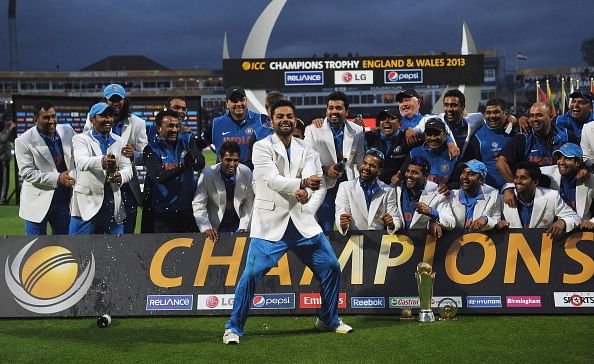
The Indian team celebrates winning the Champions Trophy
The Men in Blue have had another successful season under the able stewardship of captain MS Dhoni with the highlight being the Champions Trophy triumph in England.
The team won each of the six Test matches that it played. You could argue that all of them were at home and hence the team was expected to win, but the best teams begin with staying strong at home. The team did that, and convincingly too, with series wins over the Aussies and the West Indies. The latter ended with the retirement of Sachin Tendulkar, but many new faces were unearthed, offering much promise into the future.
Cheteshwar Pujara had a tremendous year notching up two centuries that included a big double century providing solidity at the number three position, vacated by Rahul Dravid. Shikhar Dhawan announced his Test entry with a bang, through a stroke-filled century against the Aussies and Ravichandran Ashwin demonstrated the ability to be India’s lead bowler in home conditions and also added further credibility with the bat towards the end of the season.
The ODI side also performed admirably, winning 22 and losing 10 of their 34 matches in total, with 2 games providing no result. In fact, the team had a better win record abroad and on neutral territory this year, winning 7 of 10 games on the opposition’s home turf and winning all but one of their games on neutral grounds.
They won the Champions Trophy with a perfect record winning every game, including a remarkable fight back in the final against hosts England. Rohit Sharma finally came through on his promise, while Virat Kohli continued his rapid rise up the ODI batting echelons opening the batting and new talents such as Mohammad Shami emerged later in the season.
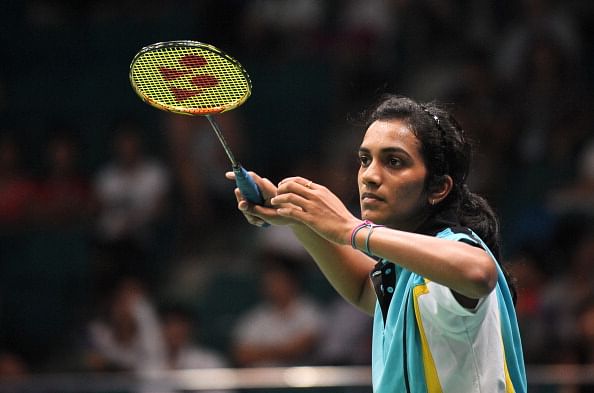
PV Sindhu
PV Sindhu returned with the bronze from the BWF World Championships
The badminton fraternity found a new face dominating the headlines this year in the form of teenager PV Sindhu who made the rather giant leap from the national scene to the international one winning two Grand Prix Gold titles and making history by winning bronze at the BWF World Championships. What was even more impressive was the fact that she took down former Olympic champion Wang Shixian and reigning World Champion Wang Yihan, both of China, en route to the semi-finals.
Another product of the Gopichand Academy in Hyderabad and tutored under the auspices of national coach Pullela Gopichand.
The lanky Hyderabadi, still just a teenager, caused a ripple when she won the Malaysian Open early on in the season. But, the shockwaves came when she made her way into the semi-finals of the BWF World Championship in Guangzhou, China, where she was assured of a bronze after falling to eventual champion Ratchanok Intanon of Thailand.
The achievement was a monumental one, as it was the first medal for India in women’s singles at the World Championships and it was also just India’s third medal overall after Prakash Padukone’s bronze in men’s singles at Copenhagen in 1983 and Ashwini Ponnappa and Jwala Gutta’s bronze in women’s doubles in the 2011 edition.
She ended the season too on a high with victory at the Macau Open, where she was the top seed and currently sits an impressive 11th in the world rankings after starting the year ranked 25th.
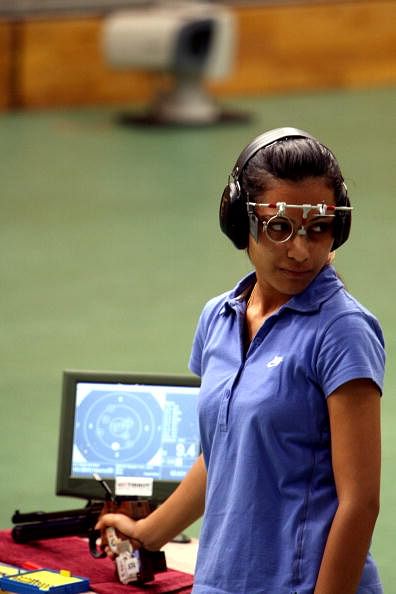
Heena Sidhu
Heena Sidhu
Heena Sidhu made history by becoming the first pistol shooter to win a gold medal at the ISSF World Cup Finals.
And it’s not like she had an easy run in the tournament; she overcame stiff odds by overcoming the challenge of double Olympic champion Guo Wenjun of China, world champion Zorana Arunovic of Serbia and multiple-Olympic medallist Olena Kostevych of Ukraine.
Two Indians had previously won gold medals at the World Cup – Anjali Bhagwat in 2002 and Gagan Narang in 2008 – but both of them had come in the rifle events, making this a first in pistol shooting.
After making a shaky start in the final, she went on to hit 15 consecutive bulls’ eyes to finish with a comfortable lead of 5.2 points over her nearest competitor.
Even more astonishing was the fact that she was not even supposed to be participating at the event, and only received a late call up after two other competitors withdrew at the last minute.
Talk about a dream win!
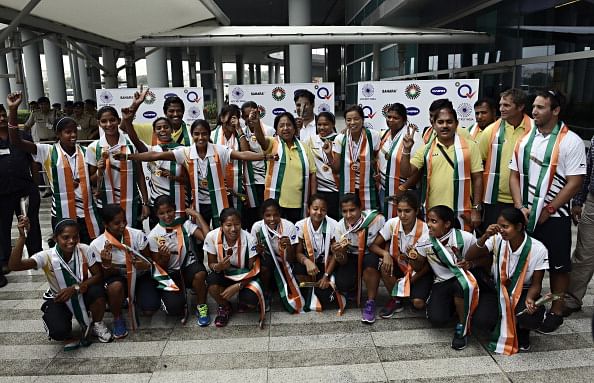
Women’s hockey teams
Indian girls hockey team return with bronze medal from Germany
The trend of winning a first ever medal in an event was common amongst India’s female athletes this year.
The junior hockey girls, achieved something on par with what Sindhu did when they finished the third-best team at their world cup and brought home a bronze medal, which was India’s first medal ever from the competition in Monchengladbach, Germany.
They beat England 3-2 on penalties in the decisive bronze medal playoff match.
The Indian girls proved to be a dangerous outfit right through the competition, surprising many of the top sides and making their way into the final four. They also went one better from the previous edition, where they had made their way to the bronze medal match, only to be pipped by South Korea.
Hockey India deservedly felicitated the achievement by granting a cash bonus of Rs. 1 lakh to each of the players and chief coach Neil Hawgood while the other members of the coaching staff received Rs. 50,000 each.
18-year-old Rani, who was not only the star of the Indian team, but of the whole tournament, vindicated by the Player-of-the-Tournament award bestowed upon her, was awarded a further lakh.
In general, the women outdid the men through the year.
The senior team, despite not picking up any gold, performed admirably in collecting the bronze at the Asia Cup and the silver in the Champions Trophy.
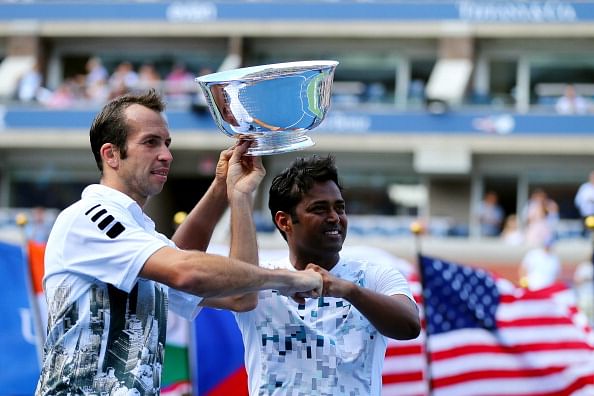
Leander Paes (R) of India and Radek Stepanek of the Czech Republic pose with their trophy after winning their men’s doubles final against Alexander Peya of Austria and Bruno Soares of Brazil at the 2013 US Open
The 40-year old veteran won the US Open mixed doubles title with his Czech partner Radek Stepanek. It was his 8th men’s doubles title in Grand Slams and 14th overall.
Paes and Stepanek clinched their second major title together with a dominant 6-1, 6-3 win over the Austrian-Brazilian pairing of Alexander Peya and Bruno Soares.
The Indian tennis star proved that age is merely a number, collecting his third doubles title at the US Open at the age of 40.
In the other two Slams that they played together, they were bumped out in the first round at the Australian Open and reached the semi-finals at Wimbledon where they went down to Ivan Dodig and Marcelo Melo in a five-set thriller.
They did not play together at the French Open due to Stepanek’s injury, with Paes partnering Austrian Jurgen Melzer instead.
Paes and Stepanek finished the year ranked at No. 7.
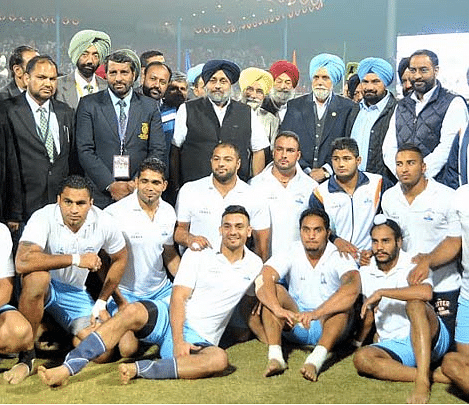
Men’s and women’s kabaddi teams
The Indian men’s kabaddi team
The men’s team won their 4th title in as many World Cups, maintaining their perfect streak with a win over Pakistan. The final this time around wasn’t as easy as in previous editions as the Pakistanis put up a game fight, but the 3-time defending champions edged them out in the end. The tournament has become something of a favourite stomping ground for the kabaddi team and it once again demonstrated that they were still the best in the sport, despite improvement from the other teams over the years.
The women too faced Pakistan, but in their semi-final, and after overcoming the neighbours proceeded to beat New Zealand in the final. This was the second instance of the women’s world cup and India made it a clean sweep of both the trophies by triumphing in this one as well.
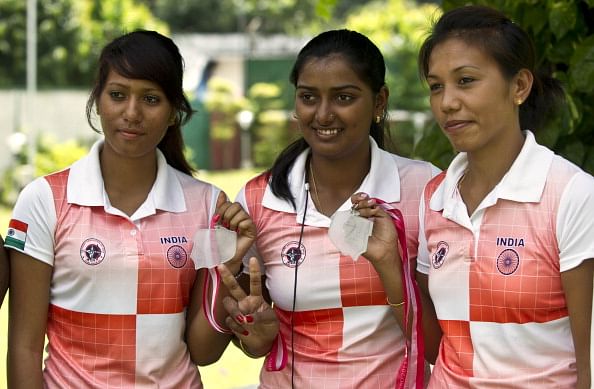
Women’s Recurve Archery team
Indian women archers Rimil Buriuly (L), Deepika Kumari (C) and Bombayla Devi pose with their gold medals during a meeting with the V. K. Malhotra President of Archery Association of India in New Delhi on August 27, 2013.
Individually they may not have struck gold, but the famed women’s recurve team as a group performed really well to come out with two gold medals to their name.
India’s leading recurve archer Deepika Kumari, along with Laishram Bombayla Devi and Rimil Buriuly had a highly successful year together as a team.
The trio had bagged gold in the World Cup Stage 3 final in Medellin, Colombia after beating China in the title clash.
They then went on to cause a stunning upset of world and Olympic champions Korea in the World Cup Stage 4 final in Wroclaw, Poland in August.
Deepika Kumari also had a fine year overall individually as she ended the year with seven international medals to her name – three gold, three silver and one bronze.
Deepika’s third gold medal, after the twin team triumphs at the World Cup, came in the mixed team event at the 18th Asian Archery Championship in Chinese Taipei where she went on to win in the company of Jayanta Talukdar, the leading male recurve archer.
She picked up two silvers early in the year at World Cup Stage 1 final in Shanghai, China, in the mixed team event and in the individual category.
The third silver medal came at the prestigious World Cup Final in Paris where she had to settle for silver for a third year in succession as she was edged out by Korea’s Ok-Hee Hyun.
She finished the year ranked No.3 in the individual recurve rankings.
The lone bronze also came with Talukdar at the World Cup Stage 3 final in Medellin, Colombia, in the mixed team event.
Indian Compound Archery team
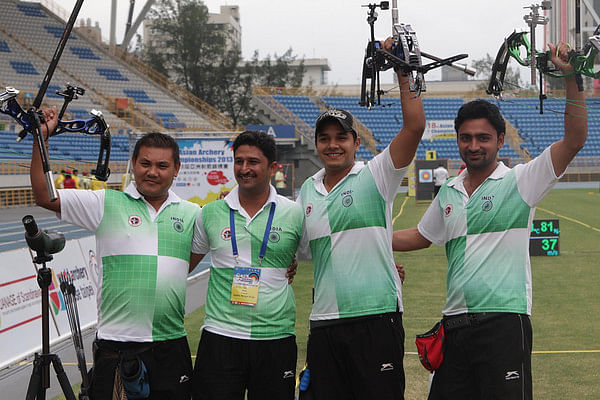
The men’s compound archery team that achieved gold at the Asian Championships
While the women’s recurve team put up consistent good shows, it was a breakout year for India’s compound archers who emerged from the shadows of their more famous compatriots.
The compound team took inspiration from the women recurve’s world-beating efforts as the trio of Abhishek Verma, Ratan Singh Khuraijam and Sandeep Kumar caused a major upset of their own when they beat the Koreans to take gold in the men’s team event at the Asian Archery Championships in Taipei.
It was the second gold for India in the men’s compound category at the event after an individual gold for IR Sanam at the 2009 edition in Bali.
The team grew from strength to strength through the year and came ever so close to winning a historic gold at the World Cup Stage 2 in Turkey, where the mixed team of Rajat Chauhan and Majudha Soy finished runners-up to the Italian team by a solitary point.
After qualifying third, the team of Chauhan and Soy went on a fairy tale run defeating all before them, that included the likes of fancied nations such as Great Britain, Canada and Russia, to make their first ever final.
Their performance was in fact the saving grace for India at the World Cup Stage 2 as the fancied recurve archers finished empty-handed after a disastrous showing.
At World Cup Stage 3 in Colombia, the men’s team won bronze and at the Asian Youth Championships in Wuxi, China, the team returned with one silver and four bronze medals.
Rajat Chauhan bagged that lone silver in the men’s individual event.
At the Asian Archery Championships, they had another successful run, collecting two gold, one silver and one bronze to further add to their tally. One of those golds, as mentioned earlier, came when the men’s team upset the Koreans. The second came in the mixed category as the team of Abhishek Verma and Lily Chanu beat the Iranians by one point in the title clash
Vijay Kumar Malhotra, President of the Archery Association of India, was unwavering in his praise for the compound archers.
“This year is entirely dedicated to compound archers in view of their brilliant performance in all international competitions attended during 2013 which is a good sign for the preparation of ensuing 2014 Asian Games, Incheon where Compound event has been included for the first time,” said Malhotra.
Indian Wrestlers
Amit Kumar (L) came home with the silver in the freestyle 55 kg category at the World Championships
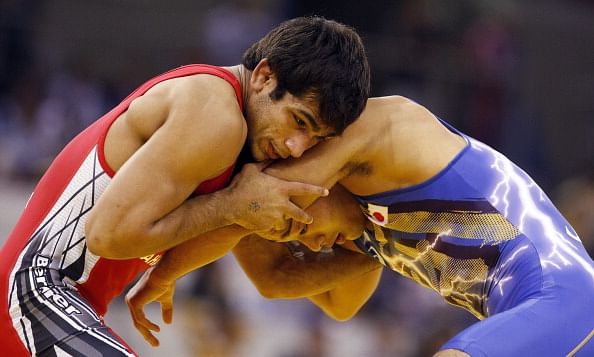
At the 2013 Asian Wrestling Championships held in New Delhi, India finished with nine medals overall – two gold, one silver and six bronze.
However, that was good enough only for fifth place overall in the medal standings behind South Korea, Uzbekistan, Japan and China.
In the men’s freestyle though, India finished as the top nation with 48 points, three ahead of Iran who finished second with 45. India finished seventh in men’s Greco-Roman and fourth in women’s freestyle.
Two Amits, Amit Kumar and Amit Kumar Dhankar, won gold in the men’s freestyle 55 kg and 66 kg categories respectively while Bajrang Kumar took bronze in the 60 kg category and Hitender in the 120 kg category.
In women’s freestyle, Vinesh, Babita Kumari, Geetika Jakhar and Jyoti won bronze medals while Navjot Kaur took silver in the 67 kg category.
There was more good news to come for India in the World Championships held at Budapest, Hungary in September. For the first time, India won two medals in the men’s events at the World Championship.
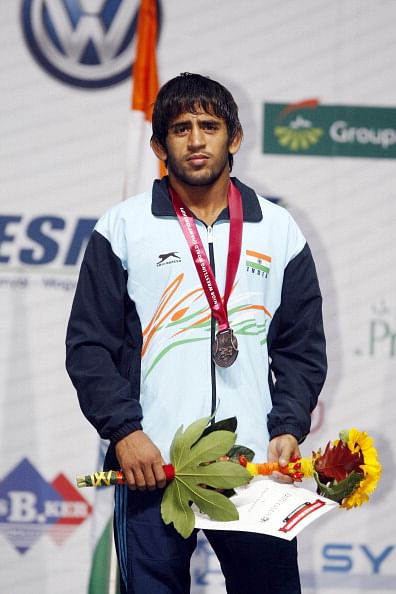
Wrestler Bajrang bagged a bronze in the 60 kg freestyle category with a 9-2 win over Nyam-Ochir Enkhsaikhan of Mongolia which took him to the final. The second medal came from Amit Kumar Dahiya when he won silver in the 55 kg weight category.
The performance meant India scored 23 points at the tournament to finish sixth in the rankings behind Iran, Russia, Georgia, Ukraine and USA and in addition, their performance earned them a first ever berth in the World Cup to be held next year.
“I am very happy with my performance. I was gunning for the gold medal as I had practiced hard for the tournament but unfortunately couldn’t get it due to bad umpiring decision. The referee warned me for not attacking the Iranian and awarded him the point. I was a contender for gold. Nevertheless, I am happy with my performance and overwhelmed by the reception received here,” said Amit.
India’s Barjang Barjang celerates his bronze medal on the podium of the men’s free style 60 kg category of the World Wrestling Championships in Budapest
“I am happy to have made the whole country proud. I am happy with my performance. This is India’s best-ever finish in the World Championship,” said Bajrang
Not to be left behind, the Greco-Roman contingent also provided a medal as Sandeep Tulsi Yadav won bronze in the 60 kg category.
Amit received a cash award of Rs. 5 lakh from the Wrestling Federation of India (WFI) while Sandeep and Bajrang each received Rs. 3 lakh.
And in the final major competition of the year, the freestyle men’s wrestlers returned with 14 medals at the Commonwealth Wrestling Championships in Johannesburg to successfully defend their title. They bagged seven gold, four silver and three bronze medals.
Sandeep Tomar (55kg), Jaideep (60kg) and Amit Kumar Dhankar (66kg), Praveen Rana (74kg), Pawan Kumar (84kg) Satyavart Kadian (96kg) and Joginder Kumar (120kg) clinched gold medals in their respective weight categories.
Silver was won by Narender (55kg), Ravinder Singh (60kg), Naresh (84kg) and Rohit Patel (120kg), and bronze went to Arun Kumar (66kg), Pardeep (74kg) and Hardeep (96kg).
The men’s Greco-Roman contingent also came back with a rich haul of seven gold, five silver and two bronze. The women’s team finished runner-up with two gold, four silver and five bronze.